
By Styora Decors | Interior Styling & Decor | 7 min read
You saved fifty “modern home” photos. Then you looked at your own living room and couldn’t work out why it doesn’t look like any of them.
Modern interior design is simpler than it looks on Instagram: clean lines, a calm neutral base, only a few materials, open floor space and furniture that does its job without fuss. The good news for Indian homes is that most of that look comes from choices you can make with what you already own, plus a handful of well-chosen additions.
Everything in this guide is styling, not renovation. No false ceilings, no new modular units, no breaking walls. At Styora Decors we are home stylists, so this is how we approach a “make it modern” brief: edit first, then add only what earns its place.
What modern interior design actually means
The word gets used for almost anything new, so it helps to pin it down. In design terms, “modern” refers to a style with roots in the early-to-mid twentieth century that has stayed remarkably consistent. Its signature traits:
- Clean lines. Straight or gently curved silhouettes, very little carving or ornament.
- A restrained palette. Whites, greys, beiges and black, with colour used deliberately rather than everywhere.
- Few materials, repeated. Wood, metal, glass, stone and plain fabric — usually three or four, not ten.
- Space as a feature. Visible floor, clear surfaces and furniture that is raised on legs so the room breathes.
- Function first. Every piece has a reason to be there.
Modern vs contemporary interior design
People often use these interchangeably, but they aren’t the same. Contemporary interior design simply means whatever is current right now, so it keeps changing — today that includes curvy sofas, boucle and warm earthy tones. Modern is a fixed style. The two overlap a lot at the moment, which is why a modern room with a few rounded shapes feels completely up to date. If you are still deciding which direction suits you, our guide to different interior design styles lays them side by side.
Modern is also not the same as minimalism. A modern room can be quite full — art, plants, books — as long as everything is ordered. If you want the pared-back extreme, that’s a slightly different brief, covered in our minimalist interior design guide.
Step one: edit before you buy anything
Most Indian homes that “don’t look modern” aren’t missing things. They have too many of them. Before spending a rupee, take everything off your surfaces — the TV unit, the coffee table, the side tables, the shoe cabinet top — and put back only what you use daily or genuinely love.
- Move gifted showpieces and souvenirs into a closed cabinet or one dedicated shelf instead of scattering them.
- Hide cables, remotes and chargers in a lidded box or tray.
- Take down tired curtains, plastic flowers and anything with a visible brand logo.
Live with the edited room for three days. You will usually find it already feels twice as modern — and you’ll see exactly where the real gaps are.
Set a modern colour palette
A modern home runs on a disciplined palette. Pick one base, one supporting tone and one accent, and repeat them through the house.
- Base (60–70%): warm white, off-white, greige or soft beige. Walls, large rugs and curtains live here.
- Supporting (20–30%): mid wood, taupe, stone grey or charcoal — usually your sofa, dining table and larger furniture.
- Accent (around 10%): matte black, brushed brass, or one colour such as olive, rust or deep blue — in cushions, a lamp, a vase, a frame.
If your walls are a strong colour you can’t change right now (common in rentals), let them become the accent and keep everything else neutral. Repainting is the one item here that needs a painter — everything else is pure styling.
Furniture: silhouettes do most of the work
You don’t need to replace every piece. Look at shape and scale, then change only what fights the look.
✨ Raise things off the floor
Sofas, TV units and side tables on slim legs instantly look lighter and more modern than heavy pieces that sit flat on the floor. Seeing floor underneath makes a compact room feel larger.
Choose simple arms and flat fronts
Track arms or slim rounded arms, flat cabinet fronts and minimal hardware read as modern. If you have an ornate sofa you can’t replace, a fitted slipcover in a plain linen-look fabric changes its character entirely.
Mix, don’t match
A matching five-piece set is the fastest way to make a room feel like a furniture showroom. Keep the sofa, then let the coffee table, side tables and accent chair come from different families that share one material or colour.
Lighting, art and rugs: the modern finishing layer
Once the room is edited and the palette is set, three additions do the heavy lifting.
- Statement lighting. One sculptural pendant over the dining table or a tall arc floor lamp beside the sofa. Add warm-white (2700–3000K) bulbs and switch off the harsh tube light in the evenings — layered, warm light is what makes modern rooms feel inviting rather than clinical.
- Large-scale art. One big abstract or monochrome piece beats six small frames. Lean it on a console or the TV unit if you can’t drill.
- A properly sized rug. Plain, flat-weave or subtly textured, large enough for the front legs of every seat to rest on it. Our guide to choosing a rug for the living room covers sizes for Indian layouts.
✨ Stylist’s tip
Pick one metal finish for the whole room and repeat it at least three times — say matte black in the lamp base, a picture frame and the curtain rod. Modern rooms look “designed” largely because small details agree with each other. Mixed chrome, gold and antique brass in one room is what quietly makes it feel unplanned.
Modern home interior design, room by room
Modern living room design
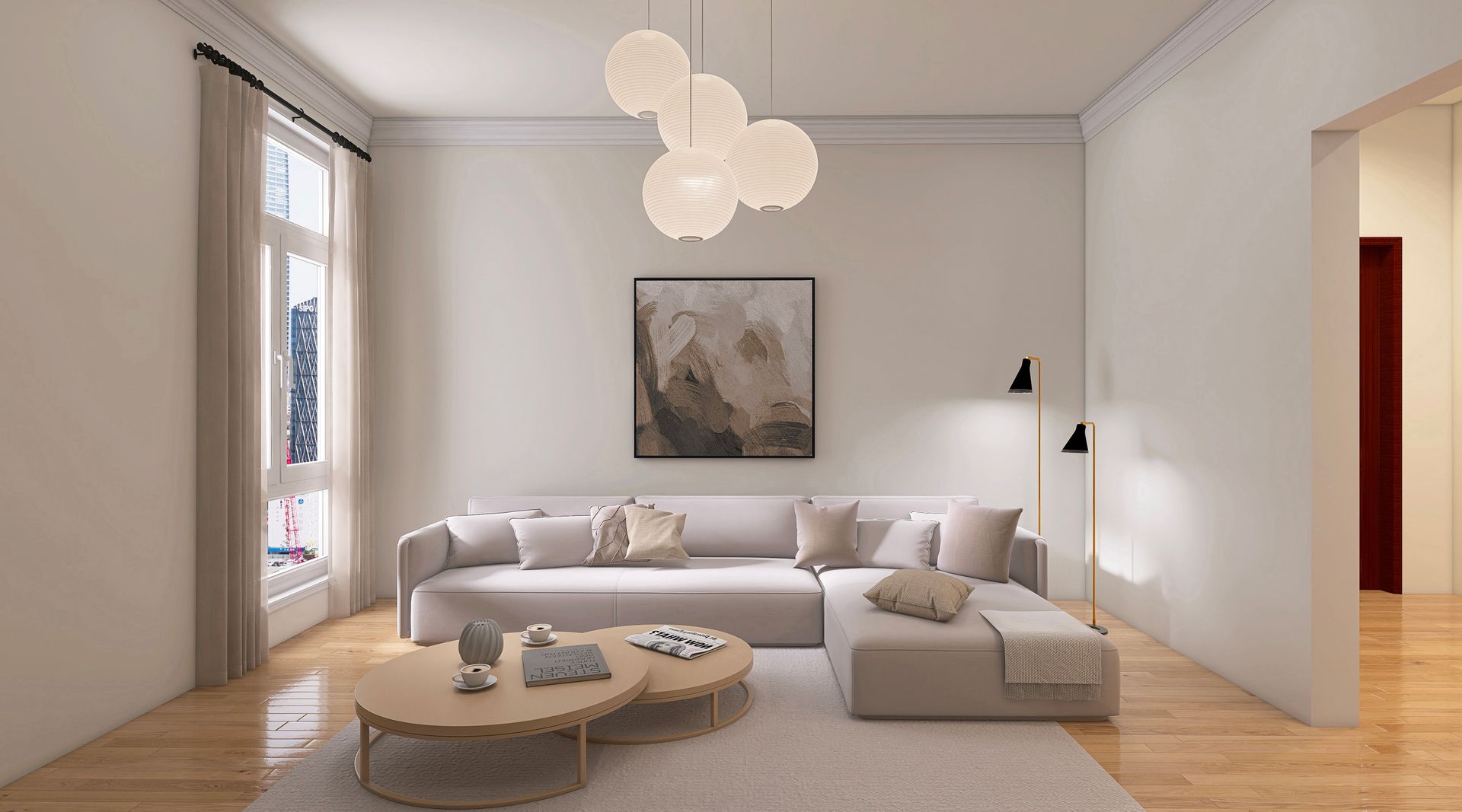
Anchor the room with the sofa and rug, keep the TV wall calm (a slim low unit, one plant, one object, nothing else), and limit cushions to three or four in two tones plus one texture. A single accent chair in leather, cane or a solid colour gives the room personality without clutter.
Bedroom
Plain bedding in white or oatmeal, one textured throw, matching or deliberately mismatched bedside lamps, and nothing on the bedside table except a lamp, a book and a small tray. A fabric or cane headboard cover softens a dated bed without replacing it.
Dining area
Clear the table completely, then add a single runner or a low centrepiece. Modern dining spaces often mix chairs — four of one style and a bench, or two contrasting end chairs — to avoid the “set” look.
Entrance
A closed shoe cabinet, a round mirror and a small catch-all tray for keys. The entrance sets the tone for everything after it, so keep it the tidiest spot in the house.
Warming up modern interiors for Indian families
Pure modern can feel cold in a home where three generations live, festivals happen at full volume and the mandir is central. The fix isn’t to abandon the style — it’s to add warmth through texture and craft.
- Natural wood in at least one large piece, so the room isn’t all grey and glass.
- Handloom textiles — khadi or handwoven cotton cushions, a jute or dhurrie rug — in solid colours or quiet stripes.
- Craft as sculpture. A single brass urli, a terracotta pot or a cane basket, placed with space around it, sits beautifully in a modern room.
- Plants in plain ceramic or matte planters to soften straight lines.
This mix of clean lines and natural warmth is close cousins with the calm look in our Japandi interior design guide — worth a read if you like modern but want it softer. If you’d rather have a stylist plan the palette and shopping list for you, see our home styling plans and pricing.
Common mistakes to avoid
- The cold showroom look. All grey, all gloss, no texture. Add wood, linen and plants.
- Everything matching. Matching sets and identical finishes flatten a room. Repeat colours, not products.
- Glossy overload. High-gloss laminates, mirrored furniture and glass tops together create glare and show every fingerprint. Choose matte for most surfaces.
- Undersized pieces. A tiny rug and small frames make a modern room look unfinished. Go bigger and fewer.
- Only overhead lighting. A single ceiling light makes clean lines look harsh. Layer lamps.
FAQs
Can I get a modern interior design look without renovation?
Yes. Most of the modern look comes from editing clutter, setting a restrained palette, choosing simpler furniture silhouettes and adding the right lighting, rug and art. Repainting needs a painter, but slipcovers, cushions, lamps and rearranging do not. Many homes start looking noticeably more modern after a single weekend of editing.
What colours work best for modern interiors in India?
Warm whites, greige and soft beige make the most forgiving base in Indian light, with mid wood or charcoal as a supporting tone. For accents, matte black, brushed brass, olive, rust or deep blue all work. Keep the accent to roughly a tenth of the room so it reads as intentional.
Is modern design practical for families with kids?
It can be more practical than most styles. Fewer objects means less to break and less dusting, and closed storage hides toys quickly. Choose performance or washable fabrics, matte finishes that don’t show fingerprints, and a flat-weave rug that cleans easily. Rounded coffee tables are a safer modern choice than sharp glass.
How is modern different from minimalist design?
Minimalism is about owning and showing as little as possible. Modern design is about clean lines, order and a restrained palette, but it can still include art, books, plants and collected pieces. Think of minimalism as one strict version of modern rather than the same thing.
Want a modern home — without renovation?
Book a free 15-minute demo call with Styora Decors. Zero obligations — we’ll understand your space and recommend the right plan.
Follow along for more styling ideas on Instagram and YouTube.