
By Styora Decors | Interior Styling & Decor | 8 min read
You bought five lovely cushions, put them on the sofa, and somehow it still looks like a shop shelf. The cushions are fine. What’s missing is a plan for how they go together.
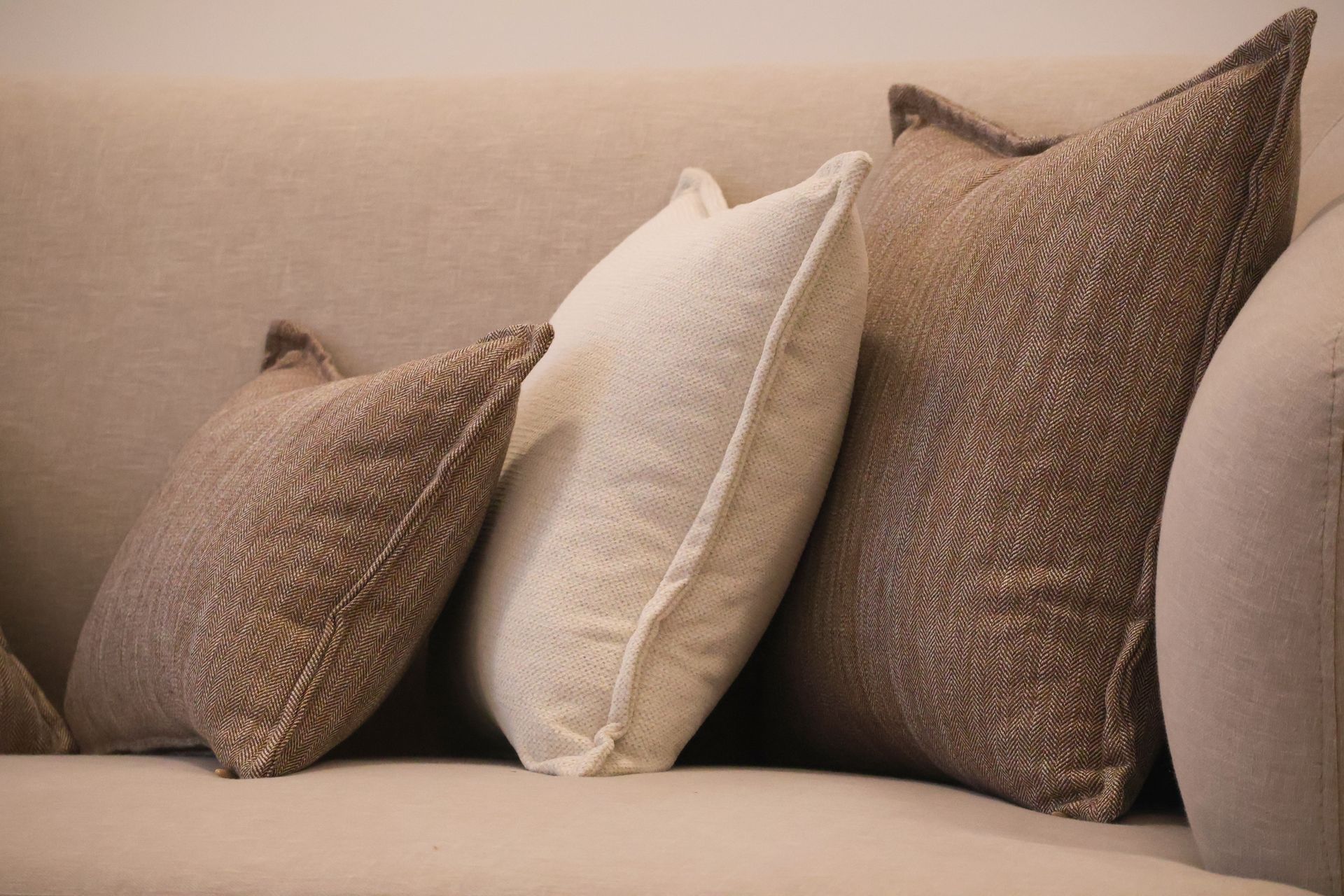
The best cushion combination ideas follow one simple formula: pick one anchor colour from the room, add one pattern that carries it, finish with one small pop, and vary the sizes so the line isn’t flat. On a 3-seater, that is usually two large squares, two medium squares and one lumbar. On a 2-seater, three cushions are enough.
Nothing here needs a carpenter or a painter. It is pure styling: you can do it this weekend with covers you already own and one or two new ones. Below is the full formula, with real sizes, fabric choices for Indian weather, and the mistakes we see most often.
The cushion combination formula: anchor, pattern, pop
Every set that looks “put together” has three roles in it. Give each cushion a job before you buy it.
- Anchor: a solid in a colour already in the room (rug, curtains, a painting). This is the biggest cushion, and it sits at the ends of the sofa.
- Pattern: a print that contains the anchor colour plus one more shade. Block print, ikat, a stripe or a check all work. This is what ties the cushions to the room.
- Pop: one small cushion in an accent colour, usually a lumbar or the smallest square, placed in the centre. One pop reads as intentional; three pops read as noise.
A quick check before you buy: hold the pattern cushion against your rug or curtains. If you can’t find the anchor colour inside the print, keep looking. That shared colour is what makes the set look designed rather than collected.
How many cushions, and in which sizes
The odd-number rule (3 or 5) exists because symmetrical pairs plus one centre piece look relaxed rather than staged. Use it as a starting point, not a law: a long L-shaped sofa often looks better with six, arranged as two mirrored groups of three.
In India, 16×16 inch and 18×18 inch are the most common square sizes, with 12×12 and 24×24 also widely sold. Lumbar (rectangular) covers are usually around 12×18 or 12×20 inches. Sizes vary by brand, so measure before you order.
A 3-seater sofa (5 cushions)
- Ends: two 18×18 (or 20×20 on a deep sofa) anchor solids.
- Next in: two 16×16 pattern cushions, set slightly in front of the anchors.
- Centre: one 12×20 lumbar in the pop colour.
A 2-seater or loveseat (3 cushions)
- One 18×18 anchor at each end, or one anchor plus one pattern if you like a looser look.
- One 16×16 or lumbar in the middle.
- Skip the 24×24 size here: on a compact sofa it eats the seat.
An L-shaped sofa (6 cushions)
Treat each arm of the L as its own small sofa. Put an anchor-pattern-pop group of three on each side and leave the corner seat with just one large cushion so people can actually sit there.
Accent chairs and diwans
One cushion per chair, a lumbar or a 16×16, usually in the pattern fabric so the chair links back to the sofa. On a diwan or a low floor seating setup, lean two 24×24 cushions against the wall as a backrest and add bolsters at the ends.
✨ Stylist’s tip
Most flat, sad-looking cushions have an insert that’s the same size as the cover. The widely used rule is to buy the filler about 1–2 inches bigger than the cover (an 18-inch filler in a 16-inch cover). It fills the corners and makes an inexpensive cover look plump. Do this before you spend money on new covers. It’s often the whole fix.
Cushion colour combinations that work with your sofa
Start from the sofa, because it is the biggest block of colour your cushions sit against. If you’re still choosing the sofa itself, our guide to sofa colour combinations for Indian living rooms covers the bigger picture.
- Beige, cream or oatmeal sofa: rust + mustard + ivory, or olive + sage + one terracotta pop. Neutrals let you change the whole mood just by swapping covers.
- Grey sofa: warm it up rather than adding more grey. Try blush, dusty pink or ochre with a charcoal-and-white pattern to connect them.
- Navy or teal sofa: mustard, rust and off-white; a blue-and-white block print as the pattern cushion.
- Brown or tan leather: cream, deep green and a textured knit or jute-blend. Avoid shiny satin covers, which slide off leather.
- A patterned or bold sofa: keep cushions solid and pull one colour from the sofa’s own print.
Match or contrast? Match (tone-on-tone) when the room is already busy, with a printed rug, patterned curtains or a gallery of art. Contrast when the room is mostly plain, and the cushions are your chance to add character. Look at your living room curtains too: repeating the curtain colour in one cushion is the quickest way to make the room look finished.
Mix textures, not just colours
Two cushions in the same colour but different fabrics look richer than two different colours in the same fabric. Aim for at least two textures in every set:
- Cotton and linen: breathable and easy to wash, so they are the everyday base for most Indian homes, especially through a long summer.
- Velvet: the most “luxe” look, and great as the anchor in cooler months. It does show dust and pressing marks, so it suits adult-only sofas better than family ones.
- Handloom, khadi and slub textures: add depth without adding pattern. Good if you want a calm, neutral set.
- Knit, boucle or chenille: soft and cosy. Use one as the pop for winter.
- Jute blends and embroidery: a single cushion adds a handmade, textured note. Check it isn’t scratchy on bare arms first.
Indian prints that make easy cushion combinations 🪔
Indian textiles are made for mixing because many of them are built on a small set of colours. A few that work well as the “pattern” cushion:
- Block print (Sanganeri, Bagru, dabu): small repeating motifs that read as texture from across the room. Pair with solids in the print’s darkest colour.
- Ikat: a stronger, blurred pattern, so use just one ikat cushion and keep the rest solid.
- Kantha and embroidery: lovely as the single statement piece in the centre.
- Stripes and checks (handloom, madras-style): the easiest “second pattern”. A stripe sits happily next to almost any floral or block print.
The two-pattern rule: if you use two prints, vary the scale. Pair one large motif with one small, or a busy print with a simple stripe. Two medium-scale florals side by side will fight. For more on making a smaller room hold all this without feeling crowded, see our small living room ideas.
How to arrange cushions on a sofa, step by step
- 1. Clear the sofa completely. Start from zero, not from what’s already there.
- 2. Place the two biggest anchors at the ends, upright, leaning into the arms.
- 3. Layer the medium pattern cushions in front, slightly overlapping the anchors.
- 4. Add the lumbar or small pop in the centre. On a 3-seater, it sits on the middle seat; on a 2-seater, at the join.
- 5. The “karate chop” is optional. A dent in the top looks styled on feather-filled cushions but just looks squashed on polyester fibre. Fluff and leave fibre cushions round.
- 6. Sit on it. If you have to move three cushions to sit down, there are too many. Remove one.
If you’d rather someone else chose the covers, sizes and sofa colours together, that’s exactly what our interior styling & decor services do, with no renovation involved.
Seasonal swaps: one set of fillers, two sets of covers
Keep good fillers year-round and change only the covers. It is the cheapest seasonal refresh there is.
- Summer and monsoon: cotton, linen and handloom in lighter shades: whites, sage, sky blue, soft yellow. These are easy to wash when humidity makes everything feel a bit damp.
- Festive season and winter: velvet, silk-blends and embroidered covers in deeper jewel and spice tones: rust, emerald, maroon, mustard.
- Store off-season covers clean and fully dry, in a breathable cotton bag rather than sealed plastic, so they don’t smell musty in the humid months.
Looking for covers and fillers we’d actually use? Our curated decor recommendations list is a good place to start.
Bed cushions: a simple layout
Beds follow the same anchor-pattern-pop logic, just laid back. On a queen or king bed: two sleeping pillows flat at the back, two large square cushions (18×18 or 24×24) leaning against them, then one lumbar or small square in front. Four to five pieces in total is plenty. Any more and it all ends up on the floor every night.
Common mistakes to avoid
- Everything the same size. Five 16×16 cushions in a row look like a waiting room. Mix at least two sizes.
- Too many cushions. If the sofa loses a seat to cushions, cut back.
- Three or more busy prints. One or two patterns, never more, and at different scales.
- Ignoring the rug and curtains. A set chosen in the shop, away from the room, rarely matches at home. Take a photo of your rug and curtains with you.
- Dry-clean-only covers in a home with kids or pets. Check the care label before you buy. Removable, machine-washable covers will save you a lot of stress.
- Flat fillers. See the tip above: a filler that’s too small makes any cover look cheap.
FAQs
How many cushions should go on a 3-seater sofa?
Usually five: two large anchors at the ends, two medium pattern cushions in front of them, and one lumbar in the centre. If your sofa is shallow or you actually lounge on it, three can be better. The test is simple: everyone should be able to sit down without moving cushions out of the way.
What size cushion is best for a sofa in India?
16×16 and 18×18 inches are the most common sizes and suit most sofas. Use 18×18 or 20×20 for the back corners of a deep 3-seater, 16×16 for a 2-seater or accent chair, and a 12×18 or 12×20 lumbar for the centre. Always check the cover and filler measurements, because brands size them differently.
Should cushions match the sofa or the curtains?
Neither exactly. Cushions should contrast with the sofa so they stand out, and repeat a colour from the curtains, rug or art so they connect to the room. The easiest method is to choose one pattern cushion that contains both the sofa’s tone and the curtain colour, then build solids around it.
Can I mix velvet and cotton cushions?
Yes, and you should. Mixing a smooth velvet anchor with a matte cotton or linen print is what gives a set depth. Keep the colours related so the change in texture does the work. In very hot months, many people swap the velvet covers for cotton and bring them back in winter.
Want your sofa and living room styled — without renovation?
Book a free 15-minute demo call with Styora Decors. Zero obligations — we’ll understand your space and recommend the right plan.
Follow us for more styling ideas on Instagram and YouTube.