
By Styora Decors | Interior Styling & Decor | 8 min read
You love the brass diya your grandmother gave you and the handloom you picked up in Jaipur — but every time you bring them into your modern flat, the room starts to feel like a museum or a festival stall.
Traditional interior design in an Indian home doesn’t have to mean heavy carved furniture, dark wood everywhere and every surface covered. The version that works in today’s apartments is indo-modern: a calm, modern base with a few traditional Indian pieces chosen well and given room to breathe — brass, carved wood, handloom, folk art and terracotta.
Almost all of it is styling. You won’t need a renovation, a false ceiling or new built-ins to get this look. Styora Decors is a home styling studio, not a construction firm, so these are the ideas we use with what you already own plus a few considered buys. Where one genuinely needs a carpenter, we’ll say so.
What traditional Indian interior design looks like today
Older traditional homes were built around craft: carved doors, wooden columns, inlay work, courtyards and deep colour. Most of us now live in flats with white walls, low ceilings and builder-grade flooring, so copying that look piece for piece rarely works. Instead, borrow its spirit:
- Natural materials. Wood, brass, copper, cane, jute, cotton and terracotta, rather than glossy laminates and plastic.
- Handmade over mass-made. Block prints, handlooms, hand-painted art and hand-beaten metal carry the warmth that makes a room feel Indian.
- Warm colour. A soft neutral base with deep jewel or earth accents: indigo, marigold, rust, emerald, maroon.
- Stories. An heirloom trunk, a wedding thali or a carved stool from your nani’s house says more than anything new.
The modern half of indo-modern is about restraint: clean-lined furniture, open floor and fewer pieces given more space. That balance is what separates a stylish traditional home from a cluttered one.
Start with a restrained base
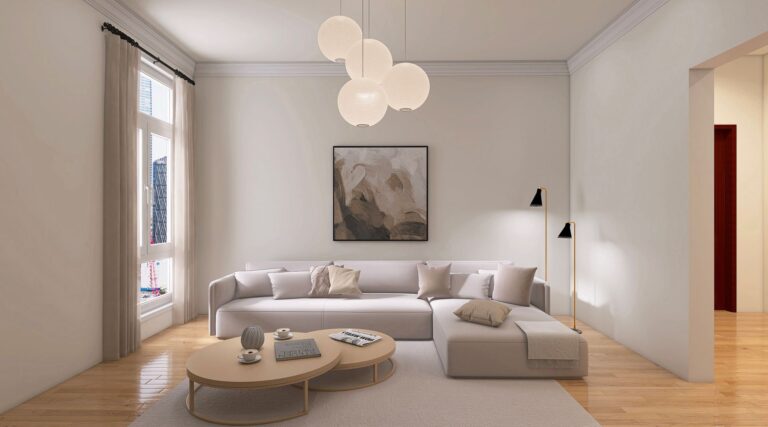
Before you add a single brass piece, get the background right. Traditional Indian home decor is rich in pattern and detail, and it only shines against a quiet canvas.
- Walls: warm white, ivory, sand or a soft terracotta. If you’d like a deeper wall, choose one — behind the sofa or bed — and paint only that. (Painting needs a painter; everything else here is pure styling.)
- Furniture: simple shapes in wood or neutral fabric. A plain three-seater sofa works better here than an ornate one, because the traditional character will come from what you layer on it.
- Palette: pick one or two jewel accents and repeat them in cushions, a rug and one piece of art. Indigo with rust, or emerald with marigold, are combinations Indian homes carry beautifully.
If you’re unsure which direction suits you, our guide to different interior design styles shows how a traditional look sits next to Japandi, boho or modern luxury — and how easily they blend.
Traditional home decor ideas that suit modern flats
1. Brass, used in groups 🪔
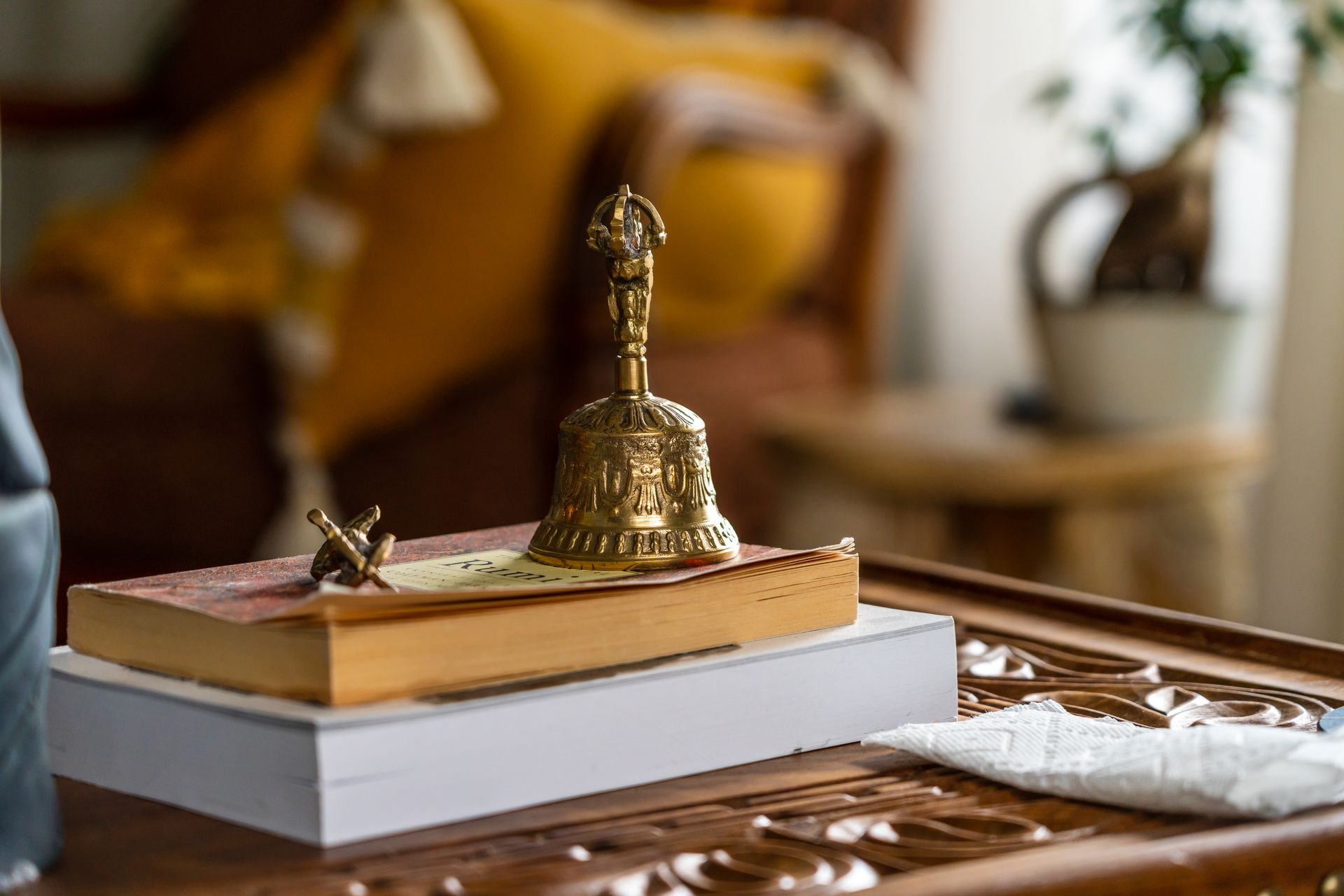
Brass is the quickest way to add a traditional note. An urli filled with water and floating flowers in the foyer, a pair of brass diyas on the console, temple bells hung in a corner, or a cluster of three brass vessels in different heights on a sideboard. Group them in odd numbers and keep them together rather than dotting single pieces around every room.
2. Carved wood and jaali as a free-standing screen
A carved wooden jaali panel brings in the craft of older homes without any installation. Use it as a free-standing screen to separate the dining area from the living room, or lean a large panel behind a plant to make a backdrop. Free-standing means no drilling and nothing to remove when you move.
3. Handloom and block-print textiles
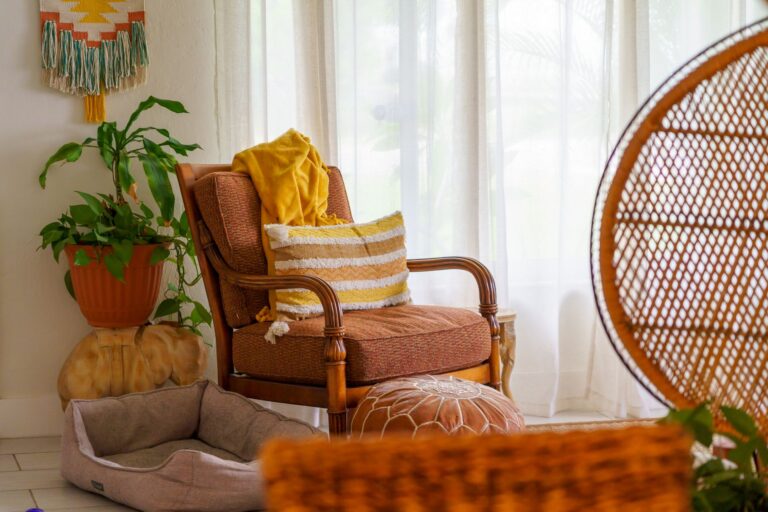
Textiles do most of the work in an indo-modern room. Try ikat or block-print cushion covers, a handloom throw over the sofa arm, kalamkari or dabu-printed bedcovers, and cotton curtains in a solid colour from your palette. Mix one bold pattern with two quieter ones so the eye has somewhere to rest.
4. Dhurries and jute rugs
A flat-woven cotton dhurrie or a jute rug grounds a seating area and suits Indian floors and dust. They’re also easy to wash or shake out, which matters in monsoon months. Size it so the front legs of the sofa and chairs sit on it.
5. Folk art: Pichwai, Madhubani, Warli, Gond
Indian folk art gives a modern wall instant character. A single large Pichwai above the sofa, or a pair of Madhubani paintings above a console, does far more than a crowded gallery. For framing, sizing and hanging choices, see our guide on what you can hang on a wall.
6. Terracotta and clay
Terracotta planters, clay lamps and hand-thrown pots add earthy warmth to a balcony, windowsill or bookshelf. Pair them with green plants and they bring a village-courtyard feel to a high-rise flat.
7. A jhoola, if your ceiling allows it
A wooden or cane swing is the dream traditional piece for many families. Be honest about what it needs: a hanging jhoola must be fixed to a proper ceiling hook by a carpenter who has checked the slab. If that isn’t possible, a free-standing swing with its own frame gives the same feel with no fixing at all.
✨ Stylist’s tip
Choose one “hero” traditional piece per room and build around it. If the hero is a large Pichwai, keep the brass small and the textiles quieter. If it’s a carved wooden trunk, let the wall above stay simple. When every piece competes for attention, even beautiful craft starts to look like a shop display.
Mixing heirlooms with modern furniture
Most Indian homes have a few inherited pieces: a teak chest, an old brass lota, a grandparent’s easy chair, silver or copper vessels. These are what make traditional Indian interior design feel personal, so don’t hide them in a storeroom.
- Give them a spotlight. Put the heirloom where it’s seen first — in the foyer, beside the sofa or at the foot of the bed — with nothing crowded around it.
- Pair old with clean. A carved chest works beautifully as a coffee table in front of a plain modern sofa. The contrast is the point.
- Repeat the material. If your heirloom is dark teak, echo that wood once more in the room, perhaps a picture frame or a side table, so it looks intentional.
- Refresh, don’t replace. Re-upholster an old chair in a handloom fabric and it fits a modern room immediately.
This is exactly the kind of mixing we do on styling calls — working with what a family already owns rather than starting from scratch. You can see how our interior styling & decor services work, from moodboards to a ready-to-buy shopping list.
The mandir corner and festive layering
In many homes the mandir is the heart of the traditional look. Even a compact wall-mounted mandir or a corner shelf can carry brass, a small rangoli plate and fresh flowers. For layouts and materials, see our pooja room design ideas. Many families also follow vastu traditions for the mandir’s placement — that’s a personal choice, and the styling works either way.
Indo-modern rooms are also the easiest to dress up for festivals. Because the base is calm, adding marigold torans, extra diyas and an urli with flowers looks celebratory rather than chaotic. Our Diwali decoration ideas for home build on exactly this kind of layered, festive styling.
Room by room: a traditional touch in every space
- Living room: a dhurrie, block-print cushions, one large folk-art painting and a brass cluster on the console.
- Bedroom: a handloom or kantha bedcover, carved wooden bedside tables or stools, and brass or terracotta lamps with warm bulbs.
- Dining: cotton table runners, brass or copper serving bowls on display, and cane-back chairs.
- Foyer: an urli with flowers, a small brass bell and a mirror in a carved wooden frame.
- Balcony: terracotta planters, a cane chair or floor cushions and a string of warm lights.
Common mistakes to avoid
- Too much at once. Brass, carvings, folk art and bold prints all in one room turns traditional into a souvenir shop. Edit hard.
- Heavy furniture in small rooms. Large carved sofas swallow a compact living room. Keep furniture lighter and let decor carry the tradition.
- Ignoring care. Brass tarnishes and wood needs dusting. Display what you’re happy to look after, especially in humid cities.
- Mixing too many palettes. Rajasthani pinks, Kerala golds and tribal earth tones together rarely sit well. Pick one colour story.
- No modern counterweight. Without clean surfaces and some empty space, the room loses the “modern twist” that makes it feel fresh.
How much does a traditional look cost?
You can usually get there with what you own plus a handful of textiles, a rug, one artwork and some brass, and the budget is entirely yours. If you’d like a stylist to plan it, our home styling plans are a design fee only: Foundation from ₹10,000, Curated from ₹20,000 (our most popular) and Bespoke from ₹35,000 for in-person styling. Most homes come together in 2–4 weeks, with no construction involved.
FAQs
What is traditional interior design in India?
It’s a style built on Indian craft and natural materials: carved wood, brass and copper, handloom and block-print textiles, folk art such as Pichwai or Madhubani, terracotta and warm, rich colours. In modern flats it’s usually done as indo-modern — a calm, contemporary base with a few traditional pieces given room to stand out.
How do I make my modern home look traditional without renovation?
Use decor rather than construction. Add a dhurrie or jute rug, handloom cushions and throws, a large piece of folk art, a brass urli or diyas, and a carved wooden screen or trunk. Keep the walls and furniture simple so these pieces stand out. Only a ceiling-hung jhoola or new paint would need a tradesperson.
Can traditional and modern decor be mixed?
Yes, and that’s what makes most Indian homes look their best today. Keep the bigger pieces, such as the sofa, bed and dining table, clean-lined and modern, then bring in tradition through textiles, brass, wood accents and art. Choose one hero piece per room and repeat its material or colour once more.
Which colours suit traditional Indian home decor?
Start with warm neutrals like ivory, sand or soft terracotta on the walls. Then add one or two deep accents — indigo, rust, marigold, emerald or maroon — through cushions, rugs and art. Brass and natural wood tie these colours together, so the room feels rich without looking loud.
Want an indo-modern home — without renovation?
Book a free 15-minute demo call with Styora Decors. Zero obligations — we’ll understand your space and recommend the right plan.
Follow @styoradecors on Instagram and Styora Decors on YouTube for styling reels and room makeovers for Indian homes.