
By Styora Decors | Interior Styling & Decor | 7 min read
Every year brings a new list of “must-have” looks. The real question is which ones will still feel right in your home three years from now.
Home decor trends 2026, as they play out in Indian homes, share one idea: rooms that feel calm, warm and made by hand rather than bought as a set. That means soft whites and warm neutrals instead of cool grey, rounded furniture, textured fabrics, handloom and block print, earthy terracotta tones, and lighting that does the job art used to do. None of this needs renovation. Every trend below can be brought in with things you place, swap or hang, and we’ll tell you which ones are worth it, which are fading, and how to test each one before you spend.
A note on how we got here: the big colour forecasts for this year point the same way. Pantone’s Colour of the Year 2026 is Cloud Dancer (PANTONE 11-4201), a white, and Asian Paints named Moonlit Silk its Colour of the Year 2026 in its ColourNext forecast. The rest of this list is what we see working when we style real Indian apartments. For the long-running shifts behind these, read our guide to interior design trends.
1. Soft whites and warm neutrals replace cool grey
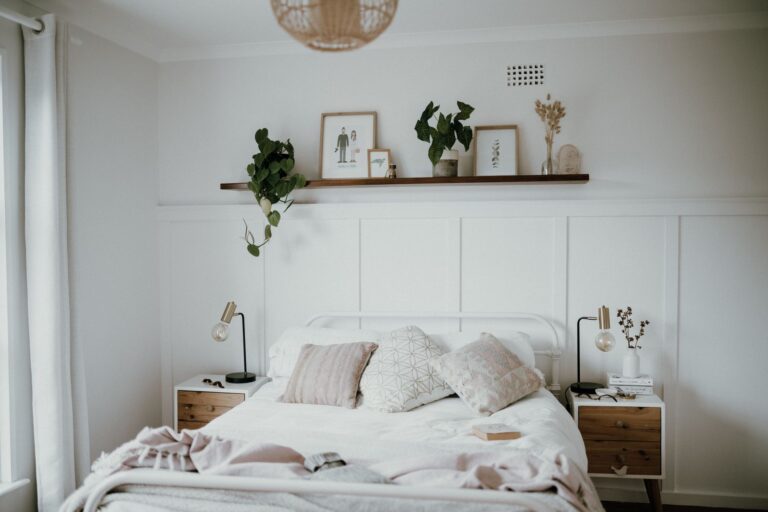
The all-grey living room of the last decade is giving way to creamy whites, oatmeal, sand, greige with a warm base, and muted clay. Pantone choosing a white for 2026 is a strong signal: the mood is quiet and light, not stark.
Why it suits India: cool greys can look flat and dull under the warm-white LED bulbs many Indian homes switch to in the evening. Warm neutrals hold up under both harsh afternoon sun and yellow evening light.
How to get it without painting: switch cushion covers, throws and curtains to warm off-whites and sand tones, and add one natural-fibre piece (jute rug, cane basket). If you are repainting anyway, ask for a physical shade card and look at it on your own wall at 8 pm, not in the shop. A white that looks clean under shop tube lights can turn yellow or blue at home.
2. Curves everywhere: rounded furniture and arches
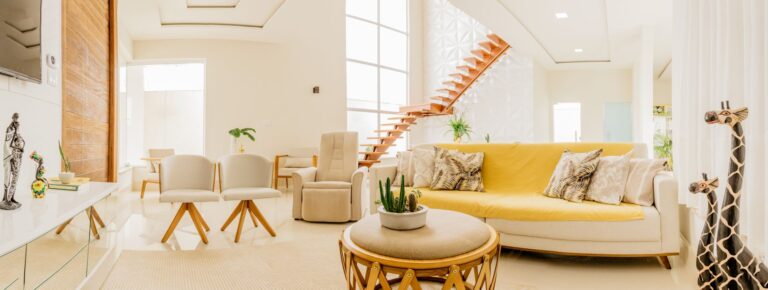
Curved sofas, round or oval coffee tables, arched mirrors and rounded side tables keep growing in popularity. They soften the hard lines of a typical Indian flat, where almost everything (walls, doors, wardrobes, the TV unit) is a rectangle.
- Easy entry: an arched floor mirror leaning against the wall (no drilling, renter-friendly) or a round side table beside the sofa.
- Mid-level: swap a square coffee table for a round or oval one. In a compact living room it also makes walking around easier, with no corners to knock your knee on.
- Skip: a curved sofa in a narrow room. Curved sofas need floor space around them and usually do not sit flush against a wall, so they eat more of a small hall than a straight sofa of the same seat count.
3. Texture you can feel: bouclé, linen, jute and cane
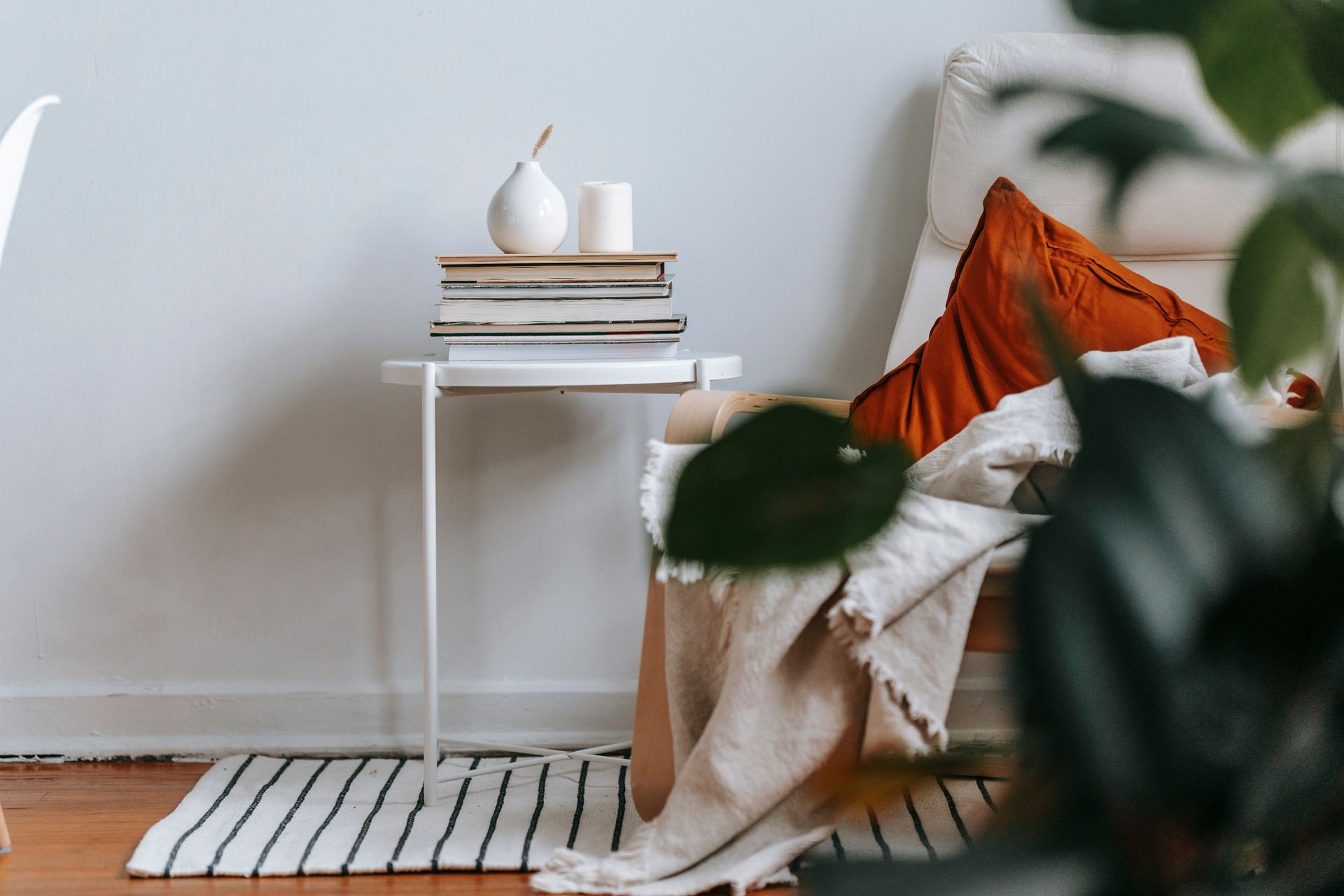
Texture is replacing pattern as the main way to add interest. Think nubby bouclé-style cushions, slubby linen-look curtains, chunky jute rugs, cane and rattan furniture, and ribbed or fluted ceramics.
The Indian reality check: bouclé and other looped fabrics catch dust and pet hair, and they get heavy and warm in humid months. Use them on cushions and a single accent chair, not on the main sofa you sit on every day. Cotton and linen blends breathe better through summer and monsoon. Cane is a natural fit for Indian homes, but keep it out of direct rain on balconies.
4. Handloom, block print and Indian craft as the hero
This is the trend Indian homes do better than anyone. Handwoven dhurries, block-printed bedcovers, kantha throws, brass and terracotta pieces: people want rooms that look collected over time, not ordered from one catalogue. The global taste for hand-made decor is a chance to use what is already in our markets and our mothers’ cupboards.
How to style it so it looks modern, not cluttered: choose one craft as the star of each room. A block-printed bedcover with plain cushions works. A block-printed bedcover with printed cushions, a printed rug and printed curtains becomes noise. Keep the rest solid and let the handwork carry the room.
If you’d rather have someone curate this for you, our interior styling and decor services do exactly that: we work with what you own and shop the gaps.
5. Earthy colour: terracotta, rust, olive and deep brown
Alongside the soft whites, warm earth colours are the accent of choice: terracotta, rust, ochre, olive, chocolate brown. Pinterest’s 2026 predictions also leaned retro, with a revival of Art Deco styling it called Neo Deco, and that retro mood pairs naturally with these deeper tones.
- Use earth tones in the 60-30-10 way: 60% soft neutral (walls, big furniture), 30% a secondary tone (rug, curtains), 10% the strong earth colour (cushions, a vase, one print).
- Terracotta and olive look richest against warm white. Against cool grey they can look muddy.
- Not sure what goes with what? Our guide to colour combinations for home has tested pairings room by room.
6. Lighting becomes the statement piece
Many homes are now treating a sculptural pendant, a paper or rattan shade, or a striking floor lamp as the room’s focal point, where a big painting used to be. Layered lighting (a ceiling light, plus lamps at sitting height, plus a small accent light) is what makes a room feel finished at night.
What to check at home: count the light sources in your living room after sunset. If it is only the ceiling fixture, that one change matters more than any trend on this list. Warm-white bulbs (look for around 2700K to 3000K on the box) give the cosy glow these looks depend on. A plug-in floor lamp needs no electrician. A new ceiling pendant does, so plan for that. Our home lighting design guide explains how to layer it.
7. Biophilic design: plants, natural materials, daylight
Biophilic design simply means bringing nature in: real plants, wood, stone, cane, linen, and keeping windows clear for daylight. It has moved from a buzzword to a default.
- Group plants in odd numbers at different heights rather than dotting single pots around the room.
- Pick plants for your actual light. A north-facing flat in Delhi is not a sunny Bengaluru balcony, and a dying plant is worse décor than no plant.
- Swap heavy curtains for sheer layers in the day so the room gets more light, and keep blackout curtains for the bedroom.
What’s fading in 2026
- All-grey everything: cool grey walls, grey sofa, grey rug. It reads cold and dated.
- Matching furniture sets: the sofa, coffee table and TV unit all from one collection. Mixed but related pieces look more personal.
- Crowded shelves of small showpieces: fewer, larger pieces look calmer and are easier to dust.
- Faux-everything: plastic “cane”, printed “wood”, artificial plants that gather dust. Real materials, even in small doses, look better.
This does not mean you need to throw out a grey sofa. Warm it up with rust, olive or cream cushions, a jute rug and a warm-white lamp, and it fits right into 2026.
✨ Stylist’s tip
Before you buy anything trendy, take a photo of the room in black and white on your phone. Colour hides problems; greyscale shows them. If the room looks flat in black and white, what it needs is contrast in light, dark and texture, not a fashionable new colour. Fix that first and almost any trend will sit well on top of it.
Common mistakes to avoid
- Doing every trend at once. Pick two that suit your home and your taste. Seven trends in one room is a showroom, not a home.
- Buying trendy big pieces first. Put trends into small, cheap-to-change items (cushions, throws, lamps, vases). Keep sofas, beds and wardrobes classic.
- Ignoring maintenance. Light linen in a home with toddlers or pets, or bouclé in a dusty ground-floor flat, will look tired within months.
- Copying a photo without matching the light. Most trend photos are shot in bright daylight. Check how a colour or fabric looks in your room at night.
- Forgetting your style. Trends should sit on top of a style you love. Our breakdown of different interior design styles helps you name yours first.
FAQs
What are the biggest home decor trends for 2026?
Soft whites and warm neutrals, curved furniture, rich texture (linen, jute, cane, bouclé), handloom and block-print craft, earthy accents like terracotta and olive, statement lighting, and biophilic design with real plants and natural materials. The common thread is calm, warm rooms that look collected over time rather than bought as one matching set.
Is grey still in style for homes in 2026?
Cool, all-over grey is fading. Warm greige and soft whites have taken its place. If you already have grey walls or a grey sofa, you don’t need to replace them. Warm the room with rust, olive or cream textiles, wood or cane accents, and warm-white lighting, and the grey becomes a neutral base instead of the whole look.
How can I follow 2026 decor trends on a budget?
Put trends into small, easy-to-change pieces: cushion covers, a throw, a jute rug, a lamp, a few plants, one handloom or block-print textile. These cost a fraction of furniture and can be swapped when tastes change. Keep the big, expensive pieces simple and timeless so they outlast any single year’s trends.
Do I need an interior designer to update my home for 2026?
Not for these trends. All of them come from styling: colour, textiles, lighting, plants and placement, with no construction or carpentry. A home stylist can help you choose what suits your space and budget. You can see how our plans work on the home styling pricing page.
Want the 2026 look in your home, without renovating?
Book a free 15-minute demo call with Styora Decors. Zero obligations. We’ll understand your space and recommend the right plan.
Follow us for real home makeovers: Instagram · YouTube