
By Styora Decors | Interior Styling & Decor | 8 min read
You save every calm, pared-back Japandi room you find online — then look up at a shoe rack by the door, dust on every surface and a family that actually lives here.
Japandi interior design blends two quiet traditions: Japanese minimalism and Scandinavian cosiness. Think low furniture, light wood, natural textures, a soft neutral palette and very little on display. It’s also one of the easiest looks to bring into an Indian home without renovation, because it depends on what you choose, where you place it and what you take away — not on breaking walls or building cabinets.
We’re Styora Decors, a home styling studio, so this guide works with the flat you already have: the dust, the monsoon, the relatives who drop in, all of it.
What is Japandi interior design?
The name is simply Japan plus Scandi. Japandi takes the restraint of Japanese homes and the warmth of Scandinavian ones and finds the overlap: both cultures value natural materials, good craftsmanship and rooms that feel calm rather than crowded. From Japan comes wabi-sabi, the idea that handmade, slightly imperfect things are beautiful, along with a respect for empty space. From Scandinavia comes hygge: soft textiles, warm light and furniture made to be used every day.
In practice, a Japandi interior has six signatures:
- Low, simple furniture with clean lines and softly rounded edges.
- Light and mid-toned wood, with the grain left visible.
- A muted, earthy palette of warm whites, sand, clay and stone, with charcoal or black as the accent.
- Natural textures: linen, cotton, cane, jute, paper and stoneware.
- Breathing room — fewer pieces, each with space around it.
- Soft, warm light from lamps and lanterns rather than one bright ceiling light.
Scandinavian rooms can feel a little cold in strong Indian sunlight, and strictly Japanese rooms can feel austere for a family home. Japandi sits comfortably in between, which is exactly why it travels so well to India.
The Japandi palette and materials
In a Japandi room, colour comes from materials rather than paint. Start with a quiet base on the walls and the big pieces, then layer tones you’d find in nature.
- Base: warm white, ivory, oatmeal or soft greige.
- Mid-tones: sand, clay, mushroom and muted sage.
- Accents: charcoal, ink black or deep walnut, used sparingly.
Skip stark, blue-toned whites. Under Indian daylight, especially the harsh afternoon sun in west-facing rooms, they look cold and clinical. If your walls are already a warm off-white, you don’t need to repaint at all.
Materials that do the work
Japandi relies on a handful of honest materials, and India makes nearly all of them beautifully:
- Wood: light or honey-toned mango wood, rubberwood, pine or sheesham in a natural matte finish rather than a high-gloss polish.
- Cane and rattan: Indian cane chairs, headboards and screens are a natural fit, and they look lighter than solid wood.
- Jute: flat-woven rugs and baskets bring texture underfoot and hide everyday dust better than plain cotton.
- Handloom cotton and khadi: the gentle slubs and uneven weave are pure wabi-sabi — ideal for throws, cushion covers and curtains.
- Clay and stoneware: hand-thrown vases, matte ceramic lamps and terracotta planters.
- Bamboo: traditional chik blinds filter light much like Japanese paper screens.
Many of these are in our curated list of decor finds, handpicked with Indian homes in mind.
Japandi furniture: low, simple and made to last
Japandi furniture sits lower to the ground than most Indian drawing-room sets. A low sofa, a platform bed and a low coffee table bring the eye line down, so the ceiling feels higher and the room feels calmer.
- Shapes: clean lines, gentle curves, tapered or chunky wooden legs and no ornate carving.
- Fewer, better pieces: one comfortable sofa beats a five-piece set with two chairs nobody sits in.
- Visible craft: exposed joinery, woven seats and natural wood grain.
- Hidden storage: closed cabinets and lidded baskets instead of glass showcases and open display shelves.
Indian homes already have a head start. A low baithak — a cotton dhurrie, a firm floor mattress and a few bolsters — is as Japandi as it gets, and it seats more people at a family get-together than any sofa.
You also don’t need to replace everything. Styling a room this way is mostly editing: removing a bulky side table, swapping a glass-topped centre table for a wooden one from another room, or slipcovering a busy patterned sofa in plain, washable cotton.
Japandi style in India: making it work for real life
The Japandi rooms you see online are photographed empty, spotless and child-free. Real Indian homes have dust, humidity, visiting relatives and a lot of belongings. Here’s how to adapt the look without losing its calm.
Dust
Open shelves crowded with objects are hard work in Indian cities. Limit display to one or two styled surfaces per room, keep everything else behind closed doors and choose matte finishes that are easy to wipe. Washable cotton covers beat delicate linen that needs dry-cleaning.
Family life
Choose textured fabrics that forgive marks, rounded corners if you have toddlers or elderly parents, and seating that stretches for guests. A basket of floor cushions can come out when relatives visit and disappear again afterwards.
Colour
Many Indian families love colour, and Japandi doesn’t have to mean beige on beige. Bring in earthy Indian tones — indigo, rust, mustard or olive — through a block-printed cushion, an ikat throw or a kantha quilt. Keep them muted rather than bright, and limit them to two or three accents per room.
Monsoon and humidity
Cane, jute and bamboo can develop mould in damp months. Keep them away from walls that seep, let air circulate around them and wipe them with a dry cloth. Cotton and linen breathe far better than synthetics in humid weather.
Room-by-room Japandi ideas
Japandi living room
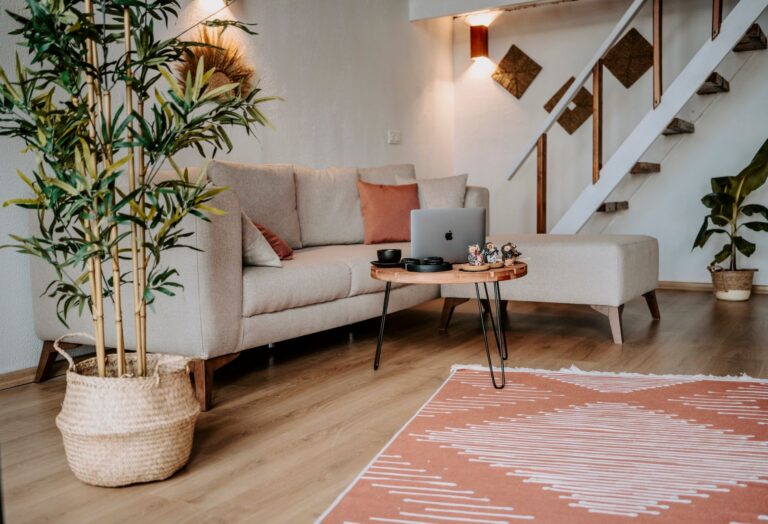
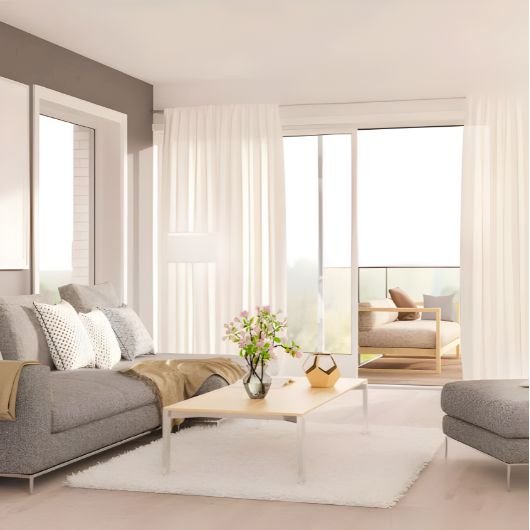
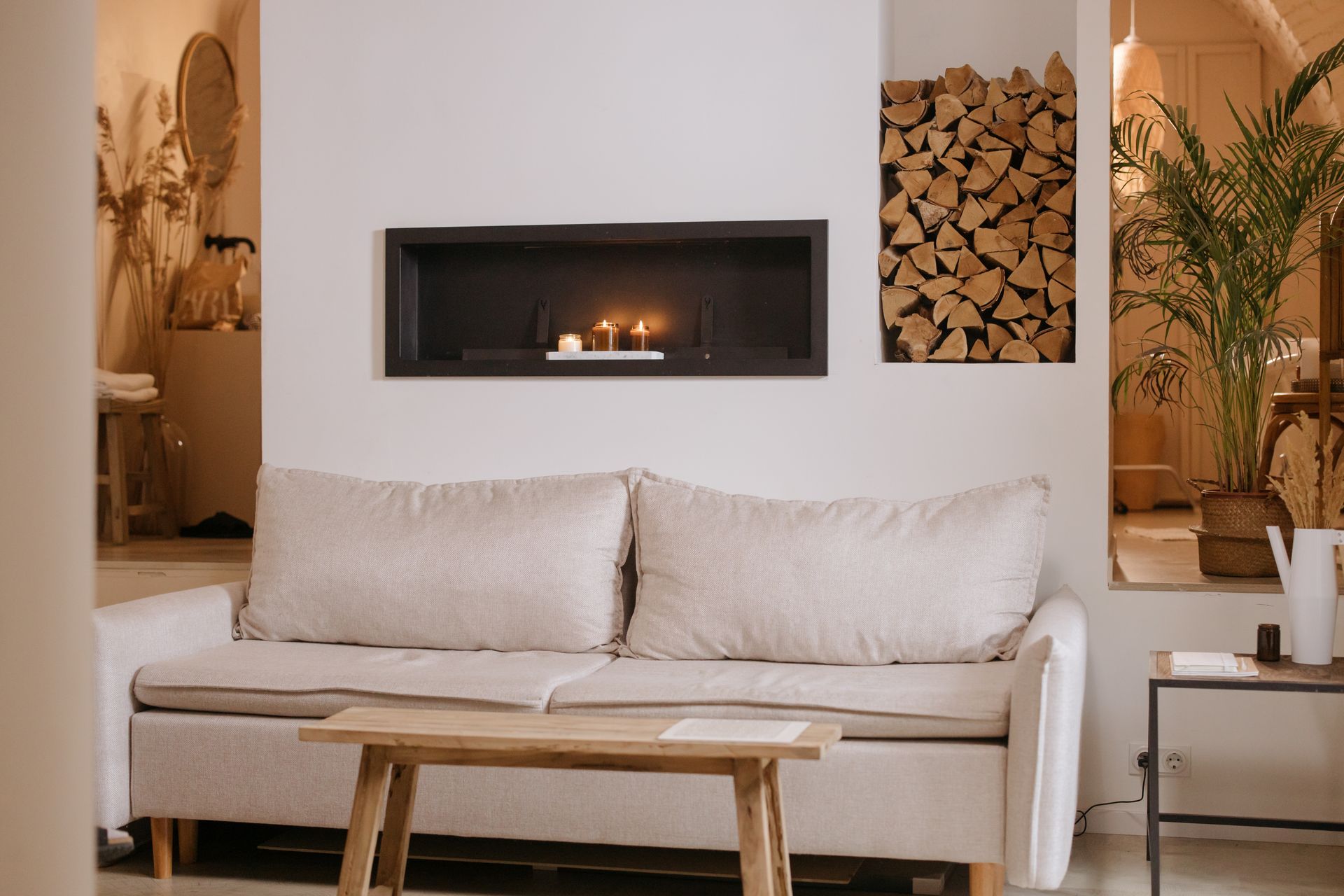
- A low sofa in oatmeal or stone, with two or three textured cushions rather than seven.
- A jute or flat-woven cotton rug big enough for the sofa’s front legs to rest on it.
- A solid wood coffee table styled with three things only: a short stack of books, a stoneware vase with a single branch and a small tray.
- A floor lamp with a linen or paper shade in one corner for warm evening light.
- One large artwork in muted tones instead of a busy gallery wall.
Japandi bedroom
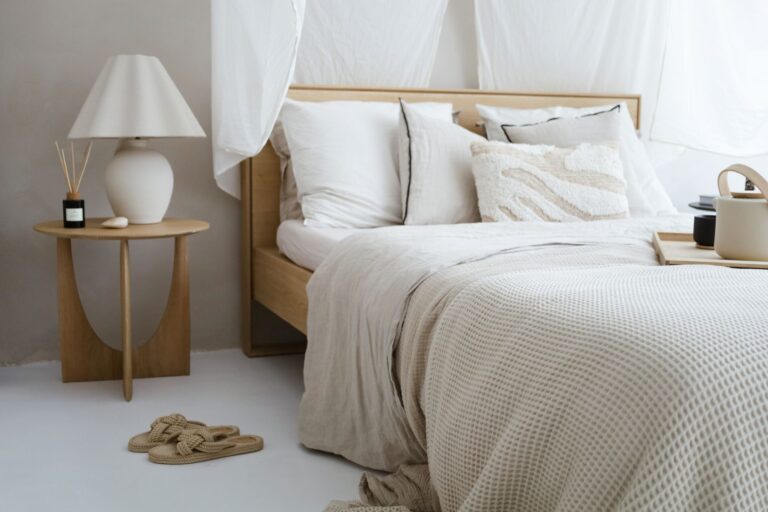
- A low platform bed or a cane headboard against a plain wall.
- Layered bedding in white, sand and clay — cotton or linen sheets with a textured throw at the foot of the bed.
- Matching bedside lamps with warm bulbs and fabric shades.
- Clothes, chargers and bags out of sight, with a lidded basket for the day’s clutter.
For the bedding formula and bedside styling in more detail, see our master bedroom design ideas.
Dining area and entrance
A round or oval wooden dining table with cane-backed chairs softens a compact dining area. At the entrance, a slim wooden shoe cabinet with closed doors, a ceramic bowl for keys and one framed print keep the first impression calm, even with the whole family’s footwear inside.
The mandir corner
A Japandi-leaning pooja corner is beautifully simple: a light wood shelf or low stand, a brass diya, fresh flowers in a small clay pot and nothing else. The quiet of the style suits a prayer space naturally.
✨ Stylist’s tip
Give every Japandi room one dark anchor — a charcoal cushion, a black-framed print, a walnut tray or an ink-black vase. An all-beige room looks flat and washed out in strong Indian daylight. A single deep accent gives the eye somewhere to rest and makes the pale tones look deliberate rather than unfinished.
Most of a Japandi look is styling rather than construction: the palette, the edit, the textiles and the placement. That’s the work we do at Styora Decors — if you’re wondering how it differs from hiring a designer, here’s interior styling vs interior design, explained.
Common mistakes to avoid
- Confusing empty with Japandi. A bare room feels cold. The look needs texture — wood grain, woven rugs, slubby cotton — to feel warm.
- Too many wood tones. Stick to two or three that relate to each other. Five different woods in one room look accidental.
- Cool white light. A single tube light washes out every natural material. Use warm bulbs and lamps instead.
- Buying a matching set. Everything from one catalogue kills the handmade, collected feel. Mix old pieces with new.
- Forgetting storage. A minimal room only stays minimal if everything has a closed home.
FAQs
What is the difference between Japandi and Scandinavian style?
Scandinavian interiors tend to be brighter and airier, with white walls, pale woods and cosy layers. Japandi keeps that warmth but adds Japanese restraint: lower furniture, darker accents such as charcoal or walnut, more empty space and a love of handmade, imperfect pieces. It usually feels more grounded and earthy, which suits the strong light in most Indian homes.
Is Japandi interior design expensive?
It doesn’t have to be. Japandi is built on fewer pieces, so your budget goes into a handful of good ones rather than many average ones. Indian cane, jute, handloom cotton and terracotta are affordable and often nicer than imported look-alikes. Start by editing what you own: clearing clutter and swapping cool bulbs for warm ones costs almost nothing.
Can I do Japandi in a small flat?
Yes — it’s one of the best styles for small homes. Low furniture keeps sight lines open, a light palette makes rooms feel larger and closed storage hides everyday clutter. Choose pieces that do two jobs, such as a storage bench at the entrance, and keep just one or two styled surfaces per room so the space never feels crowded.
Does Japandi work with Indian festivals?
Very well. A calm, neutral base makes festive decor stand out: marigold torans, brass diyas and rangoli look even richer against warm white walls and natural wood. Keep one basket for festive pieces so the room slips back to its quiet everyday look afterwards, and let brass and fresh flowers do the celebrating.
Want a calm Japandi home — without renovation?
Book a free 15-minute demo call with Styora Decors. Zero obligations — we’ll understand your space and recommend the right plan.
Follow @styoradecors on Instagram and Styora Decors on YouTube for styling reels, room makeovers and calm, liveable ideas for Indian homes.