
By Styora Decors | Interior Styling & Decor | 7 min read
Most dining tables live one of two lives: buried under fruit, post and chargers, or so bare they look like a showroom. Neither feels like the heart of the home.
Good dining table decor does two jobs at once: it makes the table look finished on an ordinary weekday, and it clears away in seconds when dinner is served. In many Indian homes the dining table is also the homework desk, the laptop spot and the place where the day’s post lands, so the styling has to be practical as well as pretty.
Everything below is pure styling — no renovation, no carpentry — built on the formula we use at Styora Decors: one base layer that stays, and a top layer you swap for everyday meals, guests and festivals.
Dining table decor ideas for every day, for guests and for festivals
Before buying anything, decide what the table needs to do most days. A family that eats every meal there needs a different set-up from a couple who mostly use it at weekends. Think of your dining table styling in three modes:
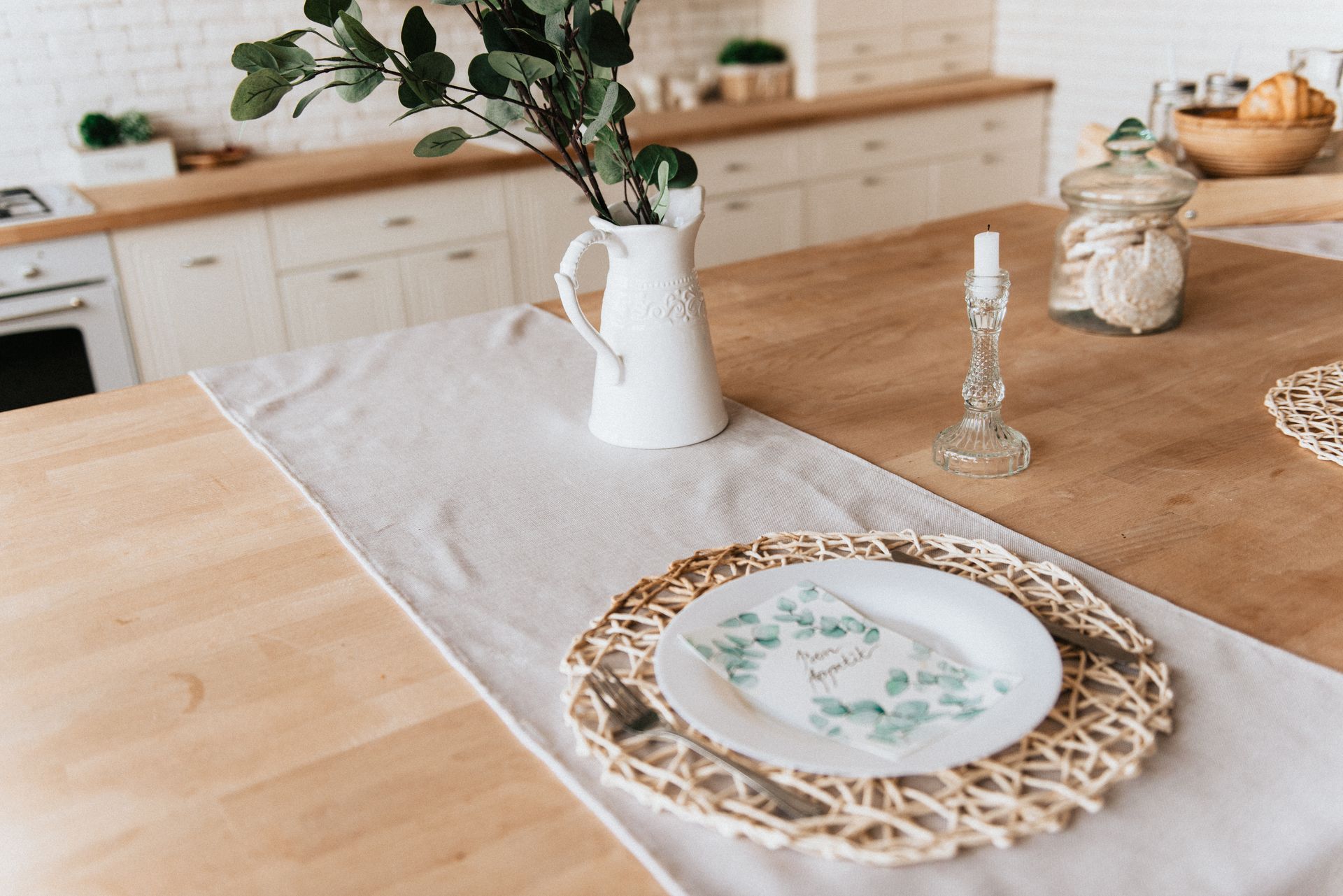
- Everyday: a runner or placemats, one low centrepiece on a tray and nothing else. It should survive homework, breakfast and a quick wipe-down.
- Hosting: the everyday base plus proper table linen, cloth napkins, serving bowls and softer light. The centrepiece gets lower, or moves to the sideboard to make room for food.
- Festive: the hosting set-up plus seasonal colour — marigolds, brass, diyas or dried grasses — for a few days at a time.
The base layer stays put all year. Only the top layer changes, which keeps the table easy to maintain and your storage cupboard small.
The dining table centrepiece formula
A good centrepiece looks effortless, but it follows a few simple rules. Get these right and almost anything — a fruit bowl, a vase, a pair of candles — can work.
Keep it low, or tall and slim
People should be able to see and talk across the table. Keep arrangements below chin height when seated, roughly 30 cm, or go tall and very slim — a single branch in a narrow bottle vase — so the eye passes around it. Avoid anything wide and bushy at face level.
Work in odd numbers and varied heights
Groups of three look natural; pairs look stiff unless the table is very formal. Combine one taller piece, one medium and one low — say, a stoneware vase with a few stems, a candle on a stand and a small bowl of seasonal fruit.
Contain it with a tray or a runner
A wooden, cane or brass tray turns loose objects into one composed arrangement. A runner does the same along a long table, giving the eye a line to follow. Either let the runner stop well short of the table’s ends or let it hang over each end by roughly 15–20 cm; a runner that ends exactly at the edge looks as if it shrank in the wash.
Match the shape of the table
On a round table, use one round centrepiece in the middle — a bowl, or a small cluster on a round tray. On a rectangular six- or eight-seater, spread a low, linear arrangement along the runner. On a compact four-seater pushed against a wall, style the wall side and leave the open side clear for plates.
For vases, trays and runners we’d happily recommend, browse our curated decor finds.
Table linen, runners and napkins
Textiles soften a hard tabletop and are the quickest way to change the table’s mood. Indian handloom is at its best here.
- Runners: block-printed cotton, handloom stripes or a plain linen-look runner for everyday; a silk or brocade runner for festive meals.
- Placemats: jute, cane or wipeable cotton for daily use. They protect the surface and define each place — round mats for round tables, rectangular mats for rectangular ones.
- Tablecloths: useful for hosting on an older or mismatched table. A generous drop over every edge looks tailored; one that stops at the lip looks borrowed.
- Cloth napkins: soft cotton napkins in one solid colour pulled from the runner look instantly considered. Fold them simply or roll them through a ring.
- Napkin rings: brass, wooden or beaded rings add a small festive touch — or tie each napkin with twine and a sprig of curry leaves or a single marigold.
Keep one set of wipeable everyday linen and one set of good linen for guests. Two sets cover almost every occasion.
Table setting ideas for everyday meals and guests
Indian meals are shared, served in several bowls and often eaten by hand, so formal Western table settings rarely fit. Keep it simple and practical.
Everyday setting
- A placemat, a dinner plate or thali, a katori or two and a spoon on the right.
- A water glass at the top right of each plate.
- Serving bowls grouped on trivets in the middle, with the centrepiece moved aside or lifted off.
Guest setting
- A quarter plate and a cloth napkin alongside the main plate.
- Coordinated tableware — all white, all brass, or white with one accent colour.
- Small bud vases or tea lights spaced along the runner instead of one big arrangement, so the dishes still fit.
- A serving spoon in every dish before guests sit down, plus a small bowl for chillies, lemon and salad.
If you’re feeding a crowd, set the table as a buffet station instead: plates at one end, mains in the middle, dessert and water at the other. Our house warming decoration ideas cover buffet flow for a big gathering in more detail.
Lighting above the dining table
Light changes dinner more than any centrepiece. A pendant centred over the table makes the dining area feel like a destination, especially in an open living-dining hall.
- Height: as a general guide, hang the bottom of a pendant about 75–90 cm above the tabletop — low enough to feel intimate, high enough to see past.
- Size: a single pendant roughly half to two-thirds the width of the table, or two or three smaller pendants over a long one.
- Colour: warm white bulbs (2700–3000K) make food and faces look their best; cool white makes both look tired.
- Mood: candles, LED tea lights or a cordless rechargeable lamp on the table add a soft glow for dinners.
One honest note: if there’s no ceiling point above your table, adding or moving one is a job for an electrician. Changing a shade, adding candles or placing a cordless lamp on the table is pure styling.
Seasonal and festive swaps
Because the base of your dining table decor stays neutral, seasonal changes take minutes. Swap only the top layer:
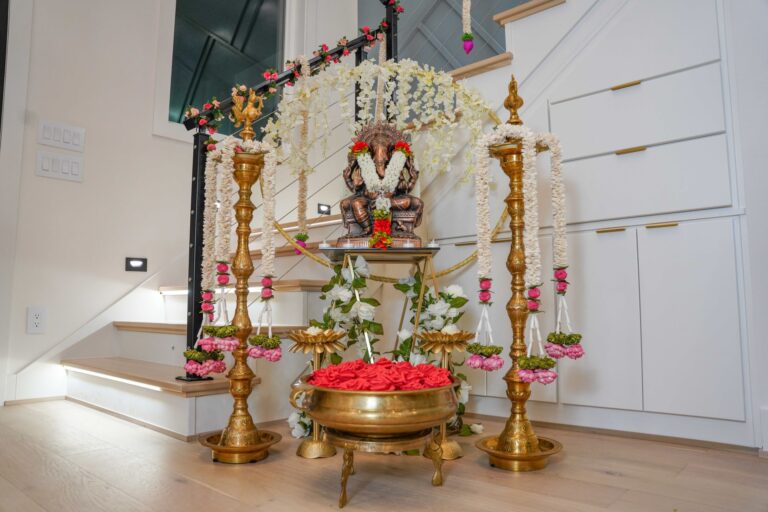
- Diwali and festive dinners: a brass urli with floating marigolds, clusters of diyas on a tray and a silk runner. Keep open flames well away from napkins and paper decorations.
- Summer: a bowl of mangoes or citrus, white tableware and a few stems of fresh mogra or tuberose in a small glass.
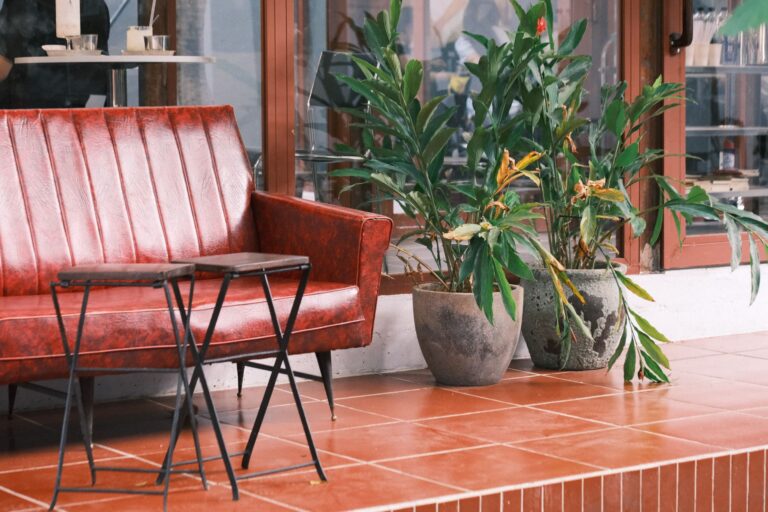
- Monsoon: glossy leaves such as monstera or areca palm in a clear vase, and darker, wipeable placemats.
- Winter: dried grasses or cotton stems, a textured runner and more candlelight.
For entrance, mandir and living room ideas to match, see our Diwali decoration ideas for home.
✨ Stylist’s tip
Style your everyday centrepiece on a tray you can lift with one hand. When it’s time to eat — or to spread out homework — the whole arrangement comes off in one move and goes back just as fast. A centrepiece that takes five trips to clear stops being put back, and within a week the table is a dumping ground again.
Common mistakes to avoid
- Centrepieces at face height. If guests have to lean sideways to talk, it’s too tall or too wide.
- Scented candles at dinner. Strong fragrance competes with food. Use unscented candles on the table and keep scent for the living room.
- Too many small things. Five tiny objects look like clutter; one tray with three pieces looks styled.
- Dusty artificial flowers. They collect grime fast in Indian homes. A bowl of fruit or one fresh stem looks better.
- Letting the table become a drop zone. Give keys, post and chargers a home elsewhere, such as a basket on a console near the door.
FAQs
What should I put on my dining table when it’s not in use?
Keep it simple: a runner or placemats and one low centrepiece on a tray — a vase with a few stems, a candle and a small bowl work well together. That’s enough to look finished without getting in the way of daily use. Avoid covering the whole table; a little empty surface makes the arrangement look intentional.
How do I decorate a small or round dining table?
Use one round centrepiece in the middle — a bowl, a low vase or a small cluster on a round tray — with round placemats. On a small table pushed against a wall, style the wall side only and keep the open side clear. Scale matters most: choose a centrepiece no wider than about a third of the tabletop.
What is the ideal height for a dining table centrepiece?
As a general rule, keep it below chin height when seated — around 30 cm — so people can see and talk across the table. If you want height, go tall and slim instead, like a single branch in a narrow vase, so the eye passes around it. Low, wide arrangements work best when you’re hosting.
How can I make my dining table look festive quickly?
Swap only the top layer. Add a silk or brocade runner, a brass urli with floating flowers, a cluster of diyas or tea lights on a tray and cloth napkins in a festive colour. Switch to warm white light and add candlelight. It takes minutes to set up and just as little to pack away afterwards.
Want a dining area that feels finished — without renovation?
Book a free 15-minute demo call with Styora Decors. Zero obligations — we’ll understand your space and recommend the right plan.
Follow @styoradecors on Instagram and Styora Decors on YouTube for styling reels, table-styling ideas and room makeovers for Indian homes.