
By Styora Decors | Interior Styling & Decor | 7 min read
You love those bright, airy Nordic rooms, but you’re not sure white walls and sheepskin will survive an Indian summer.
Scandinavian interior design is built on light, simplicity and comfort: pale woods, soft whites, natural textiles and rooms that feel calm without feeling cold. It travels well, too. With a few adjustments for Indian light, heat, dust and family life, it works beautifully here.
Everything below is styling rather than renovation: textiles, lighting, furniture choices and accessories, most of them made in India. At Styora Decors, a home styling studio, this is how we adapt the Nordic look for Indian homes.
What is Scandinavian interior design?
The style took shape in Denmark, Sweden, Norway and Finland in the mid-20th century, influenced by long, dark winters. When daylight is scarce, you make the most of it: white walls, pale floors, big windows and nothing heavy blocking the light. A few ideas hold it together:
- Light first. Pale surfaces and sheer curtains that bounce daylight around the room.
- Function over ornament. Every piece earns its place, and beauty comes from simple, well-made shapes.
- Natural materials. Light wood, wool, linen, cotton, leather and ceramics.
- Hygge. The Danish idea of cosiness: candles, soft throws, warm lamps and time together at home.
- Lagom. The Swedish idea of just enough: not too much, not too little.
You’ll also see it called Nordic interior design; the two terms are used almost interchangeably.
The core elements of the Nordic look
- Palette: white and off-white, soft greys and pale wood, with muted blue, sage, dusty pink or ochre, and black as a crisp accent.
- Wood: light, matte finishes such as oak, ash, beech and pine. Nothing glossy or orange.
- Furniture: simple shapes on slim, tapered legs, so you can see the floor underneath and the room feels light.
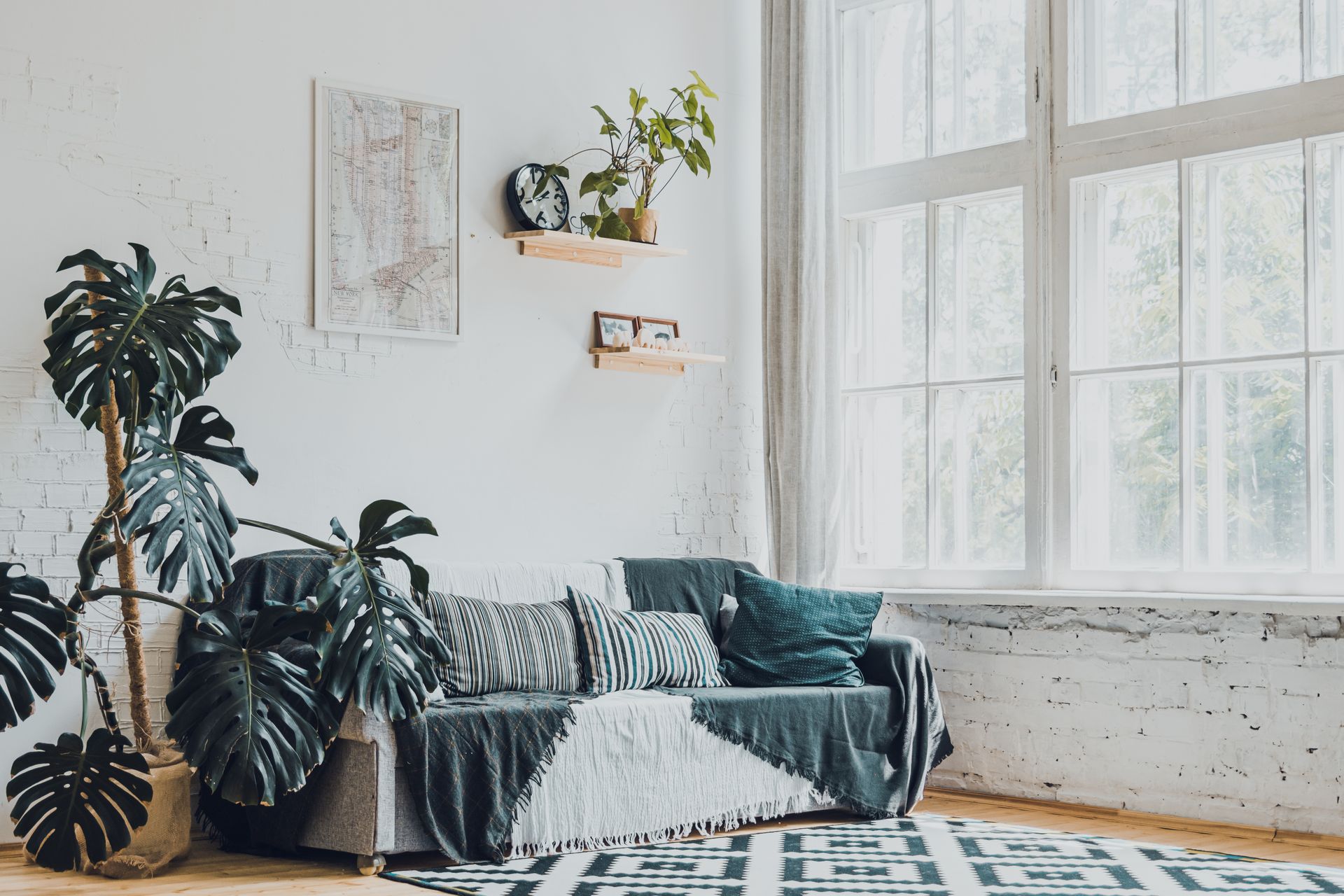
- Textiles: layered and tactile, with wool throws, linen cushions, a textured rug and sheer curtains.
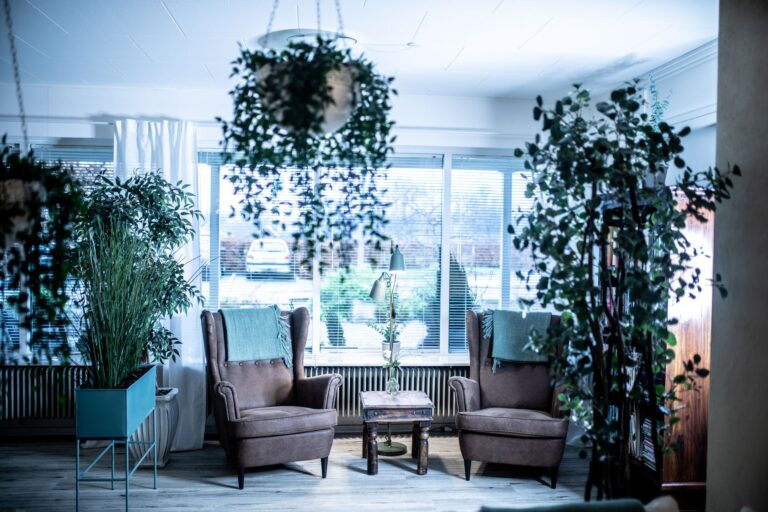
- Lighting: several warm sources rather than one ceiling light: pendants, floor lamps, table lamps and candles.
- Greenery: a few plants in simple pots, and fresh or dried stems in a vase.
- Pattern: restrained, usually geometric or graphic, in black and white or muted tones.
Adapting Scandinavian decor to India
The Nordic look was designed for low light and cold winters. Most of India has the opposite problem, so a straight copy rarely works. These adjustments keep the spirit and fix the practicalities.
Soften the whites
Stark white walls under strong Indian sun can glare and look clinical. Choose warm whites, ivory or soft greige instead, and layer sheer cotton or linen curtains to filter the light rather than let it bounce harshly.
Swap wool for cotton and jute
Sheepskin and chunky wool throws are lovely in Stockholm and stifling in a Chennai summer. Use handloom cotton, khadi, linen and jute for most of the year, and bring out a wool throw only in winter or in an air-conditioned bedroom.
Plan for dust
Pale surfaces show dust, and dust is a daily reality in most Indian cities. Choose removable, washable sofa covers, mid-tone rugs rather than white ones, closed storage over open shelving, and a few objects you’re happy to wipe down rather than dozens.
Make it work for family life
Scandinavian design is practical at heart, which suits Indian homes with children, elders and frequent guests. Rounded corners, sturdy wood, washable fabrics and extra seating, like floor cushions and a pouf, keep the look calm without making it precious.
Choose Indian-made alternatives
You don’t need imported furniture. These swaps keep the look and suit the climate:
- Instead of oak or ash furniture: light-finished mango wood, rubberwood or pine.
- Instead of sheepskin and wool throws: handloom cotton or khadi.
- Instead of wool rugs: cotton or jute dhurries.
- Instead of paper pendants: cane or bamboo shades.
- Instead of imported ceramics: stoneware and terracotta from local potters.
Block prints in indigo, grey or black on white also read surprisingly Scandinavian. Our curated list of decor finds is a good place to start.
Scandinavian living room and bedroom ideas
Scandinavian living room
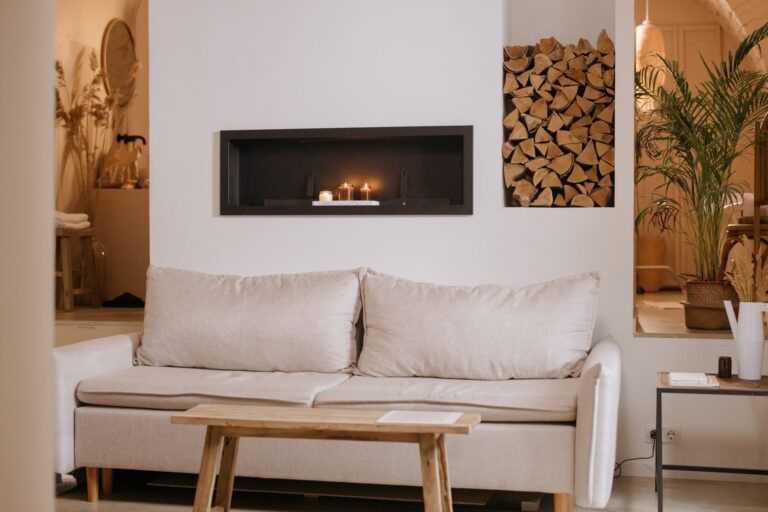
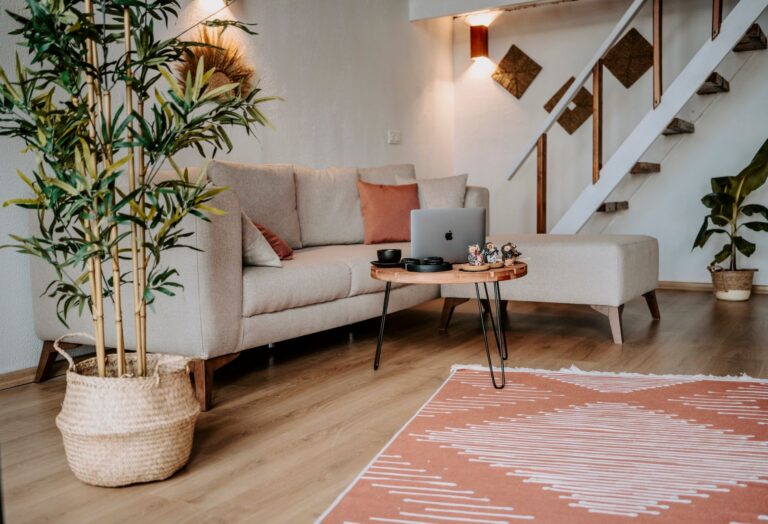
- A light fabric sofa on tapered legs, in oatmeal, soft grey or a muted blue.
- A pale-wood coffee table, round or oval so there are no sharp corners.
- A large textured rug in cream, grey or a simple geometric pattern.
- A floor lamp beside the sofa and a table lamp across the room, both with warm bulbs.
- A few plants, a stack of books and one or two ceramics, with the rest of the surfaces left clear.
For layout and lighting in more depth, see our living room decoration guide.
Scandinavian bedroom
- White, oatmeal or pale grey bedding in cotton or linen, with one textured throw.
- A simple wooden bed frame, or an upholstered headboard in a soft neutral.
- Plug-in wall lamps beside the bed, which need no electrician and keep the bedside tables clear.
- Sheer curtains layered with a lined curtain for sleep.
- One large artwork above the bed rather than a cluster of small frames.
Our guide to master bedroom design goes further on layout, lighting and storage.
Dining and work corners
A round pale-wood table with simple chairs, a linen runner and warm light gives a dining corner the Nordic feel; a pendant over the table is a quick job for an electrician, or use a floor lamp. For a work-from-home nook, pair a light desk with a task lamp, a pinboard and one plant, and keep cables out of sight.
Get the Scandinavian look in five steps
Short on time? These five changes do most of the work, in this order:
- Fix the light. Warm white bulbs everywhere, plus two lamps at different heights.
- Lighten the textiles. White or oatmeal cushion covers, a cotton or linen throw, and sheer curtains.
- Add pale wood. One light-wood coffee or side table, or a wooden tray and frames if the furniture isn’t changing.
- Ground it with a rug. A large, textured rug in cream, grey or a simple geometric weave.
- Bring in green. Two or three plants in plain white, grey or terracotta pots.
Then edit: clear the surfaces, keep only what you use or love, and let the room breathe. Want it planned for your actual rooms? Our Style Discovery session defines your palette and builds custom moodboards in 7–10 working days; see our styling plans and pricing.
✨ Stylist’s tip
Nordic rooms look bright in photos because of the lamps, not the white walls. Count the light sources in any Scandinavian room you love: there are usually four or five, all warm, all at different heights. Copy that before you buy a single white thing. Add two lamps, switch every bulb to warm white, and turn off the tube light in the evening.
Scandinavian vs Japandi: what’s the difference?
Japandi blends Scandinavian comfort with Japanese minimalism, so the two share natural materials, calm colours and uncluttered rooms. The differences are in the details:
- Colour: Scandinavian is lighter and brighter, with whites, pale greys and soft pastels. Japandi is earthier, with clay, stone, charcoal and deeper woods.
- Wood: Scandinavian sticks to pale woods; Japandi mixes light and dark wood in one room.
- Furniture: Scandinavian pieces sit on slim legs; Japandi furniture is lower and closer to the ground.
- Mood: Scandinavian is cosy and layered, with throws, cushions and candles. Japandi is quieter and sparer, with handmade, slightly imperfect objects.
If you want bright and cosy, choose Scandinavian. If you want calm and grounded, lean towards Japandi.
Common mistakes to avoid
- All white, no warmth. White walls, a white sofa and a white floor feel like a clinic. Add wood, texture and warm light.
- Cool white bulbs. A 6500K tube light turns a soft Nordic room grey and flat after dark. Use warm white bulbs of around 2700–3000K.
- Copying cold-climate textiles. Faux fur and heavy wool look wrong in a hot flat, and they trap dust.
- Everything brand new. A room of mass-produced pieces lacks soul. Mix in one old wooden piece, a handmade ceramic or a vintage find.
- Open shelves everywhere. They need constant dusting in Indian cities. Use closed storage for most things and style one shelf.
FAQs
Is Scandinavian interior design suitable for Indian homes?
Yes, with adjustments. Use warm whites instead of stark white, cotton and jute instead of heavy wool, washable covers and closed storage for dust, and warm lamps rather than cool tube lights. Its practical, family-friendly thinking suits Indian homes well, and Indian-made materials like cane, handloom and light mango wood fit the palette.
What colours are used in Scandinavian interiors?
The base is white, off-white and soft grey, with pale wood and black as a crisp accent. Muted colours add warmth: dusty blue, sage, blush, ochre and soft terracotta. In India, warm whites and greige usually work better than bright white, because strong sunlight makes cool whites glare.
What is the difference between Scandinavian and minimalist design?
Minimalism is about having as little as possible on show. Scandinavian design is simple too, but warmer and more lived-in, with layered textiles, plants, candles and a few personal objects. Think of Scandinavian as minimalism with a throw, a warm lamp and a cup of chai.
Can I get the Scandinavian look in a rented flat?
Easily, because most of it is movable. Lighten your textiles with white or oatmeal covers and sheer curtains, then add a pale-wood side table, warm lamps, a textured rug and a few plants. Rental walls are often already off-white, which makes a ready-made Nordic backdrop, with no painting or drilling needed.
Want the Nordic look made for your Indian home — without renovation?
Book a free 15-minute demo call with Styora Decors. Zero obligations — we’ll understand your space and recommend the right plan.
Follow @styoradecors on Instagram and Styora Decors on YouTube for styling reels and room makeovers for Indian homes.