
By Styora Decors | Interior Styling & Decor | 7 min read
Most flats were never planned with a pooja room — so the mandir ends up on a shelf, squeezed between the TV and the shoe rack.
Good pooja room design isn’t about square footage. It’s about giving the mandir a calm, clean, well-lit place of its own, even if that place is one corner of the living room. This guide covers pooja room design ideas for modern homes and small apartments: placement, layouts, backdrops, lighting, storage, materials and colours.
We’re Styora Decors, a home styling studio, so we’ll be clear about which ideas need a carpenter and which are pure styling you can do in a weekend, with no renovation. Most are the second kind.
Where to place the mandir: traditions many families follow
Many Indian families follow vastu shastra when choosing a spot for the mandir. Whether you do is a personal and family choice, but these are the traditions most commonly followed:
- The northeast corner of the home, traditionally called the ishan corner, is preferred, with east or north as the next choices.
- Many families like to face east or north while praying.
- Traditionally, the mandir isn’t placed under a staircase, against a wall shared with a toilet, or inside a storeroom.
- If it has to be in a bedroom, many families keep it behind doors or a curtain.
Treat these as tradition rather than a promise, and follow what your family practises — if you’re unsure, ask the elders at home or your family pandit. Then add two practical checks: a little air movement for diya and incense smoke, and enough room to stand or sit comfortably during aarti.
If you’ve just moved in, the mandir is often one of the first things families set up — our guide to making a new house feel like home covers the rooms that come next.
Pooja room design for apartments: four layouts that work
When it comes to mandir design for home in a modern flat, almost every good set-up is one of these four.
1. A pooja corner in the living room
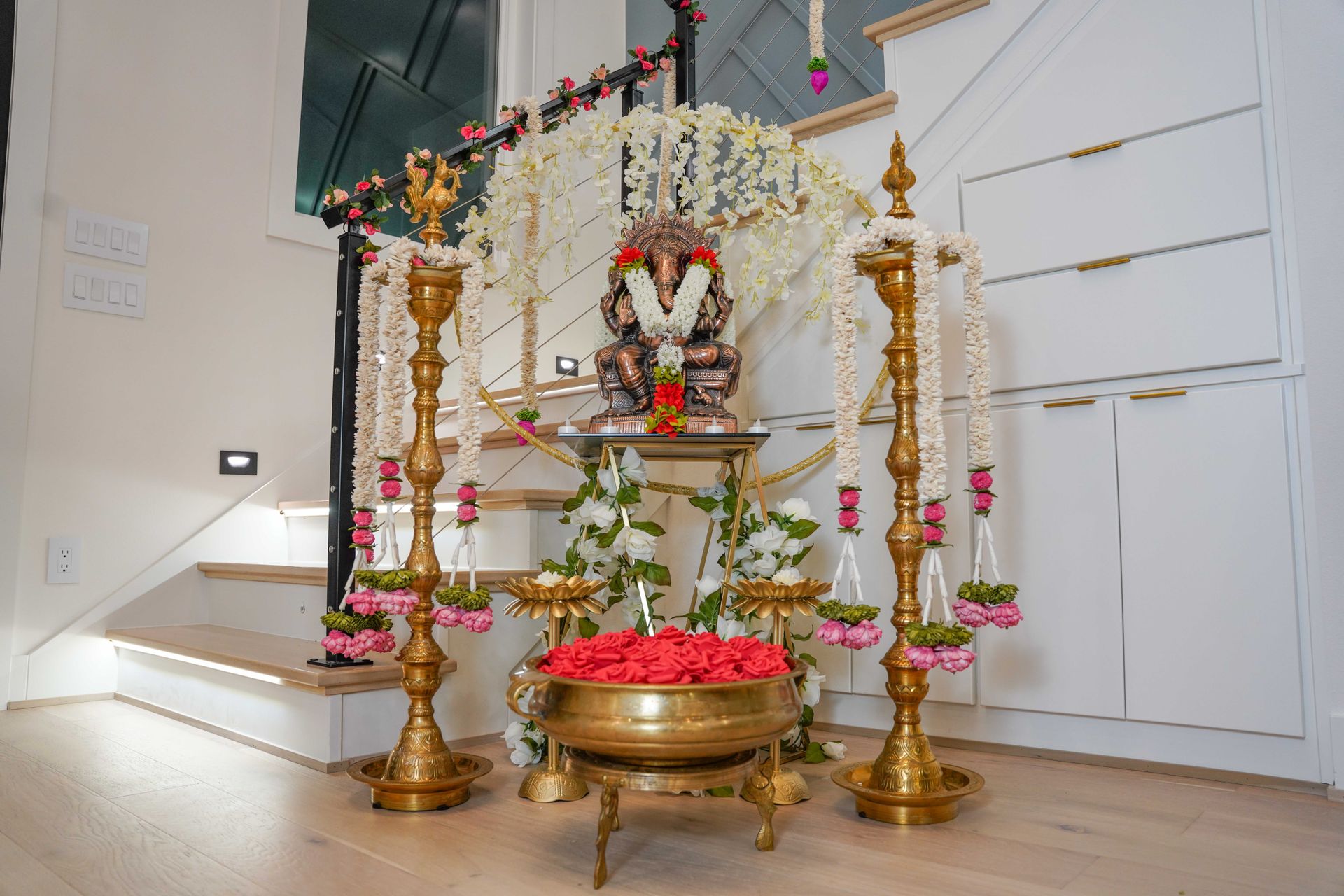
The most common option in apartments. Define the corner so it reads as its own space: a small rug or asan in front, a freestanding screen on one side and its own warm lamp. Keep it clearly apart from the TV unit, and off the shelf where remotes and chargers live. Our living room decoration guide has more on zoning a room.
2. A console or sideboard mandir
A console table or low sideboard becomes a graceful mandir with a cloth runner, the idols on a raised brass or wooden base, and puja supplies stored below. It’s freestanding, so it suits rented homes and moves with you.
3. A cabinet mandir with doors
Best for studio flats, bedrooms and open kitchens. A ready-made wooden mandir cabinet — many come with jaali or glass doors — closes the space off when it isn’t in use. Bought ready-made, it’s pure styling; a custom built-in version is carpentry.
4. A wall-mounted mandir
It saves floor space in the smallest homes, but it needs drilling and proper wall anchors — a job for a carpenter, and a conversation with your landlord if you rent. Mount it at a height that suits how your family prays, standing or seated.
Pooja room ideas for small spaces
When all you have is a couple of square feet, work vertically and keep the floor clear.
- Use a tiered riser. A two- or three-step wooden or brass stand lets every idol be seen without crowding the front row.
- Think corners, not walls. A corner unit uses space that’s usually dead and makes a small mandir feel deliberate.
- Add doors or a curtain. In bedrooms and studio flats, a cotton curtain on a tension rod closes the mandir off when you need to.
- Store underneath. A drawer or lidded basket below keeps supplies from creeping onto the mandir itself.
- Mind the scale. Many homes collect idols and pictures over the years. Group them on a riser and keep the front row for the ones used in daily puja.
Backdrops that make it feel sacred
The backdrop does most of the visual work, and none of these needs construction:
- Fabric: a length of handloom silk, block-print cotton or a zari-bordered saree on a tension rod or a simple frame. Easy to change for festivals — just keep it well back from the diya.
- A freestanding jaali screen: a carved wooden or MDF jaali panel standing behind the mandir gives the look of a built-in pooja room without touching the wall.
- Removable decals: peel-and-stick lotus, mandala or jaali patterns. Test on a hidden patch first, as some adhesives lift paint.
- One framed artwork: a Pichwai- or Tanjore-style painting, wider than the mandir itself. Pichwai paintings were traditionally made to hang behind the deity, so they sit naturally in a pooja space.
Want a stylist to plan the mandir along with the rest of your home? Our styling plans start from ₹10,000 — a design fee only, so your shopping budget stays yours.
Lighting: warm, soft and safe
Light is what makes a mandir feel sacred rather than stored.
- Warm white only. Choose warm-white bulbs or strips (2700–3000K). Cool daylight tones make brass look grey and the corner feel clinical.
- Light from the side, not directly above. A downlight overhead throws shadows onto the idols and glare off brass; a small lamp slightly in front and to one side makes everything glow.
- Backlight the backdrop. A plug-in LED strip behind a jaali screen gives a soft halo. Plug-in is styling; concealed, hardwired lighting is an electrician’s job.
- Brass diyas on a tray. A brass plate catches oil drips and keeps the flame off wood and cloth. Never leave a lit diya inside a closed cabinet, and keep flames clear of curtains and fabric backdrops.
Storage, materials and colours for pooja unit decor
Storage for puja items
Give every item a home: a lidded brass or wooden box for kumkum, haldi, akshat and camphor; a small basket for incense, matches and wicks; a jar of oil or ghee on a tray; a drawer or cloth pouch for the puja thali and bell. Keep only puja items here — the mandir shouldn’t double as the key drop.
Materials
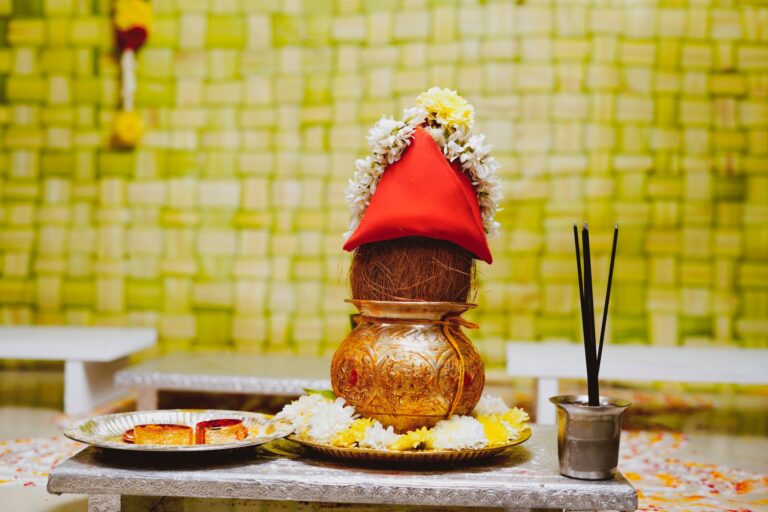
Brass is the classic — diyas, bells, a kalash, a plate. Pair it with wood for warmth, and choose a marble-look base or tray if you prefer a lighter look; real marble is heavy for most freestanding units. For pieces to shop, start with our curated decor finds.
Colours
Most families choose light, calm backgrounds — white, ivory, cream or soft sandalwood — with warm accents of saffron, marigold yellow or deep red in the cloth and flowers. If the mandir sits in the living room, pull the accents from the room’s existing palette so it looks part of the home, not stuck on.
What needs a carpenter — and what’s pure styling
An honest split, so you know who to call.
Needs a carpenter or electrician
- Built-in mandir units and floor-to-ceiling pooja cabinets
- Wall-mounted mandirs and shelves
- Jaali doors or panels fixed to the wall
- Marble or stone cladding
- Concealed, hardwired lighting
Pure styling — no tools, no dust
- A freestanding mandir, console or ready-made cabinet
- Fabric backdrops, freestanding jaali screens and removable decals
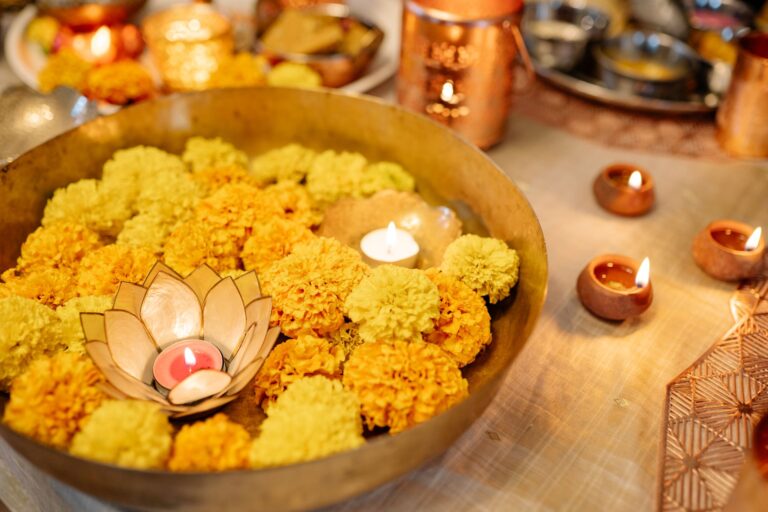
- Rugs, asans, brass diyas, bells and flowers
- Plug-in lamps and LED strips
- Lidded boxes, baskets and trays
✨ Stylist’s tip
Mock it up before you buy. Mark the mandir’s footprint on the floor with masking tape, stand a cardboard box of the right height in its place, and live with it for a few days. You’ll quickly see whether you can stand or sit comfortably, whether the light falls on the idols or behind them, and whether the corner feels calm or cramped — before you’ve spent a rupee.
Common mistakes to avoid
- Cool-white lighting that makes the mandir look like an office corner.
- Fabric too close to the flame. Backdrops, curtains and paper flowers need real distance from diyas.
- Using the mandir as storage. Keys, bills and medicines creep in fast; give them a home elsewhere.
- A tiny mandir lost on a big wall. Add a backdrop wider than the unit so it has presence.
- Dusty artificial garlands. If you use artificial flowers every day, wash or replace them regularly, and bring in fresh ones for festivals.
- Ignoring smoke. Incense and diya smoke darken ceilings and fabric over time, so choose a spot with some air movement.
FAQs
Which direction is best for a pooja room in a flat?
Many families follow vastu, which traditionally prefers the northeast corner, with east or north as alternatives, and facing east or north while praying. It’s a matter of belief and family practice rather than a rule for every home. If your layout doesn’t allow it, choose the calmest, cleanest spot you have.
Can I have a pooja corner in the living room?
Yes — a pooja corner in living room layouts is the most common choice in apartments. Define the corner with a rug or asan, a screen or backdrop and its own warm light, and keep it visually separate from the TV unit. A console or freestanding mandir works well here and needs no carpentry at all.
How can I design a pooja room without a carpenter?
Start with a freestanding mandir, a console table or a ready-made cabinet, then style it: a fabric or jaali backdrop, a tiered riser for the idols, brass diyas on a tray, fresh flowers, a plug-in warm lamp and lidded storage. Everything is freestanding, so it works in rented homes too.
What’s a good mandir design for home if I rent?
Keep everything freestanding: a ready-made wooden mandir or a cabinet with doors, a fabric backdrop on a tension rod and plug-in lighting. Nothing is drilled or fixed to the wall, so the whole set-up moves with you when you do — and your security deposit stays safe.
Want a calm, beautiful mandir corner — without renovation?
Book a free 15-minute demo call with Styora Decors. Zero obligations — we’ll understand your space and recommend the right plan.
Follow @styoradecors on Instagram and Styora Decors on YouTube for more styling ideas for Indian homes.