
By Styora Decors | Interior Styling & Decor | 7 min read
Nine nights of puja, family and garba — and you want the home to feel festive every single evening, not cluttered by day three.
The best Navratri decoration does two jobs at once: it gives the goddess a beautiful, peaceful corner, and it gets the rest of the home ready for nine nights of family, guests and garba. None of it needs renovation. This is styling with flowers, fabric, light and pieces you probably already own — and most of it carries straight into Dussehra and Diwali.
Here’s how we’d plan it at Styora Decors, a home styling studio: the mandir and ghatasthapana corner, colour-of-the-day styling, the entrance, a garba-ready living room, regional touches and rental-safe lighting.
Navratri decoration for the mandir and ghatasthapana corner
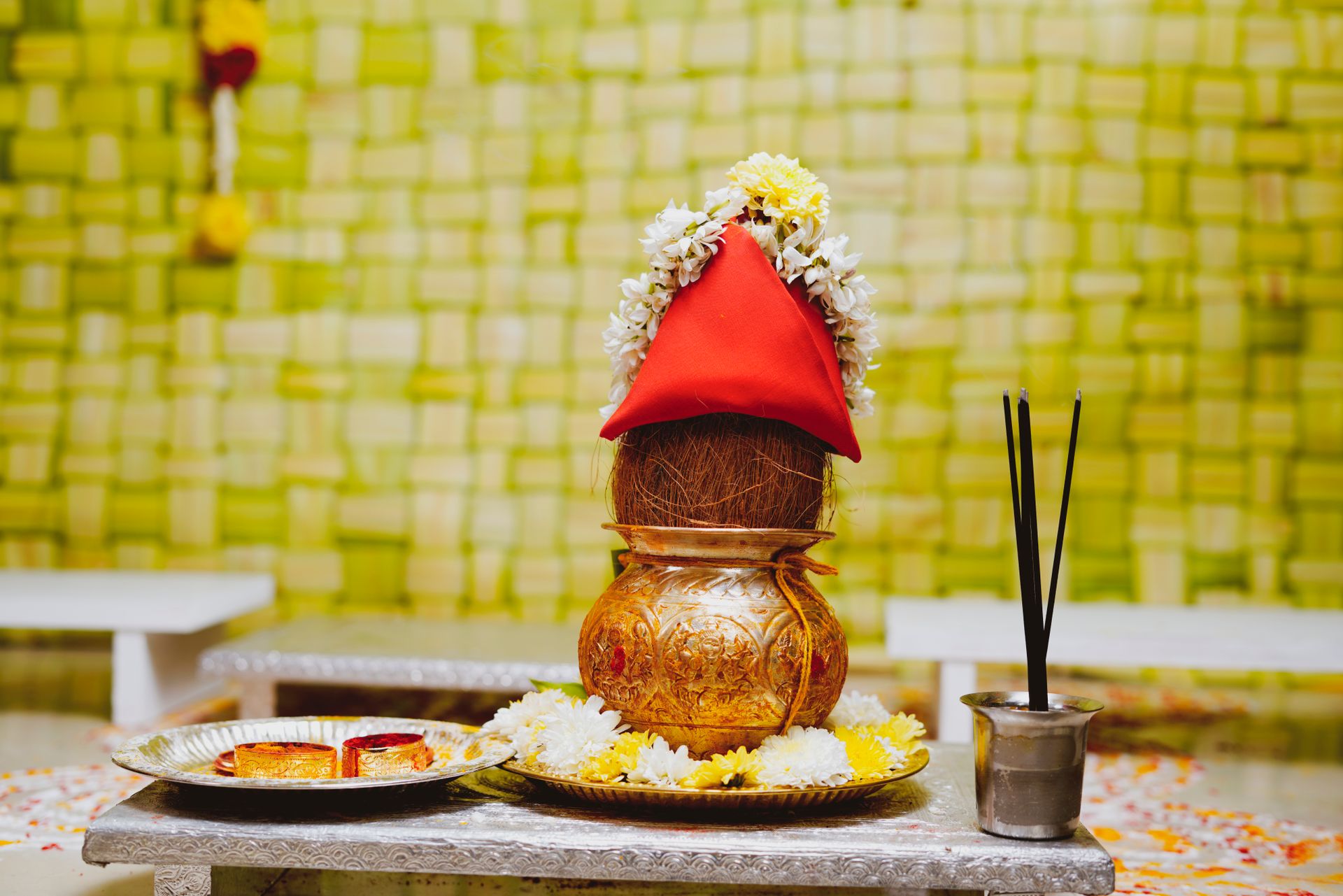
For many families, Navratri begins with ghatasthapana — installing the kalash — and an akhand jyoti that burns through all nine days. Style this corner for calm and safety first.
Give the kalash a raised, clean base
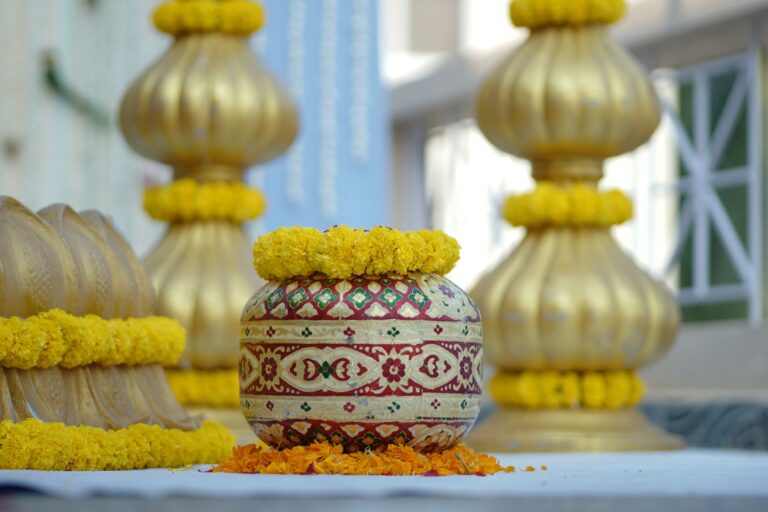
Place the kalash on a low wooden or brass chowki draped with a red or yellow cloth, so it sits above the floor and is easy to see during aarti. If your family sows jau (barley) in a clay pot as part of the ritual, plan space for it — the shoots grow over the nine days and deserve to be seen, not squeezed behind the idols.
A backdrop that frames, not competes
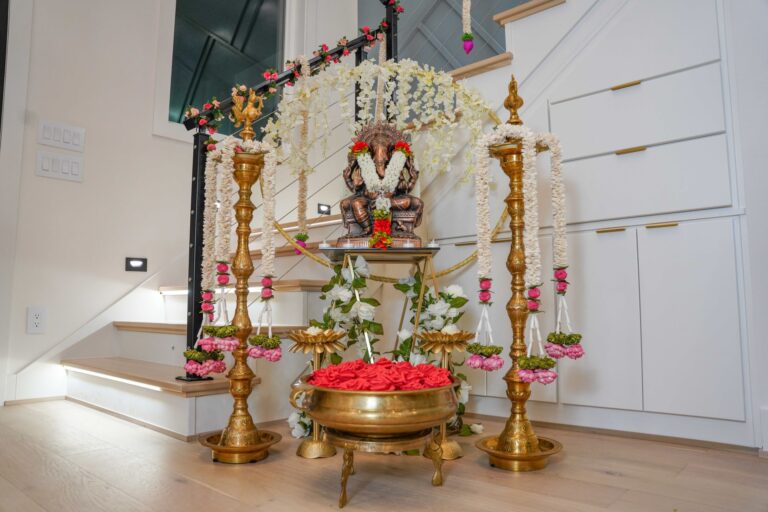
A plain silk or cotton drape in red, maroon or marigold yellow behind the idols gives the corner depth. Add marigold strings or a simple flower curtain on either side. Keep the backdrop quiet; the idols, the kalash and the flame should be the stars.
Make the akhand jyoti safe
A lamp that burns day and night needs a stable brass or metal plate, a glass chimney or lamp cover against draughts, and a clear gap from curtains, drapes and paper decorations. Keep it out of the ceiling fan’s direct draught, and never let loose dupattas hang nearby.
Small-space mandir ideas
In an apartment without a separate puja room, a console or a corner of the living room works well. Define the spot with a small rug or asan, a tray for the puja thali and diyas, and a basket underneath for supplies, so the corner stays tidy for all nine days. If you need a few pieces, our curated list of decor finds is a good place to start.
Style with the colour of the day
Many families and communities follow a colour for each of the nine days — wearing it, and some decorating with it too. The list can change from year to year and differs between communities, so go by the one your family follows. The trick with colour-led Navratri decoration is to keep the base fixed and swap only small pieces:
- Keep a neutral base. Ivory, cream or white drapes and cushions sit happily with every colour of the day.
- Swap the accents daily. A dupatta over the mandir backdrop, the cushion covers on the sofa and the flowers in one vase are enough to carry each day’s colour.
- Use flowers as your palette. Marigolds for yellow and orange, roses for red and pink, leaves and tulsi for green.
- Plan it once. Lay out the nine dupattas or cushion covers in order at the start, so the daily change takes two minutes.
If you’d like a few of those colours to stay after the festival, our living room colour combination ideas show how to build a year-round palette around them.
Festive home decor for the entrance
The door sets the tone for nine days of visitors, so give it a little attention every morning.
- A toran of mango leaves and marigolds. Refresh the flowers every couple of days so they stay bright; the mango leaves last longer.
- Rangoli, kolam or alpona. Keep a simple base design at the threshold and add fresh petals each day in the colour of the day.
- A pair of brass diyas or lanterns on either side of the door for the evenings.
- A neat shoe station. With guests arriving every evening, a basket or low rack by the door keeps the entrance clear.
Garba decoration ideas for a living room party
Hosting garba or dandiya at home, even a small one, is mostly about clearing space and setting a mood.
Clear the floor
Move the coffee table and side tables into another room, and roll up rugs so no one slips mid-step. Push the sofa against the wall and line the edges with floor cushions and bolsters for anyone taking a break.
Create a centre
Garba is danced in a circle around a centre — traditionally a garbo, a perforated earthen pot with a lamp inside. A decorated garbo with an LED tealight, set on a low, sturdy stool in the middle of the room, gives everyone a focal point without an open flame underfoot.
Mirror-work and bandhani textiles
Gujarati textiles set the mood instantly. A mirror-work wall hanging, or bandhani dupattas draped along a tension rod, makes a bright backdrop that catches the light beautifully once the dancing starts.
Warm lights and a photo corner
Switch off the tube light and string warm fairy lights overhead, with a few lanterns in the corners. Turn one wall into a photo corner — a bandhani or mirror-work backdrop, a pair of dandiya sticks in a vase and a string of marigolds — so guests aren’t crowding the mandir for pictures.
✨ Stylist’s tip
Decorate in two layers. The base layer goes up once, on the first day: drapes, fairy lights, the mandir backdrop and the toran’s leaves. The fresh layer is refreshed every morning: flowers, rangoli petals and the colour-of-the-day dupatta. Nine days is long enough for marigolds to brown and petals to scatter, so separating the layers keeps the home looking fresh on the ninth day without redoing everything — and makes the final clean-up far quicker.
Durga Puja decoration at home
If your family celebrates Durga Puja, the festive days can carry a Bengali flavour:
- Alpona at the door, drawn in white rice paste — the traditional counterpart to rangoli.
- Red and white textiles inspired by the classic laal paar saree: a red-bordered white runner on the dining table, red and white cushions, or a saree draped as a backdrop.
- Shola and brass. Shola (sholapith) ornaments, conch shells and brass or bell-metal diyas bring a festive, pandal-inspired feel indoors.
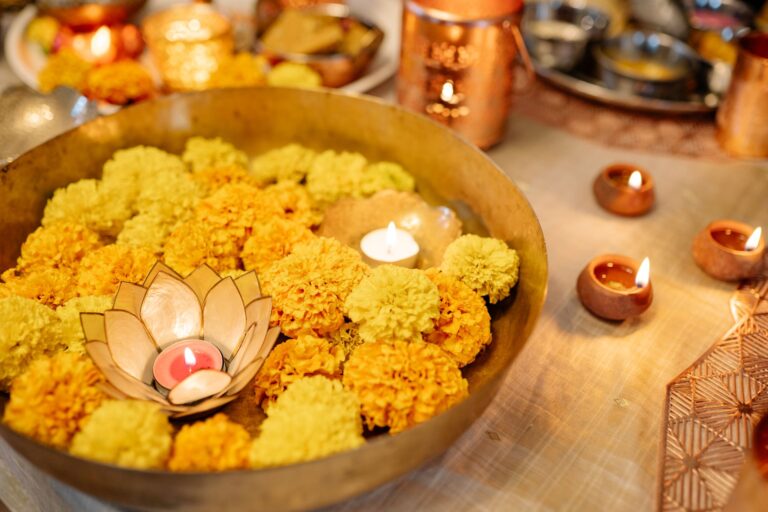
- Lotus and marigold floating in a brass urli or a wide bowl of water.
And if your family sets up a Golu, also called Kolu or Bombe Habba, cover the steps in one plain fabric so the dolls stand out. The steps are traditionally arranged in odd numbers, so plan the display before you start placing dolls.
Rental-safe lighting and decor
Renting, or not keen on marking fresh walls? Everything here works without a drill:
- Removable adhesive hooks for torans and fairy lights — test one on a hidden patch first, as some lift paint.
- Tension rods for dupatta or flower curtains across doorways and windows.
- LED diyas and battery candles near curtains, or in homes with children and pets.
- Plug-in fairy lights in glass jars and lanterns instead of new wiring.
- A freestanding screen or a console as the mandir backdrop.
Almost everything you set up now — brass diyas, lanterns, fairy lights, fabric torans — carries straight into the festive season ahead, and our Diwali decoration ideas for home show how to build on it. If you’d like the whole home styled before the festive season, not just decorated, see our home styling plans and pricing.
Common mistakes to avoid
- Fabric too close to the akhand jyoti. Drapes, dupattas and paper decorations need a clear gap from any flame that burns for nine days.
- Every colour at once. Nine colours on display together looks chaotic; show one at a time against a neutral base.
- Leaving rugs down for garba. A rug that slides underfoot is a real risk once the dancing starts.
- Decorating every surface. Too many objects make daily puja, aarti and cleaning harder. Let the mandir and the entrance carry the festivity.
- Blocking the path to the mandir. Keep a clear route for aarti, elders and guests, especially once the living room fills up in the evening.
FAQs
How can I decorate my home for Navratri in a simple way?
Start with the mandir: a clean chowki with a red or yellow cloth, fresh marigolds and a safely placed brass diya. Add a mango-leaf and marigold toran at the door and a small rangoli. Then carry the colour of the day through a dupatta, cushion covers or one vase of flowers. That’s enough to make the whole home feel festive.
What colours are used for Navratri decoration?
Red, yellow, orange and green are the traditional festive colours, led by marigolds, mango leaves and red fabric at the mandir. Many families also follow a colour for each of the nine days. The list can change yearly and varies by community, so follow your family’s and swap small pieces daily against a neutral base.
How do I set up my living room for garba at home?
Clear the floor completely: move tables out and roll up rugs so no one slips. Push seating to the walls with floor cushions for breaks, create a centre with a decorated garbo lit by an LED tealight, and switch to warm fairy lights. A mirror-work or bandhani backdrop makes an easy photo corner.
Can I reuse Navratri decorations for Diwali?
Yes, most of them. Brass diyas, lanterns, fairy lights, fabric torans, urlis and neutral drapes all carry straight into Diwali. Refresh the flowers, swap the colour-of-the-day accents for gold, ivory and deep jewel tones, and add more layers of light. Planning both festivals together also saves you from buying twice.
Want your home festive-ready and beautifully styled — without renovation?
Book a free 15-minute demo call with Styora Decors. Zero obligations — we’ll understand your space and recommend the right plan.
Follow @styoradecors on Instagram and Styora Decors on YouTube for festive styling reels and ideas you can try this week.