
By Styora Decors | Interior Styling & Decor | 8 min read
You chose the sofa carefully. Now every cushion, curtain and rug you try beside it looks slightly wrong.
A good sofa colour combination starts with the one thing you’re not changing: the sofa itself. It’s the biggest block of colour in the living room and the hardest piece to replace, so everything around it, from cushions and throws to the rug, curtains and even the wall, should be chosen to work with it.
Below are pairings for grey, beige, blue, green, brown and white sofas. An honest note: repainting needs a painter, but every combination here also works through decor alone, which is how we style homes at Styora Decors, with no renovation.
The three-colour rule for any sofa
Almost every sofa that looks styled follows the same simple rule: three colours, each with a different job.
- The sofa colour. Your base. Repeat it once nearby, perhaps in a cushion a shade lighter or darker, so the sofa looks planned rather than parked.
- A supporting neutral. Ivory, sand, greige or warm white on the walls, curtains or rug. It gives the eye somewhere to rest.
- One accent. The colour that brings the sofa to life, used in two or three places: cushions, a throw, a vase or a print.
Wood and metal sit outside the count. A brass lamp, a teak side table or black frames add depth without adding another colour to manage. For whole-room palettes, including walls and floors, see our nine hall colour combination palettes; this guide stays with the sofa and what surrounds it.
Sofa colour combination ideas by sofa colour
Find your sofa below, then build outwards. Each pairing gives you the wall, cushions, rug and curtains, and why it works.
Grey sofa colour combination
Grey sofas are popular because they hide wear, but they go cold quickly, especially in north-facing rooms.
- Walls: warm white or soft greige, never a cool grey.
- Cushions: rust, terracotta or mustard, with one ivory textured cushion.
- Rug: natural jute, or an ivory dhurrie with rust in the pattern.
- Curtains: warm white linen or oatmeal cotton.
For a cooler look, swap the rust for dusty blue, then add brass or wood so the room doesn’t turn icy.
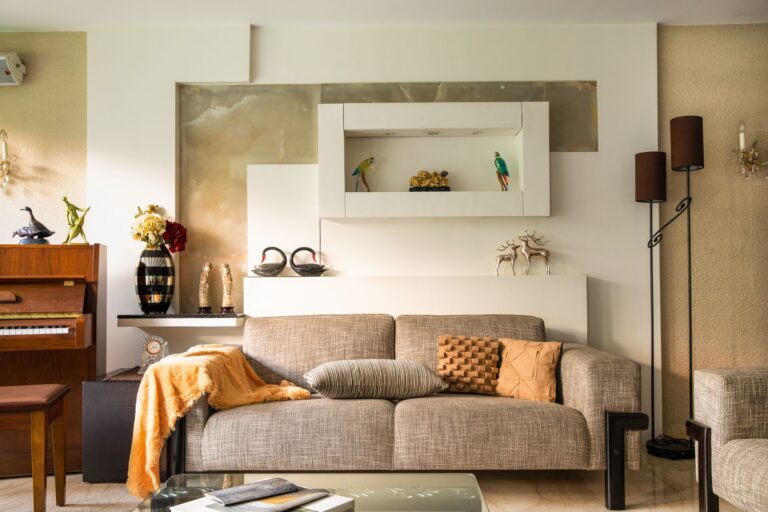
Beige and cream sofas
Beige is easy to live with but can look flat on its own. It needs definition, not more beige.
- Walls: soft white, or a shade deeper than the sofa, such as sand or putty.
- Cushions: dusty blue and denim, or olive and sage, with one pattern in the mix.
- Rug: a blue-and-ivory flatweave, or a darker jute.
- Curtains: white sheers with a lined curtain in the accent colour, or natural linen.
Add one dark note, like a black lamp base or a walnut side table, or the whole corner fades into the wall.
Blue sofas: navy, teal and powder blue
Navy behaves almost like a neutral, teal is richer, and powder blue is soft and airy. All three love a warm opposite.
- Walls: warm white or ivory.
- Cushions: ochre, mustard or rust with navy; blush or coral with teal; sand and white with powder blue.
- Rug: ivory with an ochre or rust pattern, or an indigo block print for a tonal look.
- Curtains: cream, oatmeal or a soft stripe. Avoid matching the sofa’s blue.
Green sofas: olive, emerald and sage
Green suits Indian homes because it pairs so easily with wood, brass, cane and plants.
- Walls: cream for olive, pale blush or putty for emerald, soft white for sage.
- Cushions: terracotta and caramel with olive; blush, gold and one deep pink with emerald; oatmeal and white with sage.
- Rug: rust and cream, or natural jute.
- Curtains: ivory linen. With emerald, a dusty pink or gold-toned sheer adds a little glamour.
Brown and leather sofas
Tan, cognac and chocolate leather are warm and forgiving, and they age well with children and pets around.
- Walls: cream or warm white for tan; soft white for chocolate, so the room doesn’t close in.
- Cushions: forest green, deep teal or indigo, plus a cream knit for texture.
- Rug: a vintage-style patterned rug, or a green-and-ivory flatweave.
- Curtains: cream, olive or oatmeal linen.
Green is tan leather’s natural partner; together they feel relaxed and a little heritage.
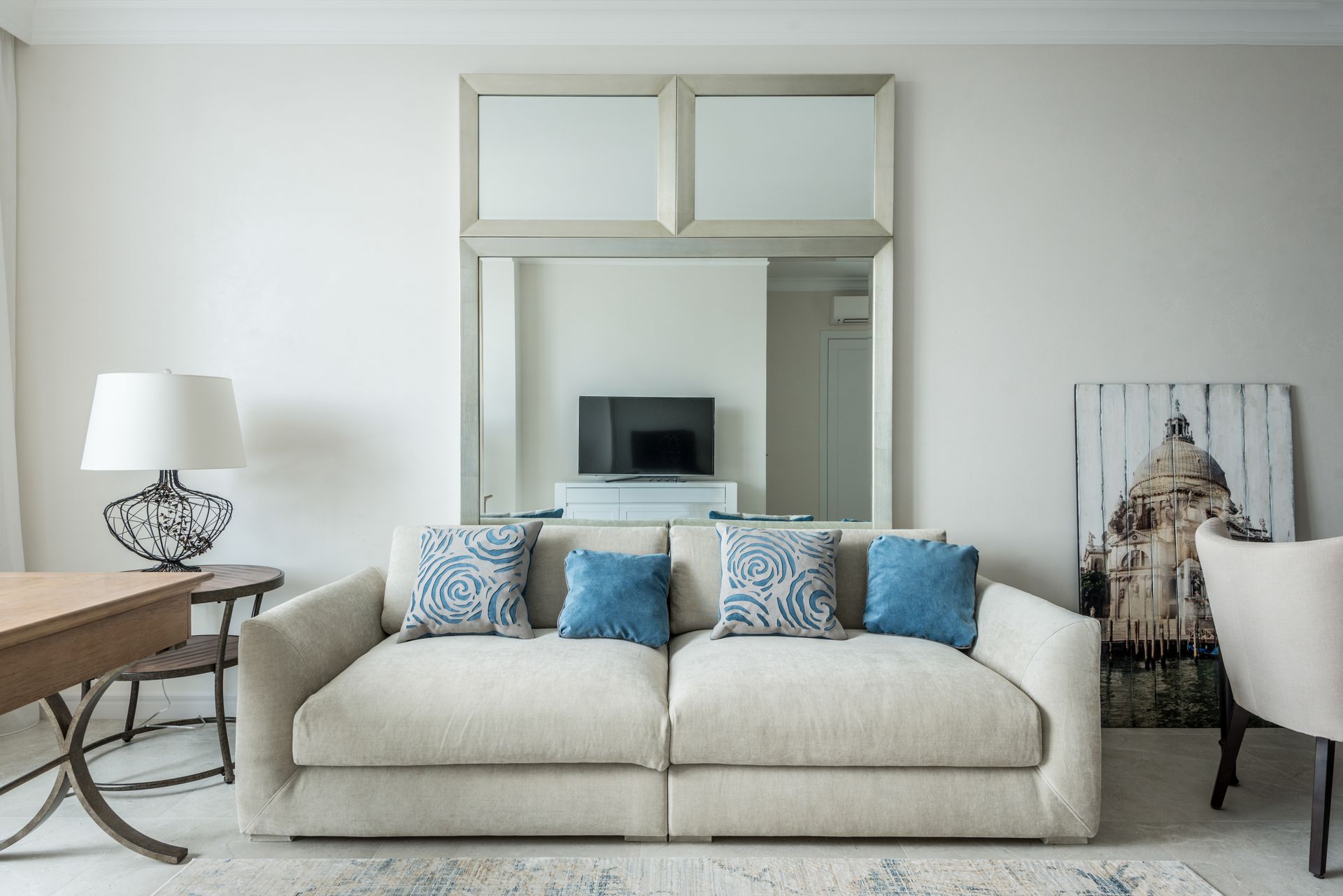
White and off-white sofas
Calm and minimal, but a white sofa needs contrast or it looks unfinished.
- Walls: greige or linen rather than stark white.
- Cushions: charcoal, black-and-white stripes, or a single colour story such as all blues.
- Rug: textured cream, or grey and white.
- Curtains: linen a shade darker than the sofa.
In dusty cities, choose a washable slipcover; it’s the only way a white sofa stays white.
Patterned sofa? Pull the wall colour from the palest shade in the print and your cushion colours from the smallest details.
Stuck between two combinations? Defining the palette for your actual sofa, light and floor is what our Style Discovery session and custom moodboards are for; see our home styling plans and pricing.
Sofa cushion colour combination: a simple formula
Cushions are the fastest and most affordable way to change a sofa’s colour story, and they’re where most combinations go wrong.
- Decide on the mood. Pairs at each end look formal; three or five cushions look relaxed.
- One solid, one accent, one pattern. A solid in the sofa’s colour family, a solid in your accent, and a pattern that contains both.
- Mix scales. One large print, one small print and one plain texture, so the patterns don’t fight.
- Mix sizes. Two 45 cm squares at the back, a 40 cm square in front and a lumbar cushion in the middle.
- Mix textures. Velvet, linen, cotton and a knit together look richer than four cushions in one fabric.
For cushion covers, throws and rugs worth a look, browse our curated decor finds.
Sofa and curtain colour combination
Curtains are the largest block of colour after the walls, so they either calm the sofa down or compete with it.
- Don’t match the sofa exactly. Identical sofa and curtains flatten the room. Go a few shades lighter, or use the supporting neutral.
- Match the wall to add height. Curtains close to the wall colour, hung near the ceiling, make the room feel taller.
- Or pull from the cushions. For a bolder look, carry the accent colour from the cushions into the curtains and keep everything else quiet.
- Layer for Indian sun. A sheer for daytime glare and a lined curtain for evenings. Strong sun fades unlined dark fabric quickly.
Fabric and texture change the colour
The same colour looks different in different fabrics, which is why a swatch in the shop rarely matches the sofa at home.
- Velvet reads deeper and richer, and shifts shade with the light and the direction of the pile.
- Linen and cotton look lighter and more casual, and they crease, which is part of their charm.
- Leather darkens and softens with age, so pair it with colours that will suit its future shade too.
- Bouclé and textured weaves soften strong colours, so a mustard bouclé feels gentler than a flat mustard cotton.
In Indian homes, think practically too. Mid-tones and small patterns hide dust better than very light or very dark solids, and removable, washable covers earn their keep through the monsoon.
Sofa colour ideas if you’re buying new
If the sofa isn’t bought yet, choose its colour the way a stylist would: as the calm base, not the statement.
- Check your floor first. A sofa that clashes with glossy beige tiles or a yellow-toned wooden floor will fight you for years. Hold the swatch against the floor, not a wall.
- Be honest about wear. With children, pets or dusty roads, mid-tones like greige, taupe, olive or navy forgive far more than cream or pale grey.
- Think about room size. In a small room, a sofa close to the wall colour makes the space feel bigger; a strongly contrasting sofa looks bulkier.
- Put personality in the layers. A mustard or emerald sofa is a joy if you truly love it, but most people change cushions far more often than sofas. A neutral base lets the room change with you.
✨ Stylist’s tip
Take a black-and-white photo of your sofa with the cushions and throw on it. If everything turns into the same shade of grey, your colours are too close in lightness, and the sofa will look flat however well the colours match. Swap one cushion for something clearly lighter or darker. Contrast in lightness, not just in colour, is what makes a sofa look styled.
Common mistakes to avoid
- Matching everything. Sofa, cushions and curtains in one shade look like a showroom set. Vary the tone and keep the colour family.
- Too many accents. Two accent colours are plenty; four on one sofa read as random.
- Cushions in the exact sofa colour. They disappear. Go a shade lighter or darker, or change the texture.
- Mixed undertones. A warm beige sofa beside cool grey curtains and a yellow-toned floor is three schemes fighting. Choose warm or cool and stay there.
- Buying curtains before the sofa arrives. Fabric looks different at home. Wait, then choose curtains in your own light.
FAQs
Which colour cushions go with a grey sofa?
Warm colours bring a grey sofa to life: rust, terracotta, mustard or blush, with one ivory or oatmeal cushion for texture. For a cooler room, dusty blue and navy work too, as long as you add warmth through a jute rug, brass or wood. Avoid all-grey cushions, which make the sofa look flat.
What colour curtains go with a beige sofa?
White sheers layered with natural linen are the safest choice. For more personality, pick curtains in your accent colour, such as dusty blue, olive or terracotta, a few shades softer than the cushions. Avoid curtains in the exact beige of the sofa, which make the whole room look washed out.
What is the best sofa colour for an Indian living room?
Warm mid-tone neutrals such as greige, sand, taupe and warm grey are the most practical: they hide dust, suit most floors and let you change the accent colour every season. If you want colour, olive, teal and navy are forgiving choices that pair well with wood, brass and Indian textiles.
Can I change my sofa’s colour without buying a new one?
Yes. A fitted slipcover changes the colour completely, and a large throw over the back and seat changes it partly. Then rebuild around it: cushions first, then the rug and curtains. Reupholstery needs a professional, but a slipcover and new soft furnishings are pure styling, done in an afternoon.
Want your sofa, cushions and curtains to finally work together — without renovation?
Book a free 15-minute demo call with Styora Decors. Zero obligations — we’ll understand your space and recommend the right plan.
Follow @styoradecors on Instagram and Styora Decors on YouTube for styling reels, colour ideas and room makeovers for Indian homes.