
By Styora Decors | Interior Styling & Decor | 9 min read
You bought good furniture and saved every reel, yet the room still looks ordinary — while a friend’s simpler flat somehow feels like a boutique hotel.
Luxury interior design has less to do with what you spend than with how a room is put together. The homes that look expensive share a few habits: generous proportions, a calm palette, warm light at several heights, and fewer, better things with space around them.
Almost all of that is styling. Nothing here needs a renovation, a false ceiling or months of work. Styora Decors is a styling studio, not a construction firm, and these are the rules we use to give Indian homes a luxury look with what’s already there plus a few well-chosen pieces. Where an idea needs a painter or an electrician, we’ll say so.
What luxury interior design really comes down to
Think of the last hotel lobby you loved and try to recall a single object in it. Most of us remember the feeling, not the furniture. That feeling is built from five things:
- Scale. Big rugs, long curtains, large art and a sofa with presence. Lots of small things read as clutter, however much each one cost.
- Restraint. Three or four colours, repeated, with empty surface around the things you love. Space is part of the design.
- Balance. Pairs of lamps, matching bedside tables, two chairs facing each other. Symmetry looks deliberate and calm.
- Texture. Velvet, linen, wool, wood, stone and metal side by side, so a quiet palette still has depth.
- Light. Warm, low and layered after dark — never one bright tube light flattening everything.
Notice what isn’t on the list: Italian marble floors or imported furniture. A room built on those can still look ordinary if the scale and light are wrong, while a simple room that gets these five right looks expensive.
Materials that read as luxury home decor
You don’t need real marble or solid brass everywhere — just a few honest materials, used consistently. Modern luxury, one of the twelve looks in our guide to different interior design styles, suits most Indian apartments: ivory, taupe and charcoal with velvet, brushed brass and marble-look stone.
Brass and warm metals
Brushed or antique brass glows under warm light in a way chrome rarely does, and Indian homes already know it well: urlis, lotas, bells, trays and candle stands. Pick one main metal finish and repeat it three or four times in a room — a lamp base, a tray, a frame, a set of cabinet knobs you can swap yourself.
Stone and marble-look surfaces
A marble-topped side table, a stone tray on the coffee table or a marble board left out on the kitchen counter adds weight and a cool, quiet sheen. Marble-look surfaces work too, as long as they’re matte or honed; very glossy prints give themselves away up close.
Velvet, linen and wool
Velvet on one accent chair or a few cushions, linen or linen-look curtains, a wool or wool-blend rug. Three textures in one colour family look far richer than one fabric in three colours. In humid cities, choose removable, washable covers wherever you can.
Wood, cane and handloom
Natural wood, cane and handwoven textiles keep luxury from tipping into showroom. They make a polished room feel Indian and lived-in rather than copied from a catalogue — a carved family chest sits happily next to a velvet sofa.
Layered lighting: the fastest upgrade for luxury interiors
If you change only one thing, change the light. Expensive-looking rooms are lit in three layers:
- Ambient: the general light. Keep the ceiling light for cleaning and busy daytime tasks, and switch it off in the evening.
- Task: a reading lamp beside the sofa, lamps on both bedside tables, good light at the dressing mirror.
- Accent: a lamp on the console, an uplight tucked behind a big plant, a light over a painting, candles on a tray.
In a living room, aim for three or four light sources at different heights, all warm white (2700–3000K), and keep every bulb in the room the same colour. A warm lamp beside a cool white ceiling panel makes both look wrong.
Plug-in lamps and rechargeable picture lights are pure styling; dimmers, cove lighting and new ceiling points need an electrician. Our guide to home lighting design goes through the layers room by room.
Scale: curtains, rugs and art that look expensive
Curtains hung high and wide
Mount the rod close to the ceiling rather than just above the window, and extend it 15–25 cm beyond each side of the frame so the fabric stacks against the wall, not over the glass. Curtains should just touch the floor, with roughly twice the window’s width in fabric for soft folds. Lined, floor-length curtains in cotton, linen-look or velvet look expensive; thin, shiny sheers that stop at the sill don’t. Rods need drilling, so in a rental, ask first.
A rug that’s big enough
Every seat in a seating group should have at least its front legs on the rug. In most Indian living rooms that means 5×8 ft at least, and 8×10 ft if the room allows. Under a bed, the rug should show about 45–60 cm on each side. A small rug floating in the middle of the floor makes good furniture look cheap.
Art and mirrors in proportion
Art above a sofa or console should be about two-thirds of its width, with the bottom edge 20–25 cm above the furniture; on a bare wall, hang it with the centre at eye level, around 145–150 cm from the floor. One large piece or a tight pair looks curated; a scatter of small frames looks unfinished. A tall mirror beside or opposite a window bounces daylight around and makes the room feel grander.
Room-by-room luxury without renovation
Living room
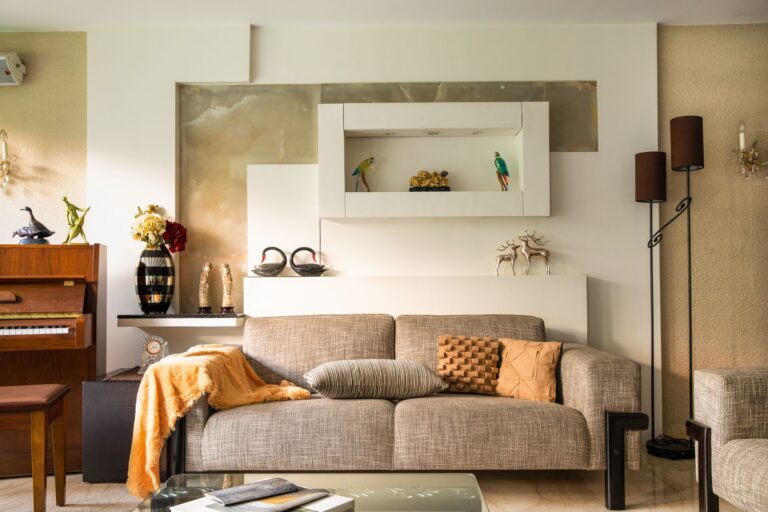
Choose one hero — a velvet armchair, a large artwork or a sculptural floor lamp — and keep everything around it quiet. Pull the seating in around a substantial coffee table, add pairs where you can (two lamps, two side tables, matching cushions at each end) and style the table with a tray, a candle and two or three books.
Master bedroom
Hotel-style bedding does most of the work: white or ivory layers, the quilt’s top third folded back to show a crisp sheet, the right number of pillows and a runner across the foot. Our master bedroom design guide has the full bedding formula. Add matching bedside lamps and, if there’s room, an upholstered bench at the foot of the bed.
Dining area
A runner, cloth napkins, one low centrepiece on a tray and warm light overhead — and nothing else on the table.
Entrance
A slim console or wall shelf, a mirror, a small lamp and a lidded bowl for keys. A lamp left on in the evening makes coming home feel like checking in.
Bathrooms
Rolled white towels, a matching soap dispenser and lotion bottle on a small tray, a plant that likes humidity and a clear counter.
The finishing layer: flowers, scent and calm
Hotels feel luxurious partly because they engage every sense, and partly because nothing is ever out of place.
- Fresh flowers or greens. A few stems of rajnigandha (tuberose) on the console, floating marigolds in a brass urli, two monstera leaves in a tall glass vase. Real and simple beats artificial and elaborate.
- One signature scent. A reed diffuser, sandalwood or khus incense, or a candle in one fragrance used consistently, so your home has its own smell. Keep it subtle, and keep strong scent away from the dining table.
- Hidden clutter. Lidded baskets for remotes and chargers, cable clips behind the TV, one tray for everyday bits. Visible clutter undoes everything else on this list.
✨ Stylist’s tip
Match the sheen, not just the colour. Count the shiny surfaces in a room — glossy laminate, mirrored furniture, polished tiles, satin cushions, gold frames. Rooms that look expensive are mostly matte, with just two or three things that catch the light, such as a brass lamp, a glass vase or a lacquered tray. When everything shines, nothing looks special, and the whole room starts to look cheap.
Where to spend and save for a luxury look on a budget
A luxury look on a budget comes from spending on what you see and touch every day, and saving on what’s easy to change.
- Spend: a sofa with a simple, substantial shape, good bedding, a large rug, lined curtains and two or three good lamps.
- Save: cushion covers, trays and vases from local markets and handicraft fairs, framed prints, plants bought small, side tables.
- Free: editing surfaces, rearranging into pairs, moving art to eye level, switching bulbs and using what you already own — a brass lota as a vase, a silk saree as a throw.
Our budget interior design guide breaks this down piece by piece. And if you’d rather have a stylist do the edit and the shopping list for you, that’s exactly what our interior styling & decor services are for.
One honest note: wall panelling, limewash or textured paint and built-in shelving need a carpenter or a painter. Everything else in this guide is pure styling.
Common mistakes to avoid
- Too much gloss and gold. High-gloss laminates, mirrored furniture and gold on everything look loud rather than rich. Choose one metal and keep most surfaces matte.
- Tiny art. A small frame floating on a big wall looks like an afterthought. Go bigger, or group frames tightly.
- Cheap-looking sheer curtains. Thin, shiny sheers hung at the window frame make a room look smaller and unfinished.
- Overhead-only light. One ceiling light flattens every texture and makes even good furniture look tired after dark.
- Buying a matching set. A sofa set and centre table bought together look like a showroom. Mix shapes and materials so the room looks collected over time.
FAQs
How can I make my home look luxurious on a budget?
Start with the free changes: clear surfaces, rearrange into pairs, switch to warm bulbs and hang art at eye level. Then spend on scale — floor-length lined curtains hung high and a rug big enough for the furniture. Add one hero piece and fresh flowers. Together these do more than any single expensive purchase.
Which colours look most luxurious in a home?
Warm or deep neutrals usually look the most expensive: ivory, warm white, taupe, greige and charcoal, with one rich accent such as emerald, navy, rust or burgundy. Keep each room to three or four colours and repeat them. Brass, wood and warm light stop a neutral palette from feeling cold.
Do I need a renovation for a luxury look?
Usually not. A luxury look comes mostly from styling — proportion, lighting, textiles and editing — which works with your existing walls and furniture. You’d need a carpenter, painter or electrician only for built-ins, paint finishes or new light points. Styora Decors is a styling studio: our plans are a design fee only, from ₹10,000, and your shopping budget stays yours.
What is modern luxury interior design?
Modern luxury is polished and calm rather than ornate: a neutral palette, clean-lined furniture, a few rich materials such as velvet, marble-look stone and brushed brass, statement lighting and plenty of breathing space. In Indian homes it works best warmed up with wood, handloom textiles and a few heirloom pieces.
Want a home that looks luxurious — without renovation?
Book a free 15-minute demo call with Styora Decors. Zero obligations — we’ll understand your space and recommend the right plan.
Follow @styoradecors on Instagram and Styora Decors on YouTube for styling reels and room makeovers for Indian homes.