
By Styora Decors | Interior Styling & Decor | 8 min read
Most children’s rooms are decorated for the age the child was on moving day. Two birthdays later, the cartoon bedsheets and the themed wall are the first things they want gone.
The best children’s room decor isn’t built around this year’s favourite cartoon or colour. It starts with a calm, durable base — walls, bed, storage, desk — and adds a top layer of bedding, cushions, prints and lamps that you swap as your child grows. Done this way, one room carries a toddler to the teenage years without starting over.
Everything below is pure styling, the way we work at Styora Decors as a home styling studio — no renovation, no carpentry builds. Where an idea genuinely needs a carpenter, painter or electrician, such as anchoring a wardrobe or adding a socket by the desk, we say so plainly.
Children’s room decor that grows: a fixed base, swappable layers
Before buying anything, split the room into two lists. The base is what you buy once and keep for years:
- Walls: a soft neutral such as warm white, sand, pale sage or a dusty blue-grey. Muted shades suit a three-year-old and still work for a fourteen-year-old.
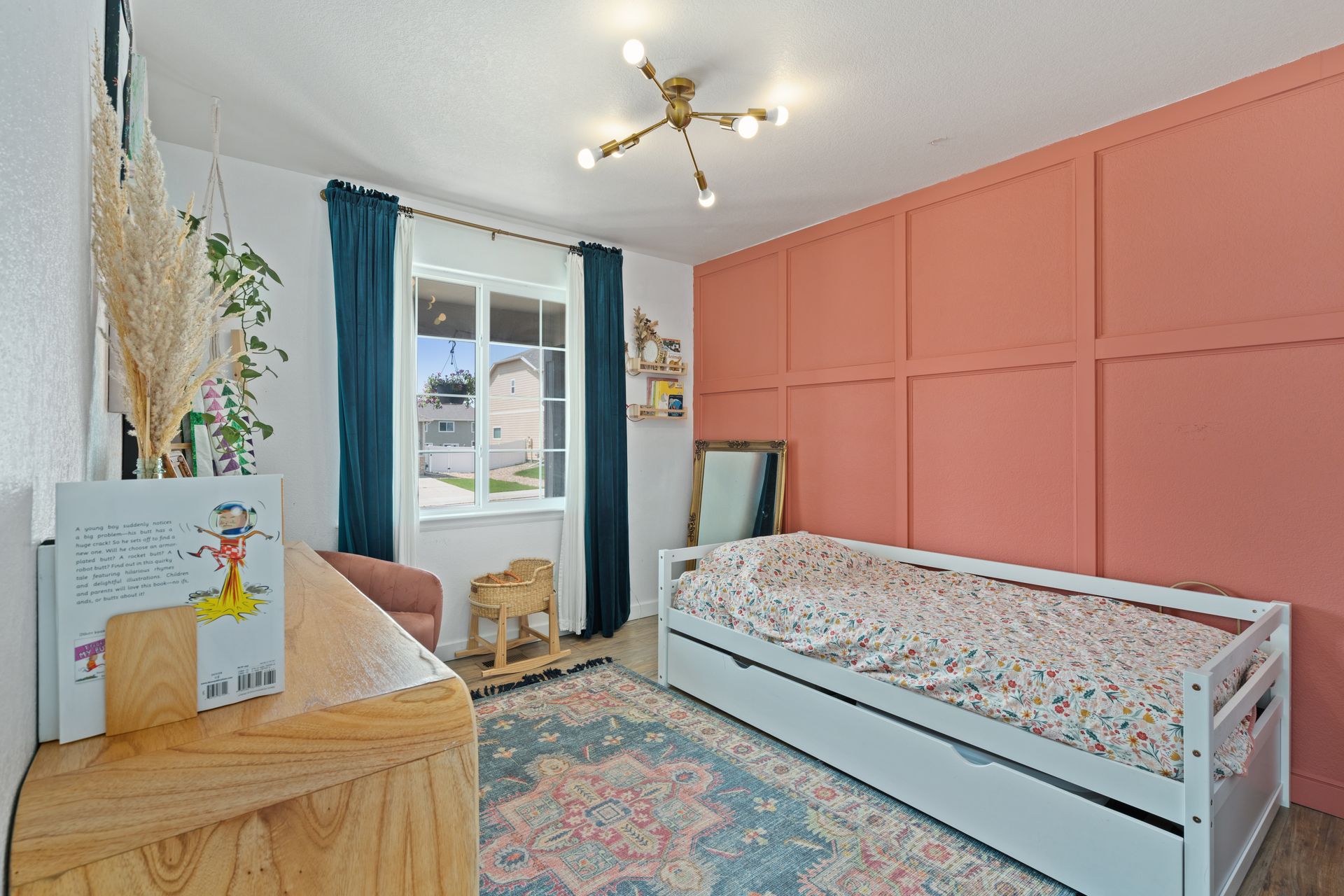
- Bed: a standard single bed (roughly 3 × 6 ft) with a removable guard rail for the early years, rather than a toddler bed they will outgrow.
- Storage and desk: plain wood or white, simple shapes, no cartoon cut-outs.
- Curtains and the main rug: solid or softly textured, in colours that sit quietly with the walls.
The layer is everything that carries personality: bedding, a block-printed dohar, cushions, framed prints, removable decals, a lampshade, a small rug and the reading-corner cushions. These are the pieces that change when the dinosaur phase becomes the football phase — and they cost a fraction of replacing furniture.
If your child wants one strong colour, put it in the layer — a bright quilt or a bold rug — or on a single feature wall. Painting that wall is a job for a painter, and easy to repaint later; painting all four walls a bright shade is the fastest way to date a room. In a rental, a large fabric hanging does the same job with no paint at all.
Kids room decor ideas for every age
Toddlers (about 2–5 years)
Keep everything low and soft: a washable cotton dhurrie for floor play, a low open shelf for toys, a front-facing book rack at their height and hooks they can reach. Skip small loose decor — beads, pebbles, miniature figurines — for now; it’s a choking risk for little ones. Blackout-lined curtains keep the room dark for afternoon naps.
School years (about 6–12)
The desk arrives, and with it books, stationery, projects and trophies. Add a pinboard for timetables, a proper desk lamp, a shelf for display and a place to show off their artwork. This is when the room fills up fastest, so storage matters more than decor.
Teens (13 and up)
Hand over the layer. Let them choose the bedding, the posters (framed looks neater), the lamp and the throw, while you keep the base. Teens need a bigger work surface, a full-length mirror, more hanging space and somewhere for a friend to sit — floor cushions or a bean bag work better than a second chair.
Children’s room storage ideas kids can actually use
A tidy room is about where things live, not how many cupboards you have. These ideas work from toddler age onwards:
- Low open shelves first. Cube shelving or a low bookcase at the child’s height, so they can take things out and put them back without help.
- Labelled baskets, one category each. Cars in one, blocks in another, art supplies in a third — with picture labels for children who can’t read yet. Cane, jute and cotton-rope baskets look warmer than plastic.
- Lidded boxes for dust-catchers. Soft toys and dress-up clothes collect dust fast in Indian cities; closed boxes keep them clean through the monsoon.
- Toy rotation. Keep about a third of the toys out and store the rest; swap every few weeks. Fewer choices make tidying easier, and old toys feel new again.
- Under-bed drawers or boxes for out-of-season clothes, spare bedding and keepsakes.
- A school station by the door. One hook for tomorrow’s bag, one for the uniform and a small shoe rack below turn the morning rush into a routine.
- Inside the wardrobe, a hanging organiser or a lower tension rod lets younger children reach their own clothes — no carpentry needed.
How to set up a kids study corner
A good study corner needs four things: the right light, the right chair, a clear surface and somewhere for everything else.
- Placement: put the desk side-on to a window so daylight falls across the page rather than glaring off a screen. For a right-handed child, light from the left stops them writing in their own shadow; reverse it for a left-hander.
- Size: a desk roughly 90–120 cm wide and 50–60 cm deep fits a notebook, a laptop and a lamp. In a small room, go wider rather than deeper, with shelves going up. A wall-mounted fold-down desk saves floor space but needs a carpenter to fix it securely.
- Chair: an adjustable chair, with feet resting flat on the floor or a footrest, lasts through several growth spurts.
- Task light: an adjustable desk lamp with a neutral white bulb (around 4000K) for homework, and warmer light elsewhere for winding down. Our home lighting design guide explains how to layer the two.
- Above the desk: a pinboard or magnetic board for timetables and notes, leaned on the desk or hung on removable strips rated for its weight.
- Cables: clip a power strip under the desk to keep wires off the floor. If there’s no socket near the desk, adding one is a job for an electrician — don’t run an extension cord across the room.
If you’d like a stylist to plan the whole room with you — moodboard, shopping list and where each piece goes — see how our home styling plans and pricing work.
A reading nook and a home for their art
Every child’s room deserves one corner that’s just for sitting. You don’t need a built-in window seat: floor cushions or a low bean bag, a small rug, a basket of this month’s books and a rechargeable cordless lamp are enough. A freestanding play tent makes it feel like a hideout.
Children make art faster than any wall can hold it, so build a display that rotates. A wire with clips, a picture ledge or a large pinboard lets them change it themselves, and frames that open from the front make swapping a drawing a ten-second job. Photograph the rest and keep a few favourites in a flat folder each year. For more no-drill options, see our guide to what you can hang on a wall.
Safety basics for a child’s room
These come before any decor, especially for under-fives:
- Anchor tall furniture. Wardrobes, bookcases and chests of drawers should be fixed to the wall with anti-tip straps or brackets so they can’t topple if climbed. This needs a drill, so it’s a job for a carpenter or handyman — in a rental, ask your landlord.
- Choose cord-free window coverings. Looped blind cords are a known strangulation risk for young children. Pick cordless blinds or curtains on a rod.
- Mind the ceiling fan. Never place a top bunk or loft bed where a child sitting up could reach the blades.
- Soften corners and cover sockets. Corner guards on low tables and covers on unused sockets are quick fixes.
- Keep rugs grippy. On marble or vitrified tiles, put an anti-slip pad under every rug.
- Nothing heavy above the bed. Hang frames elsewhere, or use lightweight frames with acrylic instead of glass.
- Keep furniture away from windows, especially in high-rise flats, so nothing becomes a step up.
Children’s bedroom ideas for shared rooms and small flats
When siblings share
Give each child a zone that’s clearly theirs: their own side, bedding colour, lamp, shelf and hook. Matching furniture with different-coloured layers looks calm and still feels personal. Keep the middle for shared play. Bunk beds free up floor space — follow the manufacturer’s age guidance for the top bunk and keep it well clear of the fan.
When the kids’ room is also the guest room
In many Indian flats, the children’s room is where grandparents sleep when they visit. Plan for it: a trundle bed or sofa-cum-bed instead of a second fixed bed, one drawer and two hooks kept free for guests, and closed storage so toys disappear behind doors. A neutral base helps here too — a calm room is easy to share; a fully themed one isn’t. Our small apartment decorating ideas have more space-saving tricks.
✨ Stylist’s tip
Before you buy anything, do a kid’s-eye check: kneel in the doorway so your eyes are at your child’s height, and look around. Everything they use daily — books, toy baskets, the hook for their school bag — should be reachable without climbing. Anything tempting that sits just out of reach, like a shelf of trophies or a jar of crayons, is an invitation to climb. Bring it down, or put it behind a door.
Common mistakes to avoid
- Theming the whole room. Character wallpaper, bedding and furniture bought together get outgrown together. Keep the theme in the layer.
- Buying only for today’s size. Toddler beds and tiny desks have a short life; choose pieces that adjust or grow.
- Storage that’s too high. If they can’t reach it, they can’t tidy it.
- Filling every square foot. Children play on the floor, so keep a clear patch at least the size of a play mat.
- Open shelves crammed with small things. In dusty homes that’s a weekly cleaning job. Fewer, bigger baskets work better.
- Not asking them. By primary school, most children have strong opinions. Let them choose between options you’re happy with.
FAQs
How do I decorate a children’s room on a budget?
Spend on the base pieces that last — a good mattress, a sturdy single bed and an adjustable chair — and keep the rest of the children’s room decor in inexpensive layers: bedding, cushions, baskets and framed prints of their own art. Rotate toys instead of buying more storage. A neutral wall with colourful textiles costs far less than redoing a themed room every few years.
What colours are best for a kids’ room?
Soft, muted shades — warm white, sand, sage, powder blue or blush — make the easiest base because they suit every age. Bring in brighter colours through bedding, rugs, cushions and art, which are simple to change. If your child wants a bold colour on the walls, keep it to one wall so it’s easy to repaint later.
How can I decorate a kids’ room without drilling?
Use removable adhesive hooks and strips rated for the weight, lean large frames and pinboards on a desk or dresser, try removable decals or a fabric hanging, and choose freestanding shelves. The one thing that still needs a drill is anchoring tall furniture to the wall — in a rental, ask your landlord, because safety comes first.
Want a children’s room that grows with them — without renovation?
Book a free 15-minute demo call with Styora Decors. Zero obligations — we’ll understand your space and recommend the right plan.
Follow @styoradecors on Instagram and Styora Decors on YouTube for styling reels, kids’ room ideas and room makeovers for Indian homes.