
By Styora Decors | Interior Styling & Decor | 7 min read
By day the room looks lovely. Then the sun sets, one white tube light flickers on, and the whole home suddenly feels like a clinic waiting room.
Good home lighting design isn’t about expensive fixtures. It’s about layers. Many Indian homes are lit by a single cool-white tube light or ceiling panel per room, which flattens colours, throws harsh shadows and makes even beautiful furniture look tired.
The fix is mostly plug-in: warm bulbs, lamps at different heights and a little accent light — no renovation needed. The one honest exception is new wall or ceiling points, which need a qualified electrician. Everything else in this guide is plug-in or pure styling, the way we light homes at Styora Decors, a home styling studio.
The three layers of home lighting design
Stylists think of light in layers, each with its own job. A room feels finished when all three are working together.
1. Ambient light
The general glow that lets you move around comfortably. In most homes it’s the ceiling light, but ambient light can also come from a floor lamp that bounces light off the ceiling, or from a pair of large table lamps. Keep it soft and even rather than bright and direct.
2. Task light
Focused light for reading, cooking, working and getting ready: a reading lamp beside the sofa, a desk lamp, light under the kitchen cabinets, a lamp at the dressing table. Task light should fall on the work, not in your eyes.
3. Accent light
The layer most homes skip, and the one that makes a room look styled. Accent light picks out something beautiful — a painting, a plant, a textured wall, a shelf of books. Think picture lights, small spotlights and LED strips tucked behind furniture.
Add a little decorative sparkle on top — candles, lanterns, fairy lights — and aim for at least three light sources in every room, at different heights: low (a lamp on a side table), middle (a floor lamp) and high (the ceiling light).
Colour temperature and the tube-light problem
Colour temperature, measured in kelvin (K), describes how warm or cool white light looks. It’s printed on every bulb box, and it matters more than wattage or style.
- 2700K, warm white: the cosy glow of a lamp. Ideal for bedrooms and evenings in the living room.
- 3000K, soft warm white: slightly crisper. A good all-rounder for living and dining rooms.
- 4000K, neutral white: clear and bright without looking cold. Good for kitchens, study tables and dressing mirrors.
- 6000–6500K, cool daylight: the bluish light of most tube lights and panels. Fine for cleaning, harsh for relaxing.
For warm lighting in the living room, stay between 2700 and 3000K, and keep every bulb in a room at the same temperature — a warm lamp beside a cool ceiling light makes both look wrong. Two practical checks when buying: look for a CRI of 90 or higher so colours look true, and check the base, because many Indian holders take B22 push-and-twist bulbs while many lamps take E27 screw bulbs.
You don’t have to get rid of the tube light. Keep it for cleaning and daytime tasks, and switch it off in the evening. Where your ceiling holders take ordinary bulbs, swapping in warm ones is a two-minute job. If a room has fixed cool-white battens you’d like replaced, that one is for an electrician.
Living room lighting ideas
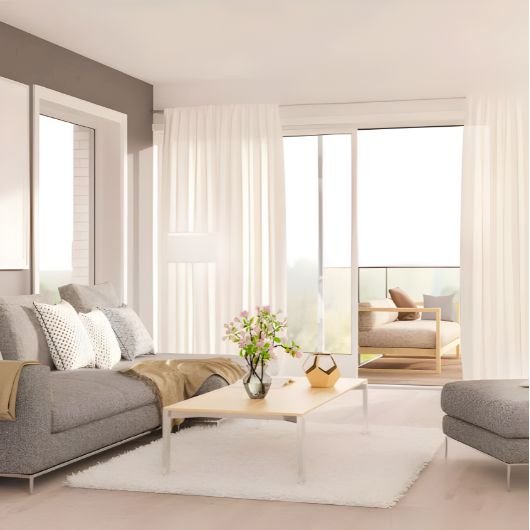
The living room needs the most layers because it does the most jobs: family time, guests, TV, reading and festivals.
- A floor lamp by the sofa for reading and a warm pool of light. An arc lamp can reach over a coffee table without any ceiling work.
- Table lamps on the console or side tables, ideally as a pair, at roughly seated eye level.
- An uplight behind a large plant, which throws leaf shadows across the wall and adds instant depth.
- A soft LED strip behind the TV to ease the contrast between a bright screen and a dark wall.
- A battery picture light over your favourite artwork.
Choose fabric or paper shades that diffuse the light rather than bare bulbs at eye level, and put lamps in the corners you see first when you walk in. For furniture layout, rugs and the rest of the room, our living room decoration guide goes deeper.
Room lighting ideas for the rest of the home
Bedroom
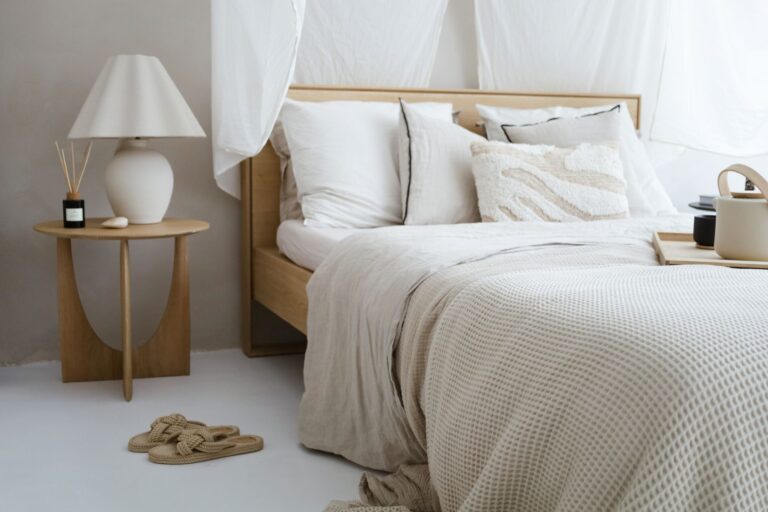
Keep bedroom light low and warm, around 2700K: two bedside lamps, a reading light that doesn’t disturb your partner and no bright overhead light after dinner. Our master bedroom design ideas cover lighting for sleep in more detail.
Dining area
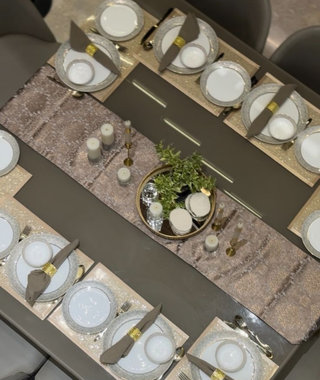
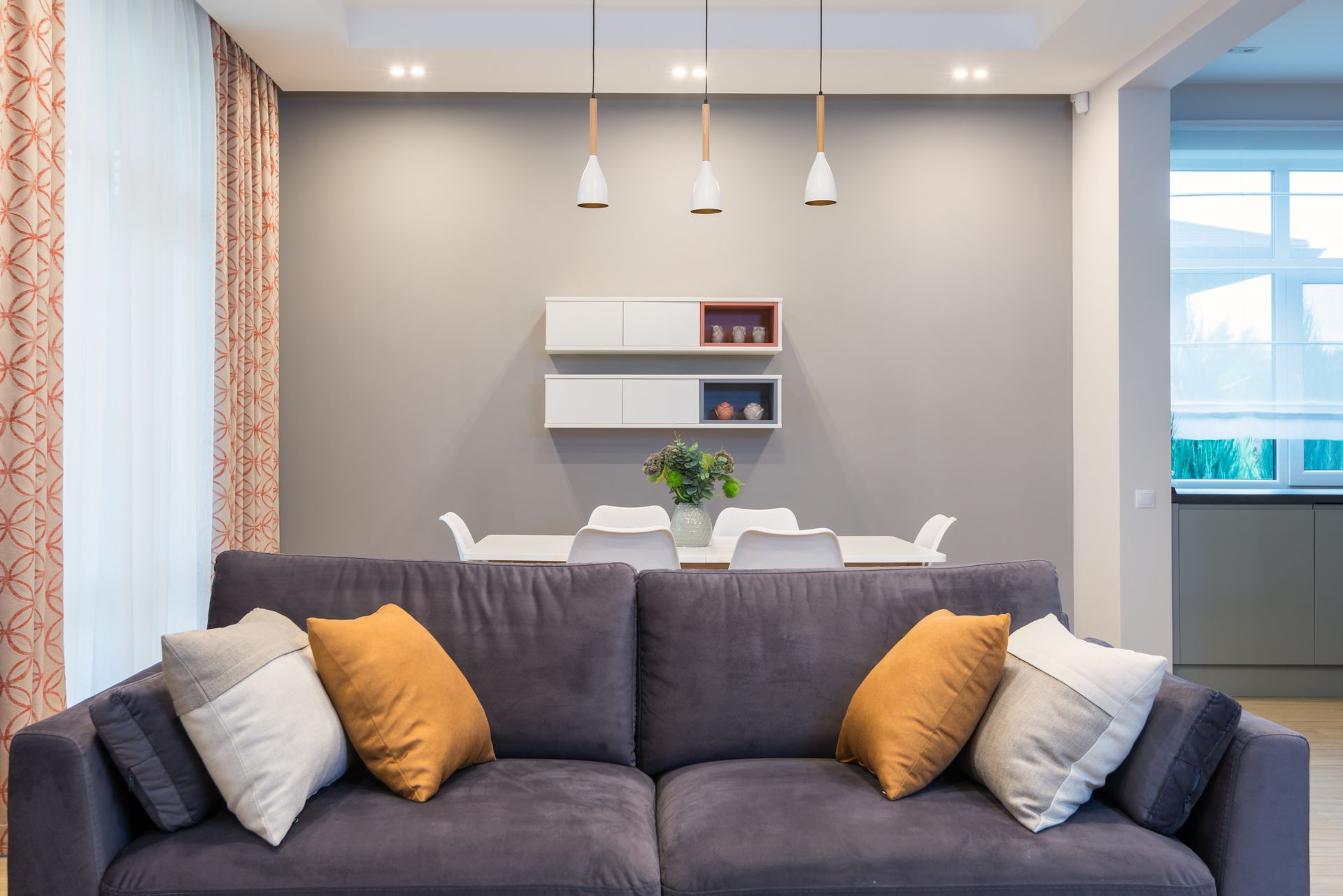
If there’s already a ceiling point above the table, a pendant centred over it turns one end of the hall into a dining room. Warm bulbs make food and faces look their best, and candles or a cordless lamp add a soft glow at dinner.
Kitchen and study
Both need clear task light at around 4000K. Rechargeable stick-on LED bars under the upper kitchen cabinets light the counter without any wiring. At a desk, place the lamp on the side opposite your writing hand, so your hand doesn’t cast a shadow on the page.
Entrance, mandir and balcony
A small warm lamp on the entrance console welcomes you home. In the mandir, a brass diya or an LED diya gives a gentle glow. On the balcony, solar lanterns and warm fairy lights handle the evenings — choose ones made for outdoor use.
✨ Stylist’s tip
Do a dusk test. At sunset, switch off every overhead light, turn on only your lamps, then sit where you usually sit. Any dark corner in your line of sight needs a light source — often just a small uplight tucked behind a plant or a basket. Light the far corners of a room, not only the spot beside you, and the whole space looks bigger and deliberately styled.
Plug-in lighting ideas for home and rentals
Renting, or simply don’t want new wiring? Good home lighting design doesn’t need it. These lighting ideas for home all plug in or run on batteries:
- Plug-in wall sconces, which need only a screw or a strong adhesive mount and a nearby socket; tidy the cord into a paint-matched cover.
- Rechargeable cordless lamps for dining tables, shelves and balconies.
- Smart bulbs in existing holders, which dim and shift from cool to warm white from your phone.
- Smart plugs or timers, so every lamp in a room switches on together at dusk — the easiest way to actually use them.
- In-line dimmers on lamp cords for instant mood control.
- Battery puck lights inside shelves, niches and wardrobes.
Adding a new wall point, moving a ceiling point or fitting a wall dimmer means calling an electrician, so try the plug-in route first. For lamps and shades we’d happily recommend, browse our curated decor finds.
Festive lighting without the clutter
Festive lights work best as an extra layer on top of a well-lit room, not as a replacement for one.
- Choose warm-white fairy lights over multicoloured chasers — they look richer and suit every festival.
- Group diyas on brass trays or in an urli instead of scattering them one by one.
- Keep candles and diyas well away from curtains, and never daisy-chain extension boards.
- Put balcony and window strings on a timer so they switch off on their own.
For entrance, rangoli and mandir ideas to go with the lights, see our Diwali decoration ideas for home.
Common mistakes to avoid
- One overhead light per room. It flattens everything. Add at least two lamps.
- Mixing warm and cool bulbs in the same room. Pick one colour temperature and stick to it.
- Lamps all at one height. Vary low, middle and high so the light has depth.
- Bare bulbs at eye level. Glare is tiring; use shades that diffuse.
- A ceiling light above the fan. When the blades spin beneath a light, they throw a flickering, strobe-like shadow. In the evening, rely on lamps below fan height.
- Tiny lamps. A lamp too small for its table looks lost. Scale up.
FAQs
What colour temperature is best for a living room?
For most living rooms, 2700–3000K warm white works best. It feels cosy in the evening and makes wood, fabrics and skin tones look natural. If you also use the room for work during the day, a smart bulb that shifts between warm and neutral white gives you both. Keep every bulb in the room at the same temperature.
How many light sources should a room have?
Aim for at least three, placed at different heights: a ceiling light, a floor lamp and a table lamp is a classic combination. Larger living rooms often need five or six, including accent lights for art or plants. Several small sources at low levels always look better than one very bright light overhead.
How can I improve lighting in a rented home without rewiring?
Swap in warm bulbs where the holders allow, then add plug-in floor and table lamps, rechargeable cordless lamps and battery picture or puck lights. Plug-in wall sconces with cord covers look built-in without any wiring, and smart plugs switch everything on together. Only new points or wall dimmers need an electrician.
Are warm white lights good for studying?
Warm white is lovely for relaxing but a little soft for close work. For a study table or home office, use a desk lamp at around 4000K neutral white, placed opposite your writing hand, and keep warmer lamps elsewhere in the room. Smart bulbs that switch temperature are a good compromise in a room that does both jobs.
Want your home lit beautifully — without rewiring or renovation?
Book a free 15-minute demo call with Styora Decors. Zero obligations — we’ll understand your space and recommend the right plan.
Follow @styoradecors on Instagram and Styora Decors on YouTube for styling reels, lighting ideas and room makeovers for Indian homes.