
By Styora Decors | Interior Styling & Decor | 8 min read
You’ve saved a hundred trend reels. The real question is which of them will still look right in your home three years from now.
The interior design trends that suit Indian homes right now are the warm ones: creamy whites and earthy neutrals instead of cool grey, soft curves, handcrafted pieces, rich texture, layered lighting and plenty of plants. The ones to use lightly are the high-maintenance or fast-dating looks — boucle everywhere, all-white rooms, cane in a damp corner. Below is a stylist’s filter for each trend: why it works, where it fails in Indian conditions, and the cheapest way to try it. Almost all of it is pure styling — no renovation, no carpenter, no broken walls.
A quick note on who is talking: Styora Decors is a home styling studio, not a construction firm. We style what you already own and curate what you need, so every idea here is judged by one test — can you live with it, and can you change it later without a hammer?
How to read any trend list (before you buy anything)
Most trend round-ups are written for large Western homes with central heating and little dust. Indian homes have ceiling fans, monsoon humidity, strong afternoon sun, shoe racks at the door and, often, rental walls you cannot drill. So before a trend gets a place in your home, run it through three questions:
- Does it survive our climate? Humidity, dust and direct sun destroy some materials and fade some fabrics faster than a trend cycle lasts.
- Is it reversible? A cushion cover is a small, cheap experiment. A wall of fluted panelling is a commitment.
- Does it fit how you actually live? A pale boucle sofa and a toddler are not friends.
If a trend passes all three, it is probably closer to timeless than trendy. If it fails one, try it in accessories only.
The interior design trends worth trying in Indian homes
1. Warm neutrals replacing cool grey 🌿
The biggest shift designers keep pointing to is warmth: cool grey walls and sofas are giving way to warm whites, sand, mushroom, taupe and deeper earth tones like chocolate, rust and olive. Even the colour forecasters agree in their own way — Pantone named a soft warm white, Cloud Dancer, its Colour of the Year for 2026 (the first white since the programme began in 1999), while Benjamin Moore picked an espresso brown called Silhouette.
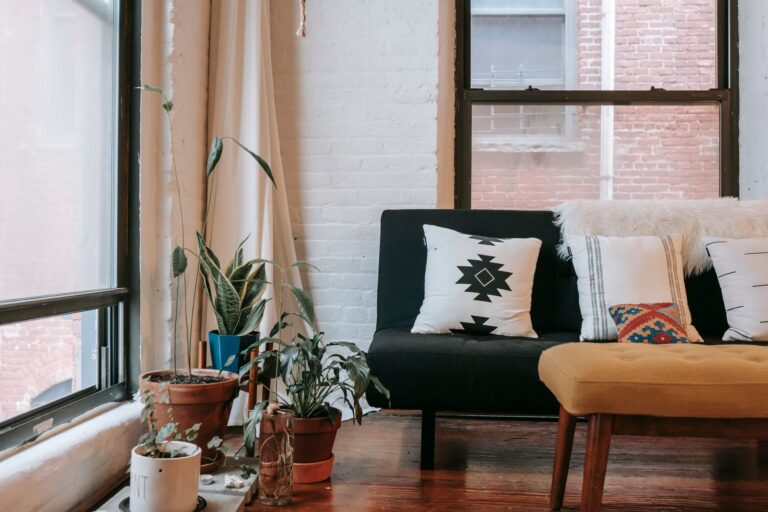
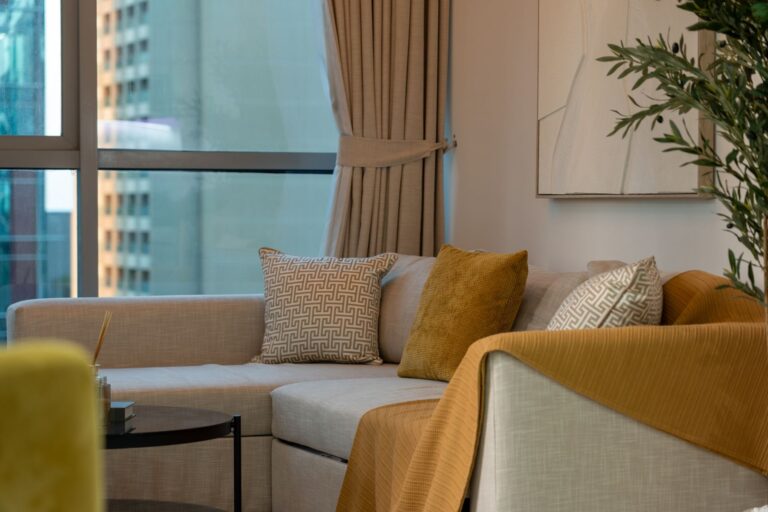
Why it suits India: warm whites and earth tones flatter wood, brass, terracotta and handloom — the materials most Indian homes already have. Grey often turns cold and flat under the white LED tube lights common in apartments. Cheapest way in: swap cushion covers, a throw and the curtains to a sand or rust palette before you touch the walls.
2. Soft curves and rounded shapes
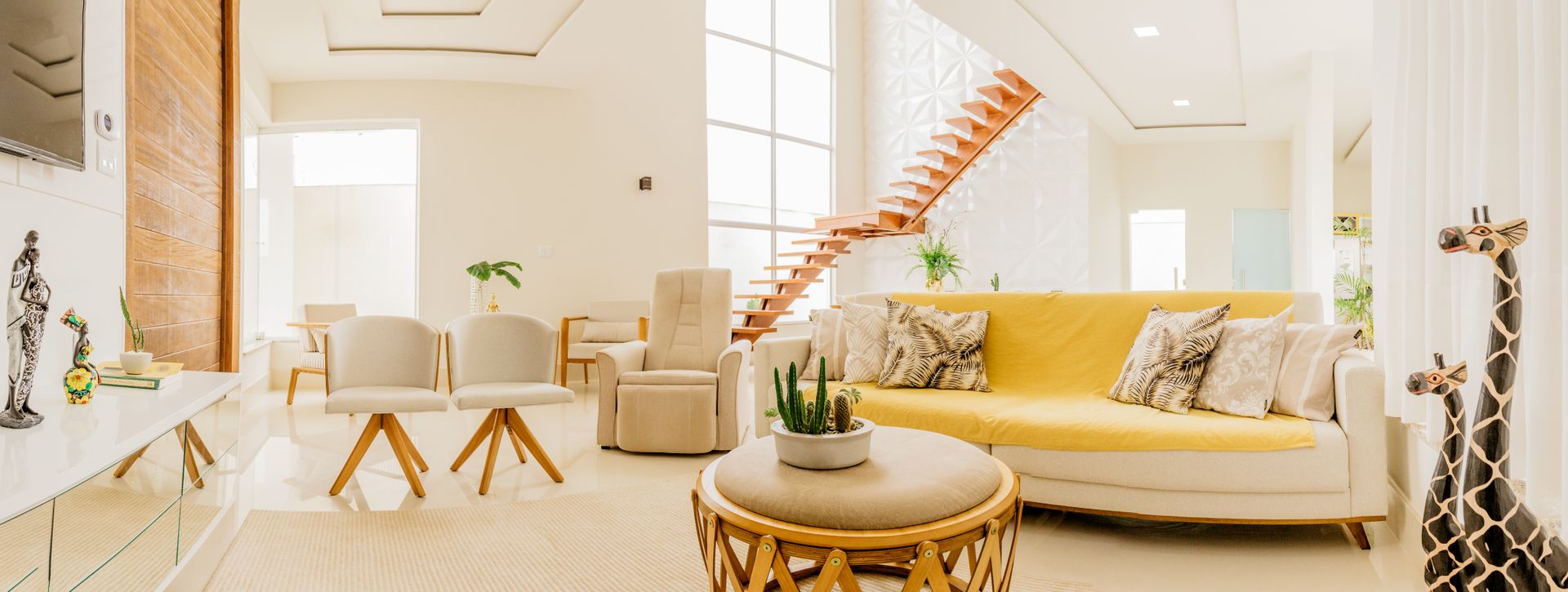
Rounded sofas, oval coffee tables, arched mirrors and globe lamps have moved from statement to standard. Curves soften a room full of straight lines — and most apartment rooms are boxes with a beam.
Where it goes wrong: a big curved sofa wastes corners in a compact living room. Cheapest way in: a round side table, an arched or oval mirror, or a round jute rug under a chair. One or two curves per room is enough.
3. Handcrafted and artisan pieces 🏡
Block print, handloom throws, terracotta, hand-beaten brass, dhurries, cane-weave and hand-thrown ceramics. Globally this is sold as “the handmade look”; in India it is simply our craft tradition, and you can buy it from the source.
Why it lasts: handmade pieces do not date the way factory-printed “trend” items do, because nobody can mass-copy the irregularity. Cheapest way in: one handloom throw on the sofa and a cluster of three terracotta or brass objects on a console.
4. Texture over shine
Matte surfaces, linen, jute, slubby cotton, limewash-look walls, rough ceramics and raw wood are replacing high-gloss laminates and mirror finishes. Texture is what makes a neutral room look rich instead of bland.
Indian reality check: heavy textures collect dust. Choose washable textures for anything near a window or fan — cotton and linen covers, jute rugs you can shake out — and keep the dust-trapping ones (deep pile, boucle) away from the balcony door.
5. Layered and statement lighting
A sculptural pendant, a paper or rattan shade, table lamps at eye level and warm-white bulbs in place of one harsh ceiling light. Designers increasingly treat a single good light fitting as the hero of a room.
This is the trend we push hardest, because it changes a room more than any furniture purchase and plugs into a socket. Our guide to layering home lighting covers bulb colour and placement in detail.
6. Colour drenching (in small rooms)
Colour drenching means painting walls, trim and sometimes the ceiling in one shade, so the room feels wrapped rather than boxed. It works surprisingly well in small spaces — a powder room, a study, a pooja corner.
Honest note: this one needs a painter, and on a rental you will need the landlord’s permission. Everything else on this list is pure styling. If you want the mood without paint, drench with textiles instead: curtains, bedding and a rug in tones of the same colour.
7. Biophilic touches: plants and natural light
Biophilic design simply means bringing nature in — plants, natural materials, daylight, views of green. Indian homes do this naturally with balconies and tulsi pots; the trend is about doing it deliberately inside, too. Start with hardy plants that tolerate our heat and indoor light; our indoor plants decor guide lists easy ones and where to place them.
8. Calm, Japandi-style minimalism
Low furniture, pale wood, clean lines, very few objects and lots of breathing room. It is the antidote to clutter, and it photographs beautifully. Read our Japandi interior design guide if this is your direction — and be realistic about storage, because minimalism only works if the everyday things have a hidden home.
✨ Stylist’s tip
Before you commit to a trend, test it with the 80/20 split: keep about 80% of the room timeless (neutral walls, simple sofa, solid wood, plain curtains) and let about 20% carry the trend (cushions, a lamp, a rug, one art piece). When the trend passes, you change the 20% in an afternoon and the room still works.
Trends to use lightly — or skip
- Boucle everything. Lovely to touch, but it pills, traps dust and stains easily. Use it on one accent chair or cushion, not the main sofa.
- All-white rooms. Pantone’s white is a mood, not a mandate. Pure white upholstery near an entrance door or with pets and kids shows every mark. Warm whites with wood and texture are kinder.
- Cane and rattan in damp corners. Natural cane can sag and spot with mould in humid spaces. Keep it indoors, out of rain, away from bathrooms and monsoon-facing balconies.
- Fluted panelling on every wall. It is carpentry, it collects dust in its grooves, and it dates fast when overused. One feature surface is plenty.
- Matching furniture sets. The “same-everything” look feels like a showroom. Mixing woods and shapes looks more personal and more current.
Timeless interior design vs trendy: how to tell the difference
Timeless design is less a style than a set of habits: good proportions, natural materials, a calm base colour, and objects that mean something to you. Trends are the seasoning on top. A simple test is to ask whether you would have liked the piece ten years ago. Brass, wood, handloom and plants pass that test easily; a specific shade of neon or a viral sculpture usually does not.
If you are still deciding on your overall look, our overview of different interior design styles will help you pick a base style, and then you can add the trends that suit it.
Not sure which trends fit your space and budget? This is exactly what our interior styling & decor services are for — we shortlist what suits your home, so you skip the expensive experiments.
Common mistakes to avoid
- Buying the whole trend at once. A new sofa, rug, curtains and paint in one go — then the trend moves on. Try it small first.
- Copying a reel without checking the light. Colours shot in soft European daylight look very different under Indian afternoon sun or white tube lights. Test swatches at home, morning and night.
- Ignoring maintenance. If you will not vacuum boucle or oil cane, do not buy them in bulk.
- Mixing too many trends. Curves, colour drenching, boucle, cane and a gallery of prints in one room reads as chaos. Pick two or three.
- Forgetting what you already own. Your grandmother’s brass lamp or a handloom saree turned into a throw is more “on trend” than anything new.
FAQs
What are the latest interior design trends?
The main directions designers point to are warm neutrals and earthy tones replacing cool grey, soft curved shapes, handcrafted and textured materials, layered statement lighting, colour drenching in small rooms, plants and natural materials, and calm, Japandi-style minimalism. Most can be tried through decor and textiles without any renovation.
Which home decor trends will not date quickly?
Trends rooted in natural materials and craft tend to last: wood, brass, terracotta, handloom, jute and plants. Warm neutral bases and good lighting also age well. Highly specific looks — one viral colour, boucle on everything, heavy panelling — date faster, so keep them to small, swappable pieces.
How can I make my home trendy on a budget?
Change the soft layer: cushion covers, a throw, curtains, a rug and one or two lamps. Add a curved or handcrafted accent piece and a few plants. Keep walls and big furniture neutral, so this 20% carries the trend and can be refreshed later without spending on the 80%.
Do I need an interior designer to follow trends?
Not for most of them. Construction and carpentry need a designer or contractor, but nearly every trend here is styling — colour, textiles, lighting, decor and placement. A stylist helps you choose what suits your space so you avoid buying pieces that look great online and wrong at home.
Want the trends that suit your home — without renovation?
Book a free 15-minute demo call with Styora Decors. Zero obligations — we’ll understand your space and recommend the right plan.
Follow us for daily styling ideas on Instagram and YouTube.