
By Styora Decors | Interior Styling & Decor | 8 min read
The pandit arrives at nine, the family at ten, and the corner you cleared last night still looks like a corner with a stool in it.
The best puja decoration ideas for home start with one decision: where the eye should land. Build a single focal setup (a raised chowki, a backdrop behind it, flowers framing it and soft light around it) and keep the rest of the room calm. That is what makes a Satyanarayan katha, a griha pravesh or a birthday puja look intentional rather than improvised. Everything below uses things you can buy, borrow or already own. No renovation, no carpenter, no permanent changes, and most of it packs away for the next occasion.
This guide is for occasion pujas held in a living room, hall or balcony. If you are planning a permanent mandir corner, our pooja room design ideas cover that separately.
Start with the space: choose the wall, then the platform
Most homes don’t have an obvious puja spot for a one-day event, so pick it the way a stylist would:
- A plain wall beats a busy one. A wall without a TV, switchboards or a window behind it gives you a clean backdrop. If the only option is the TV wall, cover the screen with a drape. A dark screen is the first thing people notice in photos.
- Leave floor space in front. The person performing the puja, the pandit and the samagri all need room. Shift the coffee table out entirely instead of pushing it to one side.
- Check the direction your family follows. Many households have a preferred direction for the deity or the person seated. That is a family and pandit decision, so ask before you style, not after.
- Raise the deity. A wooden chowki or bajot, a low side table or even a sturdy trunk covered in cloth lifts the murti or photo off the floor and gives the whole setup a centre.
Cover the platform in a single strong colour: red, yellow, saffron or a gold-bordered cloth are the usual choices. One colour reads as rich. Three printed fabrics stacked on top of each other read as clutter.
Backdrop ideas that need no drilling
The backdrop does more work than anything else in the setup. It hides the wall, frames the deity and makes every photo look finished. Rental-friendly options:
1. Saree or dupatta drapes
Two or three silk sarees or dupattas, pleated and hung from a tension rod or a curtain rod you already have, give a soft, layered look. Mix one solid with one zari border so it doesn’t look flat. This is the cheapest way to get a festive backdrop, and the sarees go straight back into the cupboard.
2. A floral string curtain
Vertical strands of marigold (genda) hung close together, with a few strands of mogra or rose in between, make the classic puja backdrop. Marigold holds up well through a long ceremony; loose rose petals wilt faster, so save those for scattering on the day.
3. Banana stems and mango leaves
In many families, especially for a Satyanarayan puja, banana plant stems tied on either side of the chowki and a toran of mango leaves at the doorway are part of the tradition. They also happen to be beautiful: tall, green, and they frame the setup without any wall fixing at all.
4. A reusable fabric or panel backdrop
If your family holds several pujas a year, a fabric backdrop (pichwai-print cloth, a brocade panel or a jute screen) on a freestanding frame pays for itself. You set it up in ten minutes every time and it never looks like a last-minute job.
Flowers: where they matter and where they don’t
Flowers are the biggest spend in most puja decor at home, and most of them end up where nobody looks. Put them in three places only:
- Framing the deity: a garland on the murti or photo and a small arch or strands on either side.
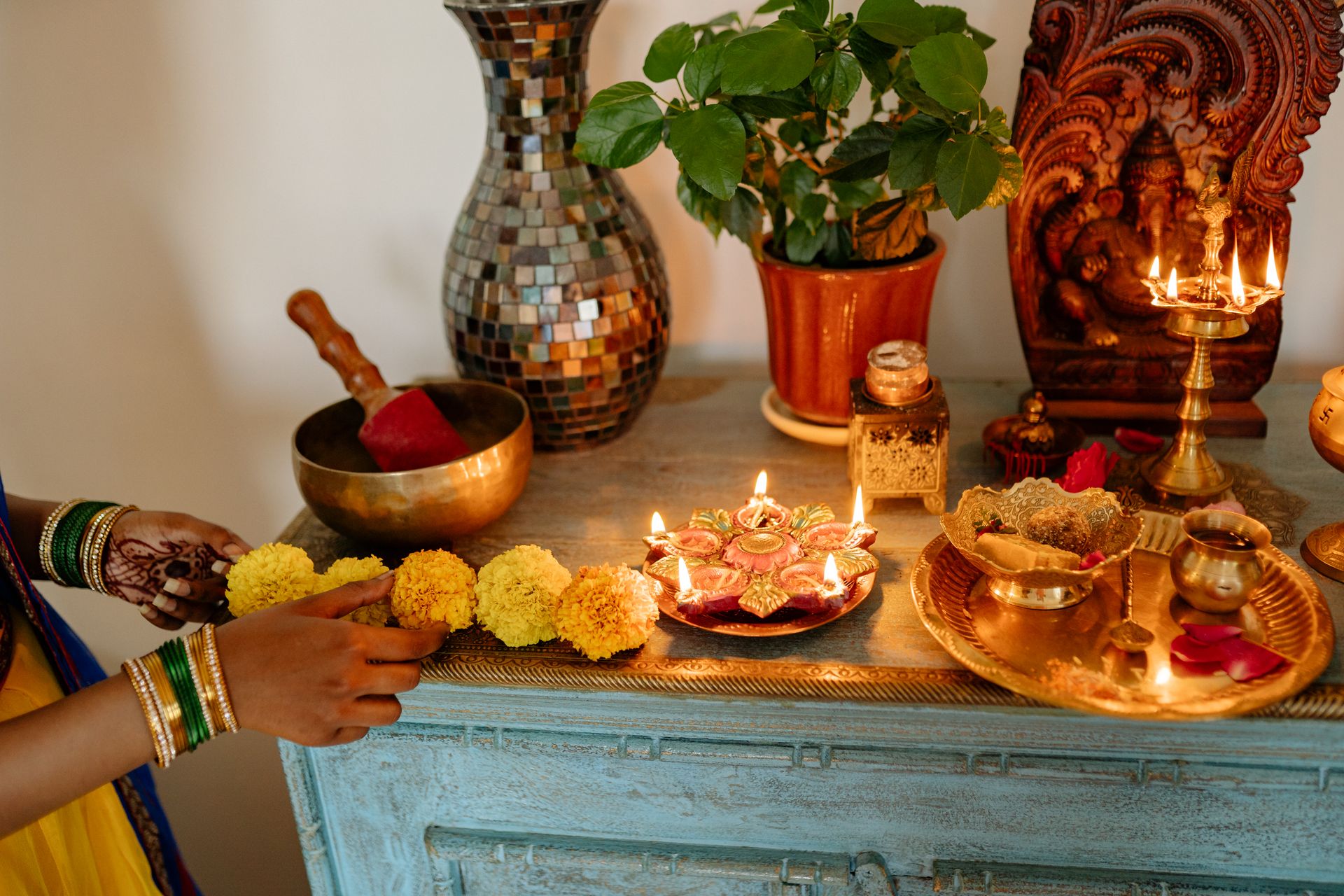
- The floor in front: a petal rangoli or a simple border of petals and diyas. This is what shows in every photo of the person doing the aarti.
- The entrance: a toran at the main door, so guests know the occasion before they step in.
Skip flowers on every side table and shelf. A room full of half-decorated surfaces looks busier, not more festive. If your budget is tight, spend it at the deity and the doorway and leave the rest bare.
Kalash, brass and the things that carry the look
A puja setup looks expensive because of a few heavy, gleaming pieces, not because of quantity. If you are going to buy anything to keep, buy these:
- A brass or copper kalash, usually filled with water and topped with mango leaves and a coconut in many traditions. It is the most photographed object after the deity.
- A brass aarti thali and a pair of tall diya stands on either side of the chowki. Height on both sides gives the setup symmetry.
- Urlis filled with water, floating flowers and floating candles, placed at the front or at the entrance.
- A small bell and incense holder that match the rest of the brass, so nothing plastic sits in the frame.
Brass over plastic is not snobbery. Brass lasts for decades, it looks better every year it is used, and you stop re-buying decorations for every occasion. Clean it a day ahead: many households still use tamarind or lemon with salt, which works well on tarnish.
✨ Stylist’s tip
Before you decorate anything, sit on the floor where the person doing the puja will sit, then stand where the family will stand. Most setups are styled at standing eye level and look empty from the asan, or they look grand from the asan and the family sees only the back of the pandit. Put your tallest element (banana stems, a backdrop drape) behind the chowki and keep everything in front of it low, so both views work.
Lighting the puja setup
Diyas are the soul of the setup, but they can’t light a room alone, especially for an evening aarti. Layer the light:
- Diyas at the chowki and along the rangoli: the real flame is the point.
- Warm fairy lights woven behind the drape or floral curtain, so the backdrop glows instead of going dark after sunset.
- Warm white lamps in the room, with harsh overhead tube lights switched off. Cool white light flattens brass, flowers and skin in photos.
- For more on warm versus cool light in Indian homes, see our home lighting design guide.
Safety is not optional with open flames and fabric in the same corner. Keep diyas well in front of drapes and floral strands, never directly below them, and keep a bowl of water nearby. Use LED tea lights for anything near fabric, in a balcony that catches wind, or where small children and pets can reach.
Puja decoration ideas by occasion
The same base (chowki, backdrop, flowers, light) adapts to almost any occasion. What changes is the mood:
🪔 Satyanarayan puja decoration
Usually a daytime family puja at home. Keep it traditional and fresh: banana stems, a mango leaf toran, a yellow or red chowki cloth, marigold and a simple rangoli. Plan seating for the family to sit on the floor through the katha (durries and floor cushions work better than pulling in dining chairs).
🏡 Griha pravesh
In a new, often empty home the puja setup is the only decor, so let it be generous. Put a big toran at the main door, a rangoli at the threshold and a full backdrop in the living room. It is also the first time family sees the home. If you’re still settling in, our guide on making a new house feel like home picks up from here.
✨ Birthday, anniversary or naming ceremony puja
These are puja celebration decor setups where the puja is followed by guests and food. Style the puja corner traditionally, then let one or two elements carry into the room: the same flowers in a vase on the dining table, the same fairy lights at the entrance. It ties the day together without redecorating the house.
🌼 Festival pujas
Festival setups carry their own traditions and colours. For the big ones, our Diwali decoration ideas and Navratri decoration ideas go deeper into each.
If every occasion turns into a scramble because the room itself never feels finished, that is a styling problem, not a puja problem. It’s exactly what our interior styling and decor services solve.
Common mistakes to avoid
- Decorating the whole room instead of one point. One strong focal setup beats ten scattered marigold strings.
- Diyas directly under drapes or flower curtains. The most common and most dangerous mistake. Keep flame forward, fabric back.
- Too many prints and colours. Pick a palette of two or three (say red, gold and green) and let the flowers bring the rest.
- Plastic flowers and thermocol cut-outs. They photograph flat, they don’t last, and they end up in the bin. Fresh flowers and brass look richer and cost less over time.
- Forgetting where people sit. Guests should not have to stand in the doorway through a two-hour katha. Lay out floor seating before you decorate.
- Leaving it all to the morning. Set up the chowki, backdrop and lights the night before. On the day, add only fresh flowers, rangoli and diyas.
FAQs
How can I decorate for a puja at home on a small budget?
Use what you own: sarees or dupattas as the backdrop, a side table or trunk as the chowki, your existing brass for the kalash and diyas. Spend only on fresh marigolds for the deity and the doorway, plus a string of warm fairy lights. Concentrating flowers in two places looks fuller than spreading them thin across the room.
What is the difference between puja decoration and pooja room decoration?
Pooja room decoration is permanent: the mandir unit, its lighting and the storage around it, styled for daily worship. Puja decoration is temporary, for an occasion such as a katha, griha pravesh or festival, usually in a larger room so family and guests can attend. Ideally the occasion setup can borrow pieces from your permanent mandir.
Which flowers are best for puja decoration?
Marigold is the most common choice in most Indian homes because it is easy to find, holds its colour and lasts through a long ceremony. Mogra adds fragrance, rose petals suit floor rangoli and scattering, and mango and banana leaves add green. Which flowers are offered to which deity varies by family tradition, so check with elders or your pandit.
How early should I set up the puja decoration?
Set up everything that doesn’t wilt the evening before: the chowki, cloth, backdrop, fairy lights, brass and seating. On the day, add fresh flowers, the rangoli and diyas a couple of hours before the puja begins. That way the morning goes into the puja itself, not into hunting for tape and scissors.
Want a home that’s ready for every occasion — without renovation?
Book a free 15-minute demo call with Styora Decors. Zero obligations — we’ll understand your space and recommend the right plan.
Follow us for everyday styling ideas: Instagram · YouTube