
By Styora Decors | Interior Styling & Decor | 9 min read
One white tube light on the ceiling, and the living room still feels flat every evening. Here is the plug-in fix.
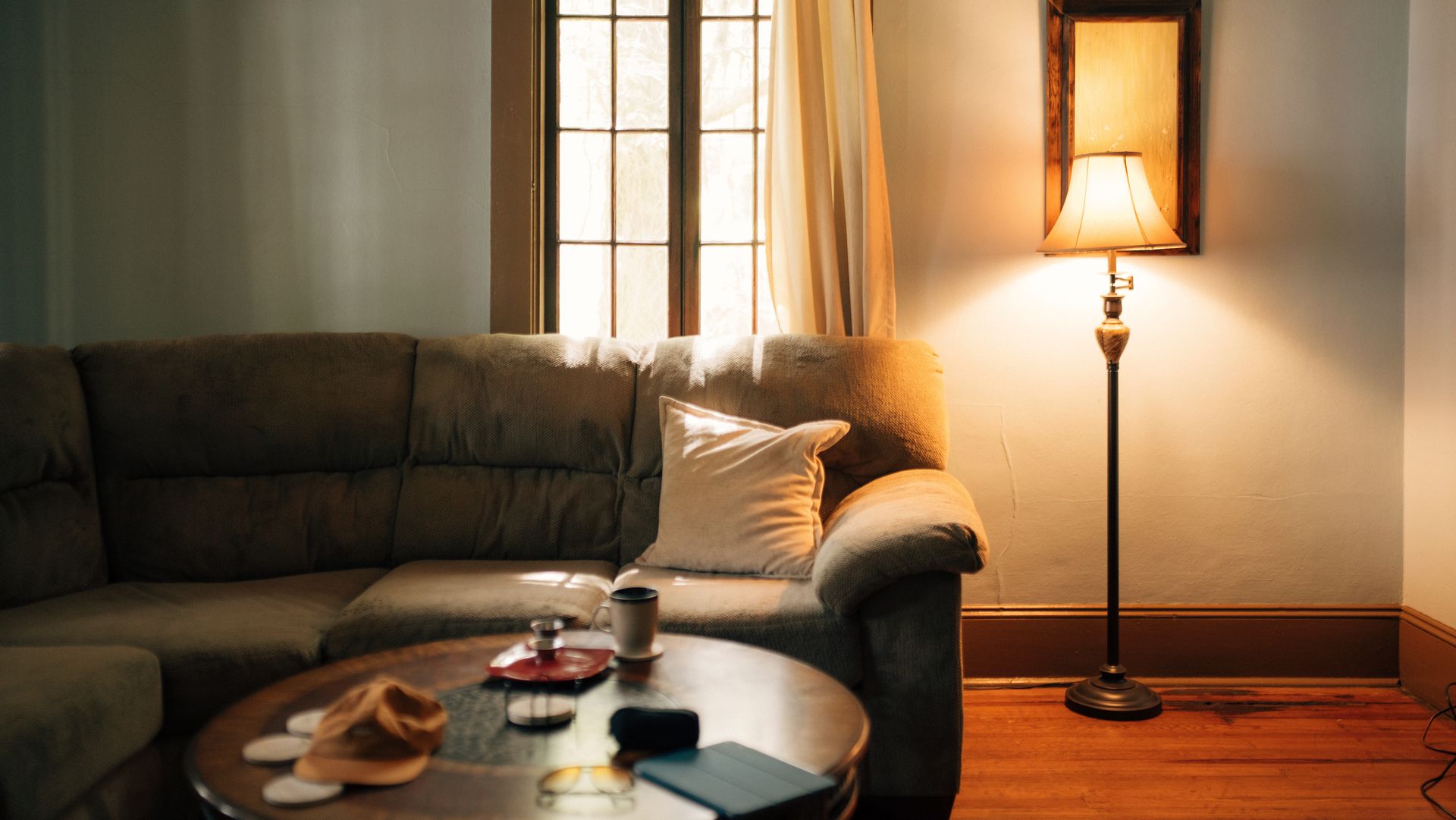
The best floor lamp ideas come down to three decisions: where the lamp stands (beside the sofa, in an empty corner, or behind a chair you read in), which way its light points (down for reading, up for a soft glow, sideways for mood), and a warm bulb of around 2700–3000K. Get those three right and one lamp changes how a room feels after sunset.
A floor lamp plugs into a socket you already have, so there is no electrician, no ceiling work and nothing to drill, which makes it ideal for rented flats. This guide covers the main lamp types, exact placement heights, and the mistakes we see most in Indian living rooms.
Why a floor lamp is the easiest lighting upgrade
Most Indian homes are lit from one point: a ceiling batten or a panel light in the centre of the room. That light falls straight down and flattens everything. Faces look tired, corners stay dark and the room reads smaller than it is.
Lighting designers talk about layers: ambient light for the whole room, task light for reading or work, and accent light for mood. A ceiling light only gives you the first. A floor lamp adds a second layer at seated height, roughly where your eyes are when you are actually using the room in the evening. We go deeper into layering in our home lighting design guide; this post is only about the floor lamp, because it is the single piece that does the most for the least effort.
Types of floor lamp design (and where each one works)
Arc lamp: the reading light over a sofa
An arc lamp has a heavy base on the floor and a long curved arm that carries the shade out over the sofa or a coffee table. It gives you overhead-style light without touching the ceiling. It needs space: the base sits beside or behind the sofa and the arm swings across, so it suits a living room with at least a small gap around the seating. In a compact hall, it can feel like a lot of metal for one light.
Tripod floor lamp: the easy statement piece
Three legs in wood or metal, a drum shade on top. A tripod floor lamp is a styling piece first and a light second: the shade diffuses light softly in all directions, so it is lovely for ambience and weaker for reading. Its footprint is wider than it looks; the splayed legs take more floor than a single-pole lamp, so measure the corner before you buy.
Slim reading lamp: for the chair you actually sit in
A single pole with a small, directional head (often adjustable). It throws a focused pool of light onto a page, a laptop or your hands. This is the lamp for a reading corner, the armchair by the window, or the side of a bed where there is no room for a bedside table.
Uplighter: soft glow off the ceiling
An uplighter points its light at the ceiling, which bounces back down as a wide, gentle wash. It is the most flattering ambient light you can add without wiring. It works best with a light-coloured ceiling; a dark or wood-panelled ceiling absorbs the light instead of reflecting it.
Fabric-shade or paper lantern lamp
A tall lamp with a fabric drum, pleated or paper shade glows from inside, so the lamp itself becomes the light source you look at. Cotton, linen and rice-paper shades all soften glare. They are good in bedrooms and in rooms that already have enough bright ceiling light but lack warmth.
Floor lamp placement: where to put it
Placement matters more than the lamp you pick. These are the spots that work in most Indian homes:
- Beside the sofa, at the end where people sit to read or scroll. Not in the centre of the room. Light from the side of a seat is the most useful light in a living room.
- In the dark corner. Every room has one, usually the corner farthest from the window. Lighting it makes the room feel wider, because your eye now reads all four corners.
- Behind a large plant. A lamp tucked behind a tall palm or a fiddle-leaf fig throws leaf shadows onto the wall. It is the cheapest dramatic effect in decor.
- Next to an armchair, slightly behind the shoulder. For reading, the light should come from beside or just behind you, on the side opposite your writing hand, so your hand does not shadow the page.
- Near a socket. Plan the spot around your existing sockets, not the other way round. A lamp in the perfect corner with a cord stretched across the walkway is a lamp you will stop using.
If your living room is compact, our guide to small living room ideas covers how to keep floor space clear around the seating so a lamp does not crowd it.
Height and shade direction: the numbers that decide it
Lighting guides broadly agree on a few measurements. They are guidelines, not rules, so test them against your own sofa:
- Shade bottom at about seated eye level. For an average adult on a standard sofa, that is roughly 42–48 inches (about 105–120 cm) from the floor. Below that, you look straight into the bulb.
- Overall height around 58–64 inches (about 147–163 cm) for a lamp beside a sofa. A dedicated reading lamp can be a little shorter.
- The bulb should be hidden from where you sit. If you can see the bare bulb from the sofa, the shade is too high, too shallow or tilted the wrong way.
How to check it at home in two minutes: sit where you will normally sit, and ask someone to hold a tape measure beside you. Note the height of your eyes from the floor. That number is your shade-bottom target. Low Indian sofas and floor seating bring this number down, so measure rather than trusting a product photo.
✨ Stylist’s tip
Before you buy any lamp, switch off the ceiling light one evening and light the room with your phone torch pointed at the wall from the corner you have in mind. If the room suddenly feels calmer, that corner wants an uplighter. If you just want to read, test it pointed down at the sofa arm instead. Five minutes of this saves you buying the wrong type.
The bulb matters as much as the lamp
Bulbs are measured in Kelvin (K). Lower numbers are warmer and yellower; higher numbers are cooler and bluer. Most room-by-room lighting guides put living rooms and bedrooms in the 2700K–3000K range: 2700K is close to the old incandescent glow, 3000K is a touch crisper and good for reading.
Many standard LED bulbs sold in India are labelled cool daylight, which on the box usually means 6500K. That bright, bluish light suits a kitchen counter or a study desk. In a floor lamp in the living room, it fights the whole idea of a warm second layer. Check the Kelvin number printed on the pack rather than the colour name, because “warm” and “soft” are used loosely by different brands.
Two more practical points: keep the bulbs in one room within a narrow range (mixing 2700K and 6500K in the same space looks patchy), and if your lamp has a fabric or paper shade, use an LED bulb, which runs much cooler than the old filament type.
Floor lamp ideas for Indian homes: safety and the everyday
- Choose a heavy, wide base if you have children or pets. Tall lamps tip easily. A weighted base, or a lamp placed where it can be pushed into a corner, is far safer than a slim pole in the middle of a play area.
- Do not run the cord under a rug. Cords under rugs get walked on and wear out unseen, and it is a widely cited fire risk. Run it along the skirting instead, held with cable clips, or behind the sofa.
- Think about dust. Open-weave or pleated fabric shades collect dust quickly in Indian cities. A smooth linen or metal shade is easier to wipe down every week.
- Watch the ceiling fan. Tall paper and lightweight fabric shades can sway or rattle under a fan on full speed. Keep them out of the strongest airflow.
- Humidity near the coast. In Mumbai or Chennai monsoons, untreated metal finishes can spot over time. Wipe them dry and avoid placing a lamp right beside an open window.
Pair the lamp with the textiles around it: a warm-toned rug and curtains will catch and hold the light far better than cool grey ones. Our guides to choosing a rug for the living room and to curtain ideas for the living room cover how to pick those so the evening palette comes together.
If you would rather not guess at any of this, our interior styling and decor services plan the lighting along with everything else, using the furniture and sockets you already have.
Common mistakes to avoid
- Buying by photo, not by height. A lamp that looks perfect online can put the bare bulb right at your eye line on a low sofa.
- Placing it in the middle of a wall. Floor lamps work in corners and beside seats, where they light something you use.
- A cool daylight bulb in a cosy lamp. The lamp looks warm in the day and clinical at night.
- Too small for the room. A thin lamp in a large hall disappears. In a big room, choose a substantial shade or an arc.
- Leaving the ceiling light on full anyway. The lamp only changes the mood when the overhead light is dimmed or off. Try it for a week before deciding the lamp does not work.
FAQs
Where should a floor lamp go in a living room?
Beside the sofa at the end people sit in most, or in the darkest corner of the room. Both spots add light at seated height and make the room feel larger. Avoid the middle of a wall or the centre of the room, and plan the spot around a nearby socket so the cord never crosses a walkway.
How tall should a floor lamp be?
For a lamp beside a sofa, lighting guides commonly suggest an overall height of around 58–64 inches (about 147–163 cm), with the bottom of the shade near your seated eye level. The simplest test: sit down, and if you can see the bare bulb, the lamp or its shade is wrong for that seat.
Which bulb is best for a floor lamp?
For living rooms and bedrooms, a warm white LED bulb in the 2700K–3000K range is the usual recommendation. Read the Kelvin number on the pack instead of the colour name. A cool daylight 6500K bulb is better kept for kitchens and work desks, where you want bright, crisp light.
Is a tripod floor lamp good for reading?
Usually not on its own. Most tripod floor lamps use a drum shade that spreads light softly in every direction, which is lovely for ambience but leaves the page dim. For reading, pick a slim lamp with a directional head, or an arc lamp, and keep the tripod for a corner where mood matters more than brightness.
Looking for lamps and the pieces around them? Browse our curated decor finds.
Want your evenings to feel warm — without rewiring a thing?
Book a free 15-minute demo call with Styora Decors. Zero obligations — we’ll understand your space and recommend the right plan.
Follow us for more styling ideas on Instagram and YouTube.