
By Styora Decors | Interior Styling & Decor | 8 min read
“The bed fits, the wardrobe fits — so why does the room still feel like a corridor?”
Good small bedroom design comes down to three decisions, in this order: the right bed size and position, storage that goes under and up instead of out, and a calm, light palette with layered lighting. Get the bed and the walkway right first — in a 10×10 or 10×12 ft room, that single choice decides whether everything else feels easy or cramped. Almost everything below is pure styling: no renovation, no demolition, and only one or two ideas need a carpenter (we flag them). Here’s how we approach compact Indian bedrooms, with the numbers to check at home.
Start with the numbers: bed size and walking space
Before you buy a single cushion, take a tape measure to the room. Two measurements decide the layout: the size of the bed and the space you need to walk around it.
- Bed sizes in India are not fully standard. A queen mattress is commonly about 60×78 inches and a double about 48×72 inches, but brands vary — so measure the actual frame, including any headboard, which can add several inches to the length.
- Walkway: most layout guides treat about 60 cm (2 ft) beside the bed as the working minimum and around 75 cm as comfortable. Below roughly 50 cm, you start walking sideways.
- Doors and drawers: leave space for a wardrobe shutter or drawer to open fully and for you to stand in front of it.
Here’s the maths for a common 10×10 ft room (120 inches each way). Put a 60-inch-wide queen bed centred on one wall and you’re left with 60 inches — about 30 inches on each side, enough for two slim bedside tables and a walkway. Down the length, a 78-inch mattress plus a headboard leaves roughly three feet at the foot. That works — until a wardrobe goes on the foot wall. A typical wardrobe is around 2 ft deep, and with swing shutters you need room to open them, so the foot-of-bed walkway is often where a small bedroom quietly fails.
If the numbers are tight, a double (48 inches) instead of a queen buys you a full foot of floor. For a single sleeper or a guest room, that trade is usually worth it.
Where to place the bed in a small bedroom
1. Headboard on the longest solid wall
The bed usually belongs on the wall without a window or door, centred if you have the width for walkways on both sides. Centred beds look calmer and give two people their own side.
2. Pushed into a corner — only when it earns floor space
Shifting the bed against a side wall frees up one continuous strip of floor, which can make room for a desk or a dressing nook. The cost: one person climbs in from the foot or across the bed. It works well for kids’ rooms, guest rooms and single sleepers; most couples find it annoying within a week.
3. Keep the bed out of the door’s swing
Open the bedroom door fully and look at its arc. Furniture inside that arc makes the room feel blocked from the very first step. Also check the bathroom door if the room has an attached bath.
Small bedroom storage ideas that don’t eat floor space
Indian bedrooms carry more than sleep — spare bedding, seasonal clothes, suitcases, sometimes a mandir shelf. The trick is to store in directions that don’t cost you walking space: under, up and behind.
- Under the bed: a storage bed (hydraulic lift or drawers) is the single biggest storage win in a small room. If you’re keeping your current bed, lidded under-bed boxes do the same job for quilts and woollens. Check the clearance under your frame before you buy boxes.
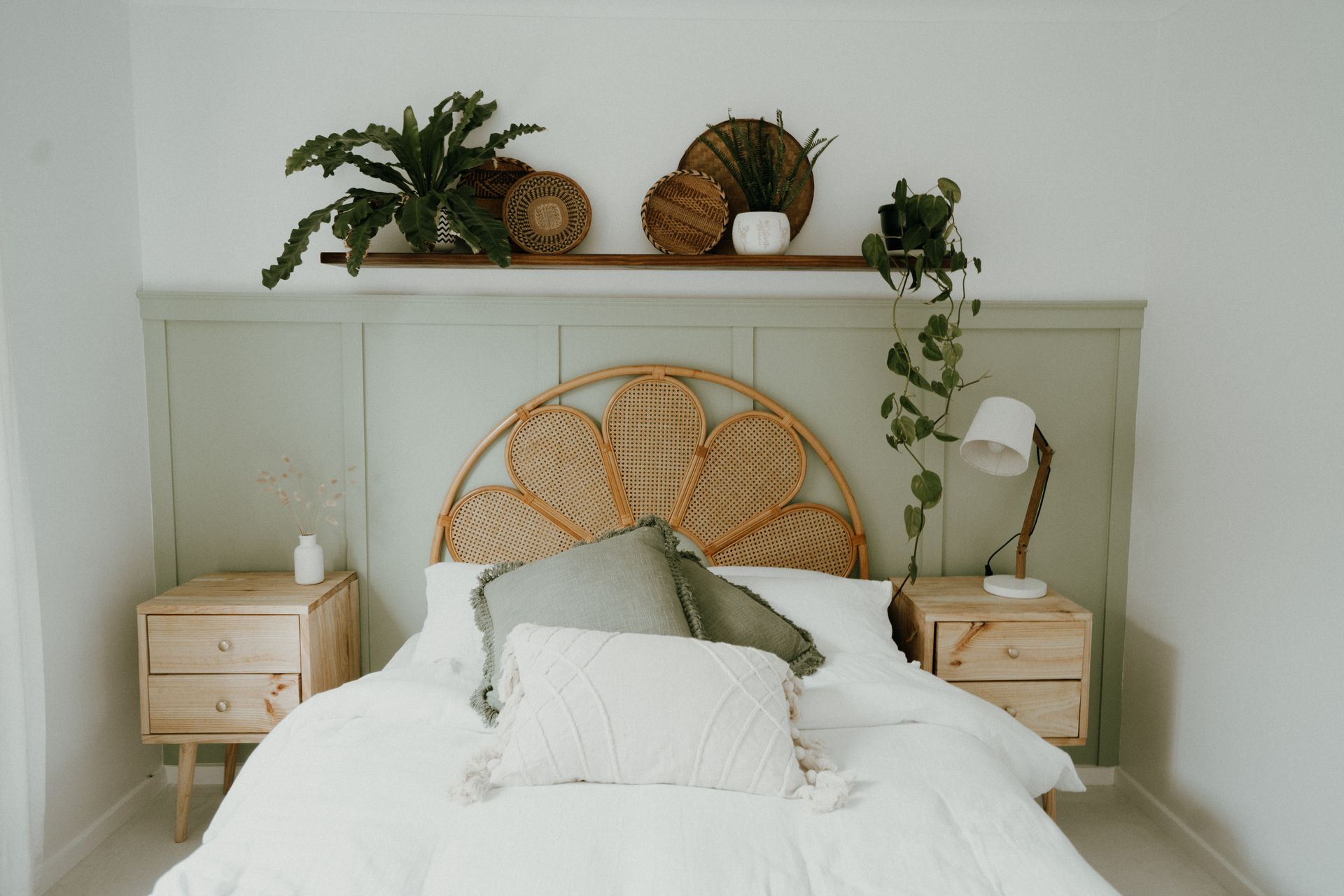
- Up the wall: a floating shelf or two above a desk or beside the bed takes books, a plant and a lamp off the floor. In rentals where you can’t drill, use a tall, narrow bookcase instead.
- Behind the door: an over-the-door hook rail holds tomorrow’s outfit, a bag and towels — things that otherwise end up on the chair.
- Inside the wardrobe: before buying more furniture, add organisers, vacuum bags for winter quilts and a top-shelf box for suitcases’ contents. Most cluttered bedrooms have a wardrobe problem, not a space problem.
Carpenter flag: wall-to-wall built-in wardrobes and loft storage above the door are carpentry jobs. Sliding shutters, where you’re building new, save the swing space we measured above. Everything else in this section is buy-and-place.
Small bedroom decor ideas that make the room feel bigger
🌿 Keep the bed wall simple
One substantial piece above the headboard — a single artwork, a pair of frames or a fabric headboard — reads cleaner than a gallery of small frames. In a small room, many little things on one wall look like clutter. Keep anything heavy off the wall directly above the pillows, or fix it securely; glass frames over a sleeping head are a genuine safety concern.
Bedside tables: go slim or go floating
Standard bedside tables are often too deep for a 30-inch gap. A narrow nightstand, a C-shaped table that slides over the mattress edge, or a small wall-mounted shelf gives you a place for a phone, glasses and water without blocking the walkway.
Mirrors that do real work
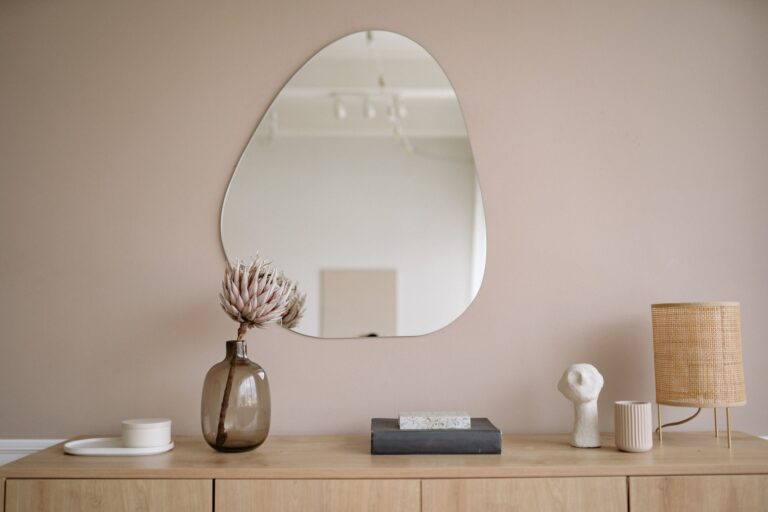
A mirror placed where it reflects the window bounces daylight deeper into the room. A full-length mirror on the inside or outside of a wardrobe shutter doubles as your dressing mirror and saves wall space. Avoid a mirror that reflects the clutter corner — it doubles that too.
Curtains high and wide
Hang the curtain rod close to the ceiling rather than just above the window, and let it extend past the frame on both sides so the open curtains stack against the wall, not the glass. The window looks taller and wider, and you keep all your daylight. Pick light linen or cotton blends; add a separate blackout layer if street lights or early sun bother you.
One rug, sized properly
A tiny mat beside the bed chops the floor into pieces. A rug laid crosswise under the lower two-thirds of the bed, showing on both sides, connects the space. For a 60-inch queen, a 5×8 ft rug turned sideways gives about 18 inches of rug either side — enough to step onto in the morning.
✨ Stylist’s tip
Before buying anything, mark your new layout on the floor with masking tape — bed outline, bedside tables, the wardrobe shutter’s swing. Live with it for two days. You’ll find the pinch points (the corner you keep stubbing your toe on, the drawer you can’t open fully) while they’re still free to fix.
Colours, bedding and lighting for a compact bedroom
Light, warm neutrals — off-white, greige, soft sand — let walls recede, and keeping the walls, curtains and wardrobe front close in tone stops the room from breaking into blocks. You don’t have to repaint to get there: bedding, curtains and a rug do a lot of the colour work. For pairings that suit Indian light, our guide to bedroom colour combinations goes deeper.
Bedding is the biggest surface in the room, so it sets the mood. Plain or subtly textured sheets in a light shade, one quilt or throw folded at the foot, and two to four cushions — not eight. A bed piled with cushions looks styled in photos and becomes floor clutter every night.
For lighting, skip the floor lamp in a tight room. Wall-mounted reading lights or plug-in wall sconces (no rewiring needed) free the bedside table entirely, and a warm bulb in a table lamp gives the evening glow a single ceiling light never will. Our home lighting design guide explains how to layer ambient, task and accent light.
If you’d rather have a stylist plan the layout and send you a shopping list that fits your exact measurements, our styling plans start from ₹10,000 — your shopping budget stays your own.
Common mistakes to avoid
- Buying the biggest bed that fits. If a king leaves you edging sideways around it, the room will always feel tight.
- Bulky bedside tables. Two deep side tables can steal a walkway’s worth of space.
- Furniture that’s all the same height. A row of waist-high pieces flattens the room; one tall element (shelf, mirror, curtains) draws the eye up.
- Dark, heavy curtains hung at window height. They shrink the window and the wall.
- Treating the bedroom as overflow storage. The ironing pile and the exercise cycle are the first things guests see and the last thing you see at night.
- Forgetting the door and shutter swings. Measure them before you buy, not after delivery.
Small bedroom vs small apartment: what’s different
A small bedroom has one job — rest — so it can be calmer and more edited than the rest of the home. If your whole flat is compact, our small apartment decorating ideas cover multi-use furniture and flow between rooms. For bed styling, headboards and layering in rooms of any size, see our bedroom decor ideas.
FAQs
What is the best bed size for a 10×10 bedroom?
A queen (commonly about 60×78 inches in India) usually fits a 10×10 ft room with around 30 inches of walkway on each side, if nothing large sits at the foot. If a wardrobe shares the room’s foot wall, a double (about 48 inches wide) often gives a more comfortable layout. Always measure your actual frame, since sizes vary by brand.
How do I make a small bedroom look bigger without renovation?
Choose a light, warm palette across walls, bedding and curtains; hang curtains high and wide; add a mirror that reflects the window; use one properly sized rug instead of small mats; and move storage under the bed and up the walls. Clearing the floor does more than any single purchase.
Is a storage bed worth it in a small room?
Usually, yes. Under-bed space is the largest unused volume in most bedrooms, and a hydraulic or drawer storage bed can absorb quilts, suitcases and seasonal clothes. Drawers need clear floor space beside the bed to open, so check that first; hydraulic lift beds avoid that problem.
Can I put a study table in a small bedroom?
Yes, if the walkways still work. A narrow desk against the window wall or a wall-mounted fold-down desk takes little floor space. Keep a chair that tucks fully under, so the desk doesn’t eat into the path to the bed or wardrobe.
Want your small bedroom planned — without renovation?
Book a free 15-minute demo call with Styora Decors. Zero obligations — we’ll understand your space and recommend the right plan.
Follow us for daily styling ideas on Instagram and YouTube.